The Korean defense industry enters the European security theater an analysis of Korea-Poland arms deals
Télécharger la versoin pdf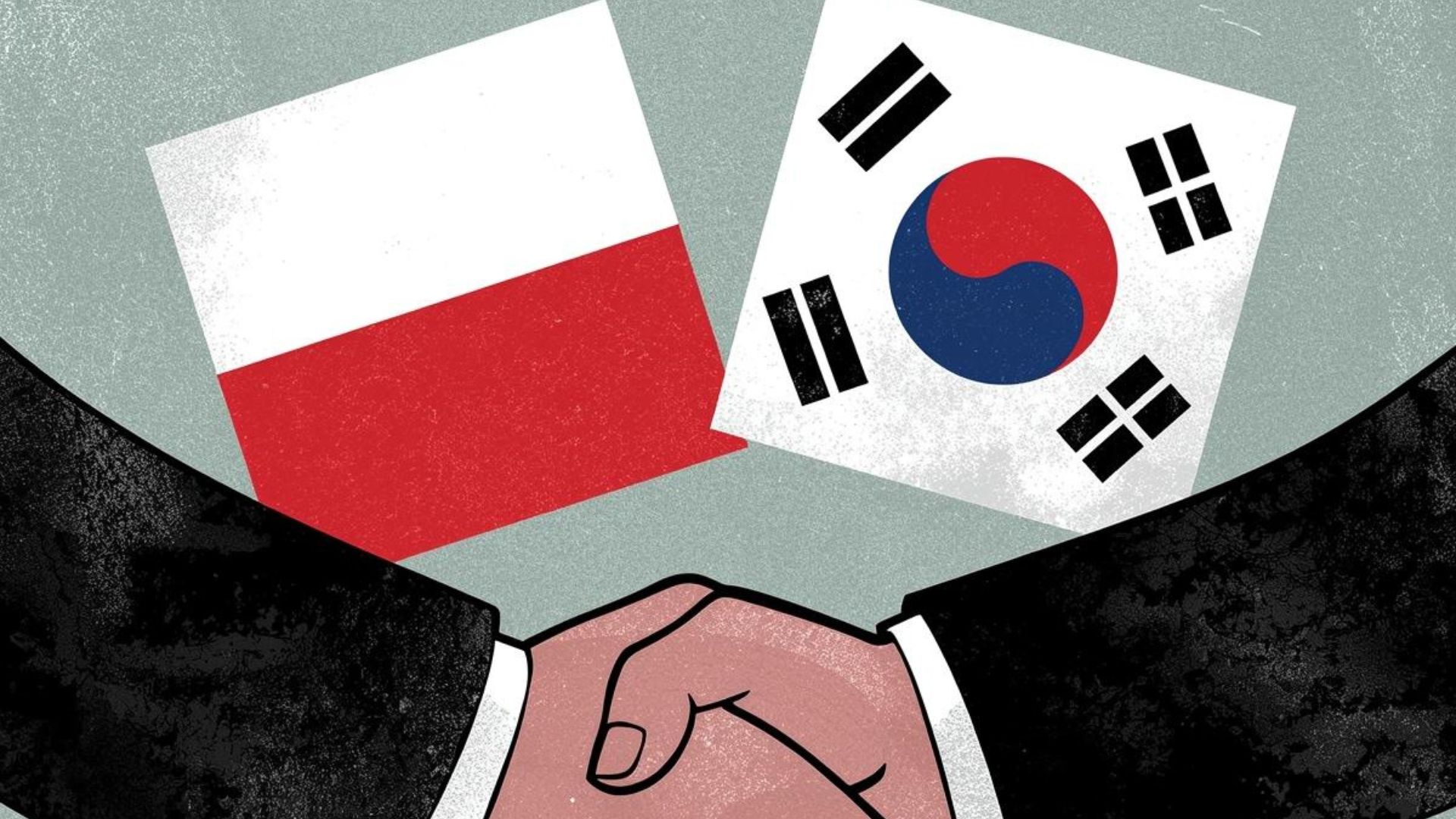
Over the past couple of years Korea and Poland have been advancing a large arms deal framework, worth approximately 60 billion USD, across the field including, but not limited to, main battle tanks, self-propelled howitzers, light fighter jets and multi-launch rocket systems. This is an unprecedented defense industrial cooperation to connect, if not integrate, their respective regions in the Euro-Atlantic and the Indo-Pacific. Such a bold move surprises many in both regions as well as Russia and other major powers. Why and how did they confirm this intriguing defense industrial cooperation, which has significant implications for security alignment? What are the pros and cons of the ongoing interaction for these two geographically distant security partners? What are the strategic consequences and implications for Korea, Poland, and other major stakeholders? This paper provides a set of preliminary assessments of these issues.
INTRODUCTION: KOREA AND POLAND, NEW ALLIES?
Is Korea a new ally for Poland? Indeed, since 2022, Polish leaders have repeatedly stated that Korea is their new ally (x), which would be surprising for students of strategic studies across the globe. The Korean decision makers echo this rapid upgrade of bilateral strategic relations (x). How can Korea become a European country’s de facto military ally, and vice versa? Poland is a member of the collective security alliance NATO in Europe; and Korea belongs to the United States’ hub-and-spoke alliance system in East Asia. Who are the common enemy for this sudden strategic alignment if they form an alliance across the Eurasian continent? These legitimate concerns and questions notwithstanding, these two distant (7,738 km apart Seoul-Warsaw) countries have initiated a bold experiment, which is unprecedented in the history of interactions between Europe and East Asia.
This strategic interaction is a mixed consequence of preparation and coincidence, starting with the recent defense industrial cooperation, a bilateral arms deal framework worth 60 billion USD. The general arms deal framework includes 1,000 K2 main battle tanks, 672 K9 self-propelled howitzers, 48 FA-50 light fighter jets, and 288 MLRS (multi launch rocket system). Furthermore, Poland insists on more cooperation in ballistic and cruise missile production; while Korea was designated as the main contractor for the ambitious Polish energy plan for nuclear power plant phase II of four 1,400 megawatt nuclear reactors over the next decade or so.
In fact, their recent strategic cooperation is the “culmination of many years of cooperation and trust built up over many years” (x). Korea is the largest foreign investor (2.2 billion USD in 2022, 5.7 billion USD in accumulative total) in Poland, dwarfing the other non-EU countries. Their trade has been steadily increasing, approaching almost $10 billion in imports and exports in 2022. More and more large Korean investors, including LG, Samsung, and their key 1st and 2nd benders are making substantial investments in battery, electronics, and automotive industries across Poland (x). Again, however, this level of economic cooperation has been transformed into multi-dimensional security cooperation across economic, technological, and military realms.
This has required leaving behind the conflictual history of 1948, when Poland was one of six countries to object to the United Nation’s endorsement of the newly founded Republic of Korea and throughout the post-Cold War period: indeed, they established a “future-oriented partnership” in 2004, and a “strategic partnership” in 2013, to which would soon be added “comprehensive”. At the same time, the military and strategic cooperation of these two key American allies emerges as one of the critical experiments to connect, if not integrate, the Euro-Atlantic and the Indo-Pacific regions from a security point of view (x). We can label this burgeoning strategic trend of the convergence of two security structures multi-dimensional and regional. In effect Korean defense industrial cooperation with Poland is the spearhead of this strategic change.
Against this backdrop, this paper illustrates the facts and process of the recent Korea-Poland arms deal and ensuing strategic moves on both sides before analyzes the arms deal from multiple perspectives—those of Korea, Poland, and third parties such as the US, France, Germany, Ukraine, and other Central-Eastern European countries along with Russia and China. This approach incorporates domestic and international interactions as well as extrapolates from this unique strategic interaction to understand the two convergences of global security and strategic risks for the stakeholders.
KOREA-POLAND ARMS DEAL: PROCESS
The start of the arms deal between Korea and Poland is a combination of a long-term build up and coincidence. In early 2022, Poland urgently needed to acquire a series of weapons due to the Russian invasion in Ukraine and the ensuing war. Along with multiple Central and Eastern European countries, Poland felt that it could be the next target of Russia. As a NATO country, Poland might not feel so threatened that it rushed to buy any available weapons from the market. Nevertheless, its tragic history between the great powers—Russia and Germany—concentrated its leaders’ minds (x). They wanted to build up their military capacity, especially their army and air force. Planning up to three percent of GDP for defense, Poland was ready to buy more advanced weapons against Russia. As a NATO member Poland had sought the most advanced weapons from the US and Germany. For instance, it planned to import 110 American M1A1 SEPv2 Abrams main battle tanks, which could not be delivered due to the American lack of production capacity until the mid-2030s. Nor has Germany, which produces one of the top 3.5 generation main battle tanks, Leopard II, delivered on its promise to fill the Polish arsenal, which started to dwindle owing to the provision of its own Soviet tanks for Ukraine.
The Polish decision makers were desperate to find an alternative outside the NATO territory (x). A quasi wartime mindset led the Polish defense minister to visit Korea in April 2022 as a precaution. The Korean K-2 main battle tank (3.5 generation) producer, Hyundai Rotem, impressed him and his delegation with its high quality, reasonable price, and most of all, quick delivery time. In addition, the already popular K-9 self-propelled howitzer, a best seller of Hanhwa Defense (now Hanhwa Aerospace), emerged as a must-buy item to beef up infantry support capacity for Poland. Additionally, the Polish leaders started to look at the KAI’s FA50 light fighter jet, which possesses training compatibility with advanced American fighter jets such as F-16s. Lockheed Martin also recommended this to Polish authorities, emphasizing its compatibility with their top fighter jets which include 32 American-promised 5th generation F-35s. Important weapons systems such as Chunmoo multiple launch missile system were also a primary target for the Polish army.
The framework agreement between Poland and Korea was completed in Warsaw on July 27 2022, only three months after the Vice Prime Minister and Defense Minister, Mariusz Błaszczak’s hasty visit to Korea in April. He and PGZ CEO Sebastian Chwałek hosted the CEOs of the three Korean defense manufacturers—Hyundai Rotem, Hanwha Defense, and Korean Aerospace Industries—during the ceremony; he emphasized the imminent Russian threat, the urgent need for tank and artillery power, as well as bilateral military cooperation with Korea. He argued, “Framework agreements have been signed that will significantly strengthen the Polish armed forces. This fortification is extremely important due to the situation on our eastern border. We don’t have time, we can’t wait. We must arm the Polish Army… The ordered equipment is a real strengthening of the Polish deterrence and defense potential. Ultimately, it will be manufactured with the broad participation of the Polish defense industry, taking into account the opinions and assessments of military experts. The orders are characterized by a rapid pace of deliveries and a large transfer of technology to Poland... We have an agreement that in the coming years the production of these weapons will be in Poland” (x). The deal’s details are as follows:
(1) K-2 Black Panther (3.5 generation main battle tank): 180 K-2 (by 2026), approximately 820 K-2PL (after 2026), Total: 1,000 units
(2) K-9 Self-propelled 155 mm Howitzer: Total: 672 units (48 by 2022-2026)
(3) K-10 Ammunition Supply Armored Vehicle, K-11 Strike Command and Control Vehicle: Number not specified
(4) FA-50 Light Jet Fighter: 12 FA GF, 36 FA50PL, Total: 48 units
(5) Chunmoo Multiple Launch Missile System (MRMS): Total: 288 units
The first phase of the deal amounts to 13.7 billion USD, 70 percent of which will be financed by the Korean government via Korea Eximbank. Soon afterwards, these three Korean companies and PGZ concluded a series of partnership agreements, which include a clause to set up manufacturing facilities in Poland. That is, the Korean manufacturers would implement the specified licensing of these weapons by the early 2030s. At the same time, the relevant training packages were arranged, including an FA-50 Jet Fighter international training program in Poland by KAI, which could complement and supplement the American F-16 program on US soil. Furthermore, the two countries agreed to co-develop a next generation tracked vehicle such as K-3 MBT, a wheeled vehicle (K808 armored vehicle), and an unmanned ground command & control system. On December 6, 2022: the first delivery of 10 K-2 and 24 K-9 units arrived in Gdynia Port, just five months since the framework agreement had been announced. The first two KA50 units were also supplied in August 2023. This is all the more surprising as we know that delivery takes years according to the defense industrial standard protocol.
Korea was not on the list until the aforementioned Polish Defense Minister’s April visit (x). But Poland found Korea a viable alternative and made a series of procurement deals over the following years. The Russian invasion, the lack of NATO allies’ weapon production capacity, and Korea’s tailor-made offer produced this mega deal, which surprised many observers of the defense industry and security in Europe and other parts of the world. In fact, the Korean defense industry has been on the rise for the last decade or so. Its unique security environment allowed its Research and Development (R&D) developers and producers to relentlessly pursue higher technologies, lower prices, and better production capacity over the last five decades. With a set of marketable weapons across ground, naval, and aerospace sectors, Korean defense manufacturers have made a great effort to export their weapons to the Middle East, Southeast Asia, South Asia, and Europe since the early 2010s. Europe, however, was mostly out of reach before the Poland deal in 2022 and 2023. All major Korean manufacturers intended to enter the European market, which was dominated by NATO countries such as the United States, France, Germany, the UK, Italy, and Spain. Their attempts to sell to multiple procurers in Central, Eastern, and Northern Europe have been recognized over the past few years, but despite this interest demand was low.
The Russian invasion in Ukraine and all-out war between these two countries since February 2022 demand for conventional weapons in Europe skyrocketed. Again, there is no immediate production capacity to fill within Europe, even though France, Germany, Italy, Spain, and the UK have both technologies and manufacturers. They lack capacity for rapid mass production, a post-Cold War legacy of a long peace and consequent trend of weapon redundancy (x). Japan, a clear Asian alternative, is constrained not to export weapons. Korea was on the radar but shackled as a non-NATO, non-European provider. Poland thus played an important role for Korea breaking into the European market. Furthermore, the fact that Korea delivered a first batch of contracted weapons to Poland in just three months and took prompt follow-up measures, impressed the international defense market. By the end of 2022, Poland had already paid approximately 500 million USD to show its commitment to the deal.
Such a defense industrial cooperation has led these two countries to expand their portfolio to more comprehensive military and strategic industrial cooperation. First, the MBT, Howitzer, Jet Fighter, MLMS deal put several other weapons systems on the table. As mentioned above, MRMS, an alternative of American M142 Hymars (High Mobility Artillery Rocket System), is already contracted, and accordingly, other ballistic and cruise missiles are being seriously considered. Furthermore, the K808 armored vehicle and unmanned ground command & control system are already in the negotiation stage. The most important weapon in this future cooperation would be the KF21, 4.5 generation jet fighter, which will be mass produced in the mid-2020s. The Polish Air Force is interested in co-producing this Korean jet fighter to complement the most advanced 32 5th generation F-35 from the US, which will be delivered over the next 10 years. Their localization agreement shows another dimension of this series of bilateral weapons deals: technology transfer. Almost every weapon system production includes local license production in Poland, which will serve as a foundation for the Polish defense industry in coming years. At the same time, Korea’s weapons system is NATO-standardized and interoperable thus can be transplanted to Poland for further cooperation in Europe (x).
Second, the bilateral military cooperation started to be combined with that of strategic industries such as nuclear power plant packages and airport command/control systems. The next generation Korean light nuclear reactor APR1400 will be constructed at Pątnów despite some export control issues by Westing house co. and the US government. This critical energy plan is a follow-up phase II project of the Polish Energy Policy 2040, which is led by the US-commissioned Phase I. Korea Hydro & Nuclear Power co. will build 2 or 4 APR1400 reactors. Each produces 1.4 giga Watt and costs approximately 5 billion USD. This deal could be connected to the important military procurement of submarines, worth 3 billion USD known as the Okar project (x). Multiple countries such as the US and France have combined military and strategic procurement across the globe. So has Korea.
KOREA AND POLAND ARMS DEAL: KOREA, POLAND AND MULTIPLE STAKEHOLDERS
Korea
Such a series of rapid and large deals contribute to Korea’s state capacity building in multiple ways beyond East Asia. The recent political, economic, and strategic interactions with Poland have significant implications for the international and domestic politics of Korea.
First, money and leverage talk. The current Yoon government did not have a sophisticated strategic plan at the beginning of the deals in 2022. In Korea, the two major political parties, which have alternated in power over the last two decades, have both promoted defense industry exports. In other words, this is a rare bipartisan policy in increasingly polarizing Korean domestic politics. Korea wants to expand its defense industry in a profitable way and exchange technologies with other countries in the military sector. It is a technologically advanced manufacturing country, and it has a comprehensive portfolio in conceptualizing, designing, manufacturing, and exporting high technology goods. Even though the defense industry was relatively slow to claim its position in a global market until recently, Korea’s advanced weapons systems have been developed and tested under its unique military confrontation with North Korea and with American support over the last five decades (x). Securing weapons procurement contracts worth $7.25 billion in 2021 and $21 billion in 2022, largely owing to the Poland and other deals in Europe and Middle East (x), the Korean government has openly put more resources into R&D, and further established systematic cooperation between government and industry (x). The Poland deal became a much-needed domestic economic boost for the current government.
This Poland deal awarded much-needed leverage for the Korean defense industry across the globe. Korean weapons producers had had difficulty entering the European and North American markets. The European market has been dominated by major NATO countries such as the US, France, Germany, the UK, Spain, and Italy. The other middle and small countries could not produce their own weapons but imported them from these military powerhouses, whose quality and NATO standardized materials largely blocked weapons procurement from non-NATO countries. Russian weapons from the Soviet period exist and function, especially, in Central and Eastern European countries; indeed we have seen their transfer from these countries to Ukraine over the last two years. However, Russia has not been the provider for at least the last two decades nor will it be one for the near future. The market was oligopolist and Korea is an exceptional player to crack into it.
Thus those small and medium-sized countries become more willing to consider what Poland imports from Korea now. They have an alternative to the bigger European countries, and this gives them leverage. On the other hand Korea also gained substantial leverage to expand its market share in Europe. There are multiple concluded and ongoing contract negotiations between Korea and Norway, Finland, Estonia, Lithuania, Rumania, Czechia, Slovakia, the UK, and so on. These NATO members are likely to follow through with Korea’s NATO interoperable weapons given the reasonable prices and quick delivery times (x). This leverage in Europe also provides Seoul with much-needed leverage over other weapons importers in Southeast Asia, the Middle East, Oceania, South Asia, and South America. The fact that Korean weapons are operating in Europe proper, where the highest military standards are applied, confirms their quality, price, and sustainability. They look competitive to everyone else now. Leverage talks.
Second, Korea gradually recognizes the strategic meaning and potential of this Poland deal. Korea has entered the European security theater. The Ukraine-Russia War dragged Korea into the next European frontline of Central and Eastern Europe against Russia. Korea has not provided any lethal weapons for Ukraine, which repeatedly asks Korea to do so, and Russia grudgingly admitted that Korea has not crossed a red line. Nevertheless, Korea is rearming Poland to the extent that the former will be able to emerge as another European military powerhouse. And such a trend would spill over to the other smaller Central and Eastern European NATO members. It is obviously compromising the Russian military capacity to reclaim the space of the former Soviet sphere of influence, or to balance the NATO’s military capacity against Russia. The other NATO majors could not or would not address NATO’s eastern comrades’ desperate needs to quickly enforce their military capacity against Russia. Economically driven Korea is filling this gap and finds itself in the European security theater for the first time.
Such an unintended strategic move has coincided with Korea’s moving towards Europe in the military-strategic dimension in 2022 and 2023. Korea intends to enforce ties with NATO while at the same time strengthening relations with the so-called AP4 (Japan, Korea, Australia, New Zealand) which forms a critical aspect of the NATO 2030 agenda. Korea has proactively joined this NATO-AP4 summits for two consecutive years. This security policy initiative is unprecedentedly bold for Korea, which could not go beyond East Asia over the last few decades. The Korean will to strengthen ties with NATO stand out as the world experiences a convergence of regions (the Indo-Pacific and Euro-Atlantic) and security dimensions (military, economy, technology, political regime) driven by the U.S., China, and other great powers (x). The Korea-Poland arms deal (and its consequences) have been a catalyst for this set of security convergences, particularly the regional convergence. Along with the commercial opportunity in the defense industry, Korea needs NATO more than before because of the U.S. need for capable partners in both the Euro-Atlantic and Indo-Pacific regions, and nuclear tripwire, as well (x).
Greater Korean engagement in European security as an arms provider fits the US’s strategic needs in two respects. First, the US needs immediate secondary backup weapons providers for Central and Eastern European NATO countries because they cannot meet their urgent and enormous demands despite its dominant status in the global defense market. Top-notch American ground and aerospace weapons are very expensive and strategically allocated to its major allies first. The slow and selective weapons provision process might be sustainable in peace time, but the Ukraine-Russia war nullifies its sustainability. The second-tier NATO countries must be substantially armed, but the other major NATO arms producers are not capable or are reluctant now and for the foreseeable future. As a non-NATO ally from the Indo-Pacific region, Korea fits the bill; K-2 MBT for M1A1 Abrams MBT, K-9 Howitzer for M109A6 Howitzer, FA50 Light Jet Fighter complementing F-16s and F-35s, Chunmu MLMS for HIMARS, and so on. Note that Korea does not directly compete with the U.S. because its products are well-advanced but largely second-tier in many sectors, and a significant number of key parts are made or licensed in America. The US fully supports the military cooperation between Poland and Korea.
Second, it is important to analyse the US’s global strategy to align its two key regional alliances—NATO in the Euro-Atlantic and hub-and-spoke in the Indo-Pacific—to create the realm of “integrated deterrence” against China and its developing bloc with Russia and other “unlike-minded” (x). The Korean decision makers seemed not fully aware of this updated global strategy of the U.S., which now openly admits its declining status in the global security hierarchy and is trying to create a U.S.-centered security framework through regional and dimensional amalgamation. Its logical consequences in the medium and long term are clearly incorporated in the US’s big picture. Korea will be more proactive, if not take advantage of, its senior military partner’s agenda because it depends heavily, if not decisively, on U.S. forces in all aspects from army to air force to navy and most importantly, for its nuclear umbrella. Such two-fold rationales from the US put Korea in a better position to advance the expansion of its defense industry into the European market and security amid the ongoing Russia-Ukraine war.
Korea did not initiate the arms deal with Poland as a result of its global strategic goals such as the freshly minted “Global Pivotal State doctrine” and “Indo-Pacific Strategy”. As this particular deal has proceeded over the last couple of years, however, the strategic significance and consequences became apparent for Korean foreign policy makers. Both the US and most European NATO member states started to respond to this new security phenomenon. In this context, Poland is trying to lead the way to allow Korea to engage in European security.
Poland
Poland made this bold strategic move with Korea based on its “from crisis to opportunity” mindset in national (political security), regional (EU/NATO), and global (the US’s security eco-system) arena. No doubt Poland has been threatened by the Russian aggression in Ukraine. The ongoing all-out war in its immediate neighborhood certainly underlined “we were right (to predict the Russian invasion)”, enforced the voice of “we’ll be next (to be invaded)”, and “we must take offensive action (to Russia and NATO major countries)” (x). Most of all, Poland had criticized the other NATO countries such as Germany and France for being naïve about the Russian will and capacity to invade Ukraine and other Eastern frontlines over the last decades. These European NATO members had ignored the Polish concerns about the Russian aggression and its potential consequences as the European dependence on Russian energy compromised their awareness of security. Against this backdrop, since mid-2022, Poland, particularly its ruling “Law & Justice” Party (PiS) became confident in the domestic and regional security realm and has been taking quick and aggressive foreign policy measures. Clearly, Poland felt the need to reinforce conventional deterrence due to a lack of nuclear deterrence and, more urgently, its own weapon stocks have been emptied to help Ukraine.
First, they were desperate to acquire the most advanced conventional weapons for the army and air force. They could not procure them from NATO members such as the US, France, and Germany so turned to a non-NATO alternative, Korea. As for Korea, this drastic foreign security action seems not to have been contemplated beforehand, but appears to be more fortuitous: Korea happened to be there, the bilateral economic relation has been productive, the Korean sales pitch of the weapons was already recognized, and Korea is another stalwart US ally. The Polish leaders from the Law & Justice Party swiftly made a deal with the Korean defense industry. Poland obtained a first batch of ready-made weapons within months and will have more than enough ground and air force materials to fight Russia in the near future. Those Korean products vastly improve the Polish military capacity beyond just filling the gap until American and German weapons are delivered over the next ten years. The leadership found more strategic advantages from the Korea deals: now, they can fulfill and justify their high-level defense budget—as high as three percent now and four percent of GDP in coming years—which will allow it to emerge as a military powerhouse in Europe (x).
Poland wants to become a top military and strategic player in Europe to equal its Western peers. It is a big country with a population of 37 million, reasonable industrial capacity, and a painful history due to its geopolitical position between Russia and Germany. In the post-Cold war era, Poland has maintained steady economic growth, elevated its regional status, and tried to lead Central and Eastern Europe. The dominance of Germany and France did not allow other European countries to be equal in Realpolitik. Poland’s fundamental task is to improve its state capacity in the military, economy, and technology. Again, it could not find a viable trustworthy partner in Europe, so it chose to try an outsider. This strategic move broke an unwritten consensus of “Europe First” in the military realm. No other non-European actor apart from the US, the de facto leader of NATO, can get involved in European military procurement, and ultimately security dynamics. European arms sales can go anywhere, but not the other way around. Poland brought an outsider into the mix to crack the long-established regional security principle: Korea becomes viable leverage for Poland in Europe (x).
Such a move coincided with the aforementioned global strategy of security convergence. In the last couple of years, Poland has emerged as a top US ally in Europe. The US prioritizes Poland as the most important NATO ally against Russia, as all six top American leaders—President, Vice-President, Secretary of State, Secretary of Defense, National Security Advisor, and Congress Speaker—visited Warsaw in the first five months of 2023, which is unprecedented in the Euro-Atlantic relation (x). From the beginning of the Ukraine-Russia War, Poland has been consistent with the American strategy, almost ruling out the so-called “European strategic autonomy” which is advocated by France and partly by Germany. Poland and other Central, Eastern and Northern European countries protested such a Franco-German drive and found that security dependence on the US is not an option but imperative against Russia.
Poland and these medium- and small-sized NATO members—including Finland and Sweden, the new and imminent NATO members—did more to support Ukraine than their Western counterparts, who needed time to digest the situation at both regional and national levels. Western Europe might regard Ukraine and Central, Eastern and Northern Europe as a buffer zone against Russia. That is, there is no direct security threat to them in the foreseeable future. Against this backdrop, Poland benefits from this war and rises in Europe, while improving its military capacity for survival. Its neighboring countries will more likely follow through to mobilize a more coherent strategic grouping in Europe. Korea and possibly the other AP4 countries will be in the mix, amid the security convergence between the Euro-Atlantic and Indo-Pacific regions. The Polish leaders openly call Korea an “ally” as their bilateral military and strategic cooperation deepens, and as the Indo-Pacific ally of the US, Korea becomes viable leverage for Poland in Europe.
Second, Poland tries to build its own defense industry with Korea. A defense industry is essential to becoming a top-tier state and competing on the regional and global stage. However, for latecomers it is extremely difficult, if not impossible, to develop. Apart from Korea and Turkey, few advanced countries want to share their defense technologies and production knowhow with their competitors or even their allies. Poland wishes to be another exception and the Poland-Korea arms deal presents an opportunity for this. Beyond the generous finance package from the Korean government, Poland made sure that Korean manufacturers transfer multiple key technologies to Polish counterparts through direct technology transfer, local license production, and Polish engineer training. Korea, also a latecomer, has shown itself generous in sharing technology transfer (x). In contrast, Poland could not receive any significant cutting-edge technologies from their NATO allies. Korea suggested Poland co-develop the latter’s defense industry. As briefly mentioned, Korea must have a NATO insider to further engage the defense market in Europe. Europe has been largely insulated in weapons procurement. Again, their bilateral arms deal has been expanding. Its initial items of main battle tank, self-propelled howitzer, and light fighter jet was just a start. This year, the two countries explored more weapons systems such as 155 mm ammunition, mid-range surface to air missiles, cruise missiles, wheeled armed vehicles, infantry fighting vehicles, attack submarines, and 4.5 generation fighter jets. Clearly, this growing list of weapons systems means that these two countries plan to do further trade (x). Money and leverage talk, but this long-term economic and strategic profit-sharing talks louder. Korea wants their arms to be incorporated into the NATO standards, their defense manufacturers to establish a sustainable European partnership, and to improve their security advantage with Europe. Poland understands the Korean motivation and proposes Korea co-produce these arms for the European market and beyond.
The two countries also consider that the deeper defense industrial partnership in Europe can go beyond the market exchange. Multiple Polish leaders shared their interesting ideas on the partnership in the long term. Korea provides these weapons for Poland and co-develops the Polish defense industry in coming years, which would allow Poland to provide the interoperable weapons for Korea in case of contingencies in the Korean peninsula and Indo-Pacific region (x). It might be a wild future scenario for both parties’ moment of cooperation. Nevertheless, such strategic thinking is highly compatible with the regional security convergence between the Euro-Atlantic and Indo-Pacific regions. Korea might have a European military collaborator in Poland beyond its sole ally the United States, which happens to be an ally of Poland. The US’s “integrated deterrence” strategy across the globe might find a working example in these two junior partners’ defense industrial collaboration in Europe, defying distance. Poland becomes an indispensable junior ally in Europe for the US, just as Korea does in East Asia. Again, through such an unorthodox move with Korea, Poland will climb up the security hierarchy by gaining a unique strategic position and will represent Central and Eastern Europe against the vested interests of Western counterparts (x).
Not All Upbeats, but Significant Concerns
This unconventional strategic interaction also creates negative externalities. For Poland, even though military enforcement is certainly a bipartisan domestic agenda, there is significant disagreement between the ruling Civic Coalition (KO Civictium) and the primary opposition Law & Justice Party (PiS), on how and how fast the military enforcement should be executed. Its transparency and accountability are also questioned. This domestic debate is twofold: first, the skyrocketing military budget of up to four percent of national GDP strains even the other national governance in an emergency like the current one. The massive arms deal and many more follow-up purchases from Korea in coming years are a legitimate concern for the Polish public. Where will the money come from? Aside from the huge amount, which even Korea was not sure Poland could afford, the question of why Korea and not European allies is the subject of much criticism (x). Such a domestic controversy is often linked to the PiS’s growing tendency of democratic backsliding and its anti-EU sentiment. The former ruling party has a clear agenda of right-wing nationalism for domestic and international political gains, as we can see in its serious bashing of Germany and the EU (x). The Poland-Korea arms deal could be used as one of the main vehicles to manipulate Polish nationalism and its related democratic backsliding and anti-EU credo.
In contrast, the ruling party, which is led by the former president of the EU Council, Donald Tusk, leans towards the European Union and its leading countries. This “Civic Coalition” made it clear that if it won the upcoming general election, it would review and renegotiate this deal with Korea; as it did win the general election together with The Third Way and New Left Party last October it assumed power. President Andrzej Duda of the PiS will be in power, but the ruling party will be the three-party coalition led by the Civic Coalition, and its leader Tusk will be Prime Minister for the next four years (x). The Civic Coalition leaders have already started to discuss the pledged review of the Korea deals now (x). Even though Donald Tusk eased Korea’s fears by his promise to honor old contracts with Korea, the viability of the deals will continue to be questioned until the contracts of the second and third phases are completed (x).
Unlike the U.S.’s support of this Korea deal, Western Europe’s concern and reluctant endorsement of it lurk in the strategic dynamics. There is no doubt that France and Germany need a militarily stronger Poland to enforce the buffer zone against Russia. Poland leads the way in rapid and systematic military enforcement in Central and Eastern Europe, which would insulate them from the Russian aggression. However, they cannot provide the much-needed conventional weapons for Poland and its threatened neighbors for the foreseeable future. Nevertheless, these non-US NATO (and EU) leading countries might be uncomfortable with a growing Polish military presence, its rising status in the NATO hierarchy, and related Polish domestic nationalism and democratic backsliding. In economic terms, they also started to worry about losing their European defense market to a non-European country such as Korea (and in future Japan), Israel, and Turkey. Even though the US is a dominant and favored seller in Europe, France, Germany, and Italy are the other primary weapons sellers. The surprising Poland-Korea deal breaks this oligopolist structure and introduces more competition.
Korea has already encountered negative externalities, as well. First, its ambitious arms deal might force it to offer excessively favorable conditions to Poland: export financing, technology transfer, local license production, and offset trade (x). Even though Korea has been more open to technology transfer to buyers, it has never experienced this many technology transfers of high-level weapon systems. It is well-known that in the global defense industry, a seller wants to minimize technology transfer to a buyer and even though it happens, the buyer is usually incapable of incorporating and internalizing it for their own R&D and production. Korea is considering co-developing the Polish defense industry to expand the tandem’s future market share in Europe. However, such a partnership can be fragile, therefore, it is a “high risk, high return” business for Korea. Poland might not be up to the task of high-level technologies, might quit due to domestic political change, and could take over everything and desert Korea. It is not a one-shot local license production, but rather a comprehensive sharing of weapons systems between the two distant countries. This is a rare, if not unique case where two geographically distant countries co-develop industrial defense capacity.
In this context, this bilateral partnership needs a long-term strategic agreement and commitment at the highest level and bipartisan principle from both sides. It might be a security alignment, even though it is not a security alliance in the conventional sense in international relations. We might need a new category to conceptualize this bilateral security cooperation based on the dual security convergences in region and dimension. Defense industrial cooperation is not just commercial but also military and strategic in nature (x). Such high-level cooperation presupposes both parties in an alliance format. The only such examples exist among the Western European countries—France, Germany, the UK, Spain, and Italy. Nevertheless, their co-development/production is limited to a small number of high-tech weapons, and it suffers from numerous conflicts of interests. They are all NATO members and immediate neighbors. Few distant allies share the defense industrial capacity, let alone co-develop a series of weapons. Korea and Poland are starting this daunting task.
Korea has also started to understand that the sales and provision to Poland and other NATO countries of these arms can create a significant negative externality such as Russia’s anger and China’s anxiety (x). Korean decision makers perceive some signaling from Russia in various ways. In essence, Korea is arming Poland and other Central, Eastern and Northern European countries which intend to fend off the Russian aggression and influence. Russia would be aware of the expansion of the Korean defense industrial and military security presence at Europe’s eastern frontline.
Such a Russian reaction would put Korea in an even more dangerous position on the Korean Peninsula and the Indo-Pacific region because North Korean military threats would be intertwined with those of the NATO battleground—a figment of imagination no more with the most recent Russian “quid pro quo” threat against Korea and other security concerns (x). The regional security convergence occurs elsewhere—North Korea and Russia. Since mid-2023, they started their own version of defense industrial cooperation, which resembles and parallels that of Poland and Korea. Russia is short of conventional weapons and ammunitions (esp. 120 mm and 152 mm shells), first, because the prolonged war drains reserves, and second, the additional supply is limited due to its lack of massive production capacity and heavy Western sanctions. Some capable non-Western countries, which have not alienated Russia over its Ukraine invasion, cannot replenish the Russian reserves. Even China, which is the most capable arms producer in friendly terms, has not provided any lethal weapons and other military equipment to Russia. Desperate Russia finds North Korea liable to supply them. North Korea is delighted to receive the call and exchange their heavily stored ammunitions and missiles with more cutting-edge defense technologies such as nuclear-engine submarines (SSN/SSBN), missile/satellite launchers, and much more. Russia even proposed Russia-North Korea-China military exercises (x). The two Koreas go to Europe and the European security crisis elevates the security dilemma in East Asia. Such an unexpected security convergence irks China, too (x).
CONCLUSION
These two countries’ top leaders have continued to think, negotiate, and act together. In July, President Yoon visited Warsaw, in August Defense Minister Lee visited Warsaw, and in September, Prime Minister Han joined the Krynica forum. They brought along the highest-ranking officials and business leaders, who were greeted by their Polish counterparts. They agreed to jointly work for post-war reconstruction projects in Ukraine, which Ukraine had already endorsed. The success of Korea in dynamizing cooperation with Poland can serve as an example on how to build fruitful relations with Central and Eastern European countries. At the same time, NATO welcomes stronger cooperation with Korea as we can see in the Individualized Tailored Partnership Program (ITPP), which was completed and announced in Vilnius last July, to encourage further dialogue and consultation in cyber defense, arms control and nonproliferation, interoperability, counterterrorism and emerging technology including space tech.
On December 14, 2023, the Ambassadors or Permanent Representatives to NATO of the United States, Britain, Italy, Denmark, the Netherlands, Czechia, Romania and Poland visited Korea, meeting with Defense Minister Won-sik Shin, Vice Foreign Minister Ho-jing Chang and key officials of the U.S. Korea Forces in Seoul (x). Their collective visit to Seoul is part of their official AP4 visit. Julianne Smith, the United States Permanent Representative to NATO in the Biden administration said, “Not just Polish citizens but also all NATO members appreciate Korea’s weapons sales to Poland” during the visit (x). Her remarks emphasize the expansive nature of Korea-Poland weapons deals, which can be contextualized in the growing NATO-AP4 relation.
Nevertheless, they should expect more negative consequences in their own terms and conflicts of interest between them and with the other powerful regional and international actors. The change of ruling party in Poland is already creating uncertainty in the ongoing negotiation on the second phase of the deal. Moreover, it is important to note that the aforementioned NATO ambassadors who visited Korea (and Japan) did not include those of France, Germany, and Hungary from the perspective of European strategic autonomy. There is a cleavage among the NATO countries on the Korea-Poland defense industrial cooperation along with the so-called NATO-AP4 security cooperation (x). In sum, the Korea-Poland bilateral defense industrial partnership has a bright but “high risk, high return” future. And their intriguing security alignment will accelerate regional security convergences if they continue to succeed in their bilateral defense and strategic industrial cooperation. They might already have kindled another structural shake-up of global security in the 2020s.
Wooyeal Paik is associate professor in the Department of Political Science and International Studies, Deputy Director of the Yonsei Institute of North Korean Studies, and Director of the Center for International Relations, Aerospace Strategy & Technology Institute at Yonsei University, Seoul.
He is also a visiting fellow at Institut de recherche stratégique de l’École militaire (IRSEM), Paris and adjunct professor at Vrije Universiteit Brussel, Brussels.
Professor Paik received a B.A. in political science from Yonsei University, a M.Phil. in public and social administration from City University of Hong Kong, and a M.A. and a Ph.D. in political science from UCLA. His recent research focuses on the interactions between domestic politics and international politics from global strategic perspectives and on the convergence of Indo-Pacific and Euro-Atlantic regions as well as key security dimensions (military, political, economic, technological, and environmental). More specific topics are NATO-AP4-China relation, Korea-Europe defense industrial cooperation, and politics of technology. He also tries to create a new field, politics of things such as weapons, forests, pets, and artificial intelligence, while advising and/or working with multiple government branches such as the Korean Ministry of Foreign Affairs, Ministry of National Defense, National Assembly, Navy, Air Force, and Forest Service.
His works appear in International Studies Quarterly, The China Quarterly, Political Science Quarterly, International Political Science Review, Modern China, Journal of Contemporary China, The Pacific Review, The Pacific Affairs, Asia Europe Journal, and Korean Political Science Review.