Winning hearts and minds: from Syria to Nagorno-Karabakh, the development of population-centric approaches in Russia's military interventions
Download the PDF version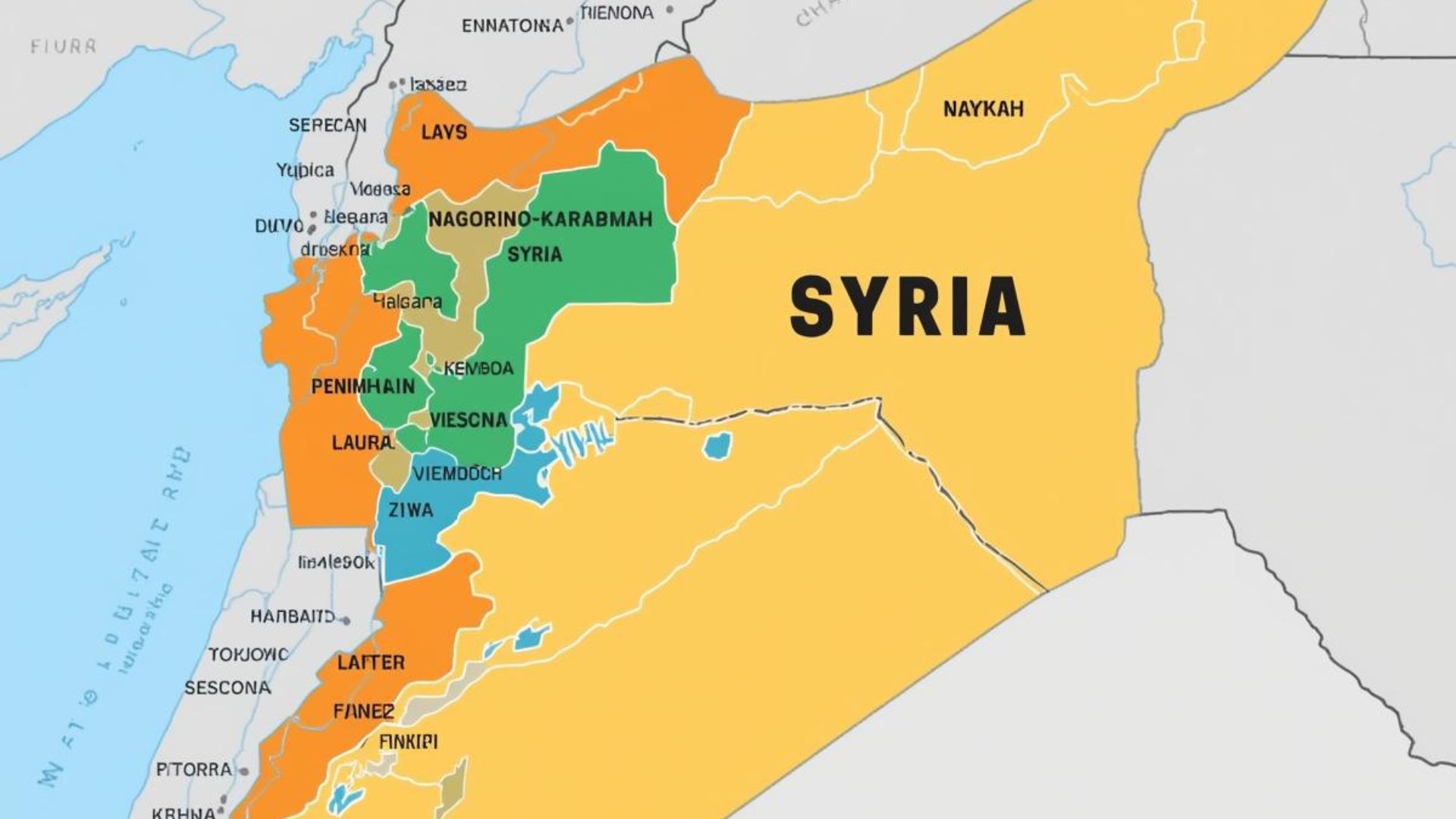
Recent Russian military operations in Syria and in the Nagorno-Karabakh region illustrate the growing importance of population-centric approaches in Russia’s military interventions. Compared to previous military operations conducted by Moscow since 1991, the Syrian campaign launched in 2015 reveals an apparent paradox. Following a first phase mostly characterized by kinetic operations, including the bombing of civilian areas and infrastructures, the second phase of Moscow’s intervention features a central humanitarian dimension. Such dimension also lies at the very heart of the Russian peacekeeping mission deployed in the Nagorno-Karabakh region since November 2020. These developments, that fit in the pursuit of a “winning hearts and minds strategy”, echo a rising awareness within the Russian military science towards the role of civilian populations in armed conflicts.
INTRODUCTION
Following the agreement on a ceasefire in Nagorno-Karabakh signed in November 2020 between Yerevan and Baku, Moscow decided to deploy a 2,000-strong peacekeeping contingent in the region. Over the past three decades, leading figures within Russian military science have highlighted the growing importance of population-centric approaches in military operations. To many extents, the Russian military contingent in the Nagorno-Karabakh region epitomizes these theoretical considerations, as much as it draws upon the incorporation of the lessons learned in Syria. The Russian Military Contingent is mostly composed of soldiers from the 15th Separate Motor Rifle Brigade, which was created in 2005 and is so far the only brigade exclusively in charge of peacekeeping operations. Furthemore it also includes battalions from the Military Police, established in 2011, that gained remarkable skills in the field of peacekeeping and humanitarian operations during Moscow’s military campaign in Syria. It operates in close coordination with an ad hoc Interagency Response Center, a civilian structure set up in November 2020 by Presidential Federal Decree that acts under the leadership of the Russian Defense Ministry. This paper argues that the development of population-centric approaches in Russia’s military interventions in Syria and in the Nagorno-Karabakh region, – approaches which partly draw from the lessons of Soviet intervention in Afghanistan –, is a striking illustration of the recent evolutions witnessed in Russian warfare.
RUSSIA AND PEACEKEEPING OPERATIONS: AN OVERVIEW
Former Soviet Eurasia as main theater of Russian peacekeeping operations
Starting from the early 1990’s, Moscow has initiated and led several peacekeeping operations in former Soviet Eurasia. Through those operations, Russia has not only maintained, but also strengthened its military presence in various newly independent states. The peacekeeping operation in Transnistria ranks among the first operations of that kind. It was established in July 1992 after the ceasefire agreement signed by then Russian and Moldovan Presidents, Boris Yeltsin and Mircea Snegur, putting an end to the conflict between Transnistrian separatists and Moldovan armed and police forces. (x)
The agreement laid out plans for the creation of a peacekeeping operation under a trilateral military command that would include up to 3,100 Russian servicemen, and up to 1,200 Moldovan and Transnistrian servicemen. However, its size was later reduced to three (Moldovan, Russian, Transnsitrian) 500-strong battalions. Contrary to trends observed in other unresolved conflicts, the overall size of the Russian contingent deployed in Transnistria has been decreasing and currently sits at a total estimate of 1,500 soldiers. The Operational Group of Russian Forces (OGRF), established in 1995 by the 313/1/343B directive of the Russian general staff, is under the authority of the Central Military district – one of the five military districts of the Russian Federation – and comprises separate maneuver brigades, an anti-aircraft missile regiment, an independent regiment and an air group. As of today, about 400 Russian peacekeepers participate in the Joint Control Commission, while soldiers from the OGRF are mostly in charge of safeguarding the Soviet-era ammunition depot of Colbasna.
At the same time, Moscow initiated another peacekeeping mission in Tajikistan following the civil war that unfolded in 1992. This mission took the form of a Collective Peacekeeping Force (CPKF), which was created as a result of a decision adopted in September 1993 by the Council of Heads of States of the Commonwealth of Independant States (CIS). (x) Although this new peacekeeping operation was meant to be multinational, it ended up being mostly Russian. Based on the already existing 201th Rifle Division stationned in Tajikistan, the CIS CPKF in Tajikistan was staffed with 25,000 Russian soldiers after its creation, and included a Kazakh, a Kyrgyz and an Uzbek battalion. This mission was officially brought to an end in June 2000, following a decision adopted by the Council of the Heads of States of the CIS. (x) The same year, the United Nations Mission of Observers in Tajikistan was terminated.
In addition to Moldova and Tajikistan, Russia has also deployed peacekeeping missions in Georgia in the early 1990’s following the adoption of ceasefires similar to the “Transnistrian template”, i.e. between Georgian central authorities and separatist entities backed by Moscow. Officially established by the CIS in July 1992, the South Ossetia Joint Peacekeeping Forces (JPKF) was staffed with about 1,500 servicemen. For its part, the CIS Peacekeeping Force in Abkhazia-Georgia (CISPKF) was set up in June 1994 and staffed with about 2,500 servicemen. Again, these two missions were de facto led by Moscow and composed almost-exclusively of Russian personnel. The presence of the CISPKF and the JPKF did contribute, until August 2008, to the respect of the ceasefire between Tbilisi, Sukhumi and Tskhinvali. However, they largely failed to meet their assigned objectives. As a matter of fact, the CISPKF and the JPKF did not prevent the resumption of hostilities in August 2008. What is more, one of the CISPKF’s main goals – to ensure the return of the 300,000 Georgian IDP to their homes located in the Abkhazian region –, was not met. Such failures largely stem from Russia’s biased approach to peacekeeping in these regions. Like in Transnistria, Moscow had clearly backed one of the conflicting sides. Similarly, those operations served as a facade under the guise of peacekeeping not only to preserve its military presence beyond its borders, but also to prevent Chisinau and Tbilisi from resorting to the use of military force against the separatist entities.
Russia’s participation in UN peacekeeping missions
Moscow has also been providing an important contribution to multinational peacekeeping operations well beyond beyond former Soviet Eurasia, a region where Russia keeps the upper hand in the field of peacekeeping operations. Its participation to UN-led peacekeeping operations actually dates back to 1973, a time when the Soviet Union had sent 36 military observers to the Second United Nations Emergency Force deployed in Sinai following the Yom Kippur War. (x) However, it is only after the collapse of the Soviet Union that Russia became a sizeable contributor to UN-peacekeeping operations, together with the rise in such operations all across the world.
Russia’s increased participation not only to UN-led but also to NATO-led peacekeeping operations throughout the 1990’s fits with the overall shift that occurred between Moscow and the West following 1991. This shift, waned competition and even confrontation in favor of increased cooperation, is reflected in Russia’s first 1993 military doctrine. (x) During this decade, peacekeeping was even considered to be a promising field of cooperation between Russia and NATO. This all took place in light of the positive outcomes (x) offered by Moscow’s participation in NATO peacekeeping operations in Bosnia (IFOR/SFOR) and in Kosovo (KFOR). Russia was the largest non-NATO contributor to both of these missions, with respectively 1,200 and 3,150 troops as of 1999.
Drawing from the lessons to Bosnia, researchers from the Foreign Military Studies Office of the US Army Combined Arms Center and from the Center for Military-Strategic Studies of the Russian General Staff of the Armed Forces suggested in a paper jointly published (x) in 2000 some recommendations on future Russia-US cooperation in the field of peacekeeping operations. In another article published in 2005 by the NATO Defense College, Russian Colonel Yuri Serdyuk suggested the establishment of a NATO-Russia brigade dedicated to joint peacekeeping operations that would be placed under the authority of a NATO-Russia Contingency Command and the NATO-Russia Council. (x)
Even though prospects of concrete cooperation mechanisms between Russia and NATO in the field of peacekeeping have faded away, Russia still contributes to UN peacekeeping operations by being in the top-ten countries in terms of military observers deployed in UN operations. There are currently 72 Russian peacekeepers (x) who participate in nine UN peacekeeping missions: UNIFIL, South Sudan, Central African Republic, Western Sahara, Congo Democratic Republic, Sudan, Kosova, Columbia and Cyprus.
Throughout the 1990’s, Russia sent peacekeeping forces to nearly all the armed conflicts that broke out during the collaps of the Soviet Union with the exception of the Nagorno-Karabakh conflict. In parallel, Moscow also developed its participation in UN-led and NATO-led peacekeeping operations, which was then seen as a promising field of military cooperation between Moscow and the West. Whereas such prospects have not materialized, the concept of peacekeeping has significantly broadened in Moscow’s eyes, as suggested by the Russian military operations in Syria and in the Nagorno-Karabakh region.
THE SYRIAN CAMPAIGN AS A TESTING GROUND FOR POPULATION-CENTRIC APPROACHES IN MILITARY OPERATIONS
Russia’s intervention in Syria represents a move forward in the development and the implementation of population-centric approaches in military operations. Departing from the aforementioned examples, the operation in Syria covers a large spectrum of post-conflict management activities. Such an evolution is in line with the current debates existing within Russian military science on the changing character of war. The bureaucratic approach also contributes to the proper understanding of these developments. Before his appointment in 2012 as Russian Minister of Defense, Sergey Shoygu had already developed a sizable experience in the field of crisis management and humanitarian operations. He had previously been heading the Ministry of Emergency Situations (MES) since 1994, and was followed by about 14 generals and high-officers from the MES upon his arrival at the Defence Ministry. (x)
The first phase of Russia’s military campaign in Syria was mostly consisting in airstrikes against moderate rebel groups as well as Al-Qaeda and Daesh. From early 2016 onwards, Moscow developed a new approach to the conflict. While maintaining its airstrikes, including against civilian areas, at a slower pace, the Russian military command also started focusing on post-conflict management by carrying out peacemaking, peacekeeping, and humanitarian activities. Various ad hoc or newly created structures, such as the Center for the Reconciliation of the Opposing Sides or the Military Police play a chief role in the implementation of this second phase of Moscow’s Syrian campaign.
The Coordination Center for Reconciliation of Opposing Sides
Until 2016, most of Russia’s humanitarian operations in Syria were coordinated by the MES. Its involvement in the Syrian conflict started well before the beginning of Moscow’s military intervention in September 2015. As early as March 2012, a Il-76 of the MES delivered the first batches of humanitarian aid to Syria. Up to 2013, planes sent by the MES to Syria were transporting on their way back Russian nationals and dual citizens fleeing the conflict. According to a report published by the Institute of Oriental Studies of the Russian Academy of Sciences, this was how more than 1,500 people were evacuated from Syria to Russia. (x) The MES was also tasked with coordinating the delivery of humanitarian aid provided by a wide range of non-state actors. This included NGOs with close ties to the Kremlin, such as the Imperial Orthodox Palestine Society, the Akhmat Kadyrov Foundation, or the Committee of Solidarity with the Peoples of Libya and Syria. They all followed a pattern that had already been observed during the active phase of the conflict in Donbass, where “entrepreneurs of influence” such as Konstantin Malofeev played a chief role in the organization of humanitarian aid. (x)
An important development occurred in February 2016 with the management of humanitarian operations shifting from the MES to the Ministry of Defense. During the same month, the Coordination Center for Reconciliation of Opposing Sides (CCROS) was also established. To put things into perspective, this all happened about a month before V. Putin declared that the “mission set for the defence ministry and the armed forces on the whole has been accomplished” and ordered the withdrawal of the “main part” of the Russian military group of forces in Syria. (x) Simultaneously, a core ceasefire agreement was brokered by the US and Russia and endorsed by the UN Security Council. The establishment of this center thus coincides with the beginning of a second-phase for the Russian intervention in Syria.
Initially located at the Hmeimim airbase, the CCROS headquarter was transferred to Damascus in March 2018 with branches in several Syrian cities such as Aleppo, Homs, and Deir Ez Zor. Staffed with about 50 officers, the CCROS is divided into five working groups: analysis and planning group; negotiation group; group for agreements and cooperation with foreign organizations; information support group; group for humanitarian support of the Syrian population. (x) Additionally, it works in close coordination with the National Defense Control Center of the Russian Defense Ministry.
At the operational and tactical level, the CCROS is the main implementer of the peacemaking and peacekeeping process developed since early 2016 by Moscow. This process aimed at facilitating the regime’s advance in opposition held-areas without resorting to kinetic means. Furthermore, it sought to further consolidate the regime’ presence in the Central and Southern part of the country while regrouping rebel groups in the Idlib region, in Northern Syria. Through the CCROS, Moscow has brokered a large number of local ceasefires between the regime and rebel groups or rebel-held localities. In this endeavour, strong Russian involvement into the diplomatic process was mobilized, which – among other things – led to the creation of the Astana negotiation format with Turkey and Iran (December 2016) and to various initiatives such as the Sochi peace conference (January 2018). Members of rebel groups received guarantees that in exchange for joining this process, they would not face prosecution or detention while being provided with secure access to the rebel-held area of Idlib. The establishment of a deal over so-called de-escalation zones (Idlib, Homs, Lattakia, Aleppo, Hama, Eastern Ghouta) (x) was prompted by a call to end all hostilities in these areas with guarantees offered by Russia, Turkey and Iran.
As a result, it further strengthened the role of the CCROS as a peacemaking body promoting the interests of Moscow and its Syrian ally. As of November 2021, the Syrian regime even managed to restore its control over all these de-escalation zones, apart from the Idlib region. Since February 2016, more than 2,500 Syrian localities have been joining the ceasefire process with the Syrian regime through the intermediation of the CCROS.
With the Syrian regime progressively regaining its formerly lost territories, the functions of the CCROS has evolved by shifting from peacemaking and peacekeeping activities between the rebels and the loyalist forces to population-centered activities. In September 2018, the center was rebranded as Centre for Reconciliation of Opposing Sides and Refugee Migration Monitoring in the Syrian Arab Republic. This move fully reflects the integration into the CCROS of the Refugees Reception Center, (x) which was established in July 2018 and placed under the joint authority of the Russian Defense and Foreign Ministries cell, operating from the National Defense Management Center. (x) It is worth mentioning that Moscow has massively publicized its activities aimed at bringing back Syrian refugees. This was done through the publication of articles and the broadcasting of documentaries as well as the organization of public relation events. A good example would be the “International Conference on the return of Syrian refugees”, (x) held in Damascus in November 2020.
The Military Police, an unexpected yet crucial tool for implementing population-centric approaches
Along and in close coordination with the CCROS, the Russian Military Police (MP) is the other main face of the peacekeeping/humanitarian dimension behind the Russian intervention in Syria. Officially created in late 2011, the Russian MP is a direct product of the Russian military reform introduced in 2008 under Anatoli Serdyukov and further developed under current Russian Defense Minister Sergey Shoygu. The MP was not initially meant to be deployed abroad or in overseas operations, but was supposed to address long-standing discipline issues within the armed forces, such as the “dedovshina”, the ill-famed practice of hazing Russian army conscripts, theft and large-scale corruption.
At the beginning of the Russian intervention in Syria, battalions of the MP were deployed in the Lattakie region to safeguard the Hmeimin airbase. They were thus performing missions that were fully in line with the MP original status. Starting from December 2016, i.e. at the beginning of the second phase of the Russian intervention, and in the particular context of the Aleppo battle, the MP battalions started to play a brand new role in the Syrian conflict. At that time, the MP de facto became the main tool of post-conflict management at the hands of the Russian military command. Most interestingly, the evacuation of dozens of thousands of civilians from Aleppo by the Russian military, including the MP, was praised by V. Putin as the “biggest humanitarian action of our time”. (x) This clearly shows that the Russian MP is the main tool used by the Russian military command to implement local ceasefires brokered by the CCROS.
Following the conclusion of a local truce, MP battalions are usually tasked with securing the transfer of fighters in other rebel-held areas. Acting in newly conquered areas, they can either work independently or together with representatives of Syrian armed and security forces. Consequently, they often serve as de facto law enforcement agencies by organizing patrols aiming at preventing criminality and handling law offenders to Syrian authorities. (x) The MP has also become a sort of primary dispatcher of humanitarian assistance to the Syrian population. It operates both in areas that have always been under the control of the Syrian regime, and in areas it recently reconquered. On a practical level, its help entails inter alia the delivery of humanitarian aid (food packages, drinkable water, household items clothes) provided by a wide range of actors including the UN. The MP also carries out the organization of medical assistance. Finally, it can also ensure the repair of water supply and irrigation systems. This people-centric role played by the MP in Syria has received extensive media coverage by various Russian newspapers and TV channels, which confirms the Kremlin’s efforts to promote its humanitarian action in Syria.
Several features characterize the deployment of the MP in Syria. The vast majority of Russian MP battalions involved in these humanitarian operations are staffed with servicemen of Muslims denomination, most of them coming from Russia’s North-Caucasus republics. By choosing to rely on soldiers sharing the same religious beliefs as the majority of the Syrian population, Moscow remains in line with its “winning the hearts and minds strategy”. Indeed, that choice concurs with an approach specifically tailored in accordance with the Syrian population. What is more, some North-Caucasus battalions actually do not belong to the MP. They are linked to the special designation forces (called in Russian spetsnaz) from the Russian military intelligence, the GRU (Glavnoe Razvedyvatel’noe Upravlenie). Disguising GRU forces as MP battalions fits with the implementation of a people-centric approach.
This even resonates with the Russian General Chief of Staff’s description of contemporary warfare provided in its 2013 infamous speech “The value of science is in the foresight”. (x) In his landmark article, V. Guerasimov writes “The open use of forces – often under the guise of peacekeeping and crisis regulation – is resorted to only at a certain stage, primarily for the achievement of final success in the conflict.”
Interestingly, this practice of “ethnic staffing” bears staggering resemblance with the deployment of GRU Muslim battalions in the context of the Soviet intervention in Afghanistan. Staffed with Muslim soldiers from Central Asian Republics, these battalions were predominantly used for peacemaking and peacekeeping purposes during the Soviet intervention. Turning to Muslim battalions, and to other population-centric operations already developed in Afghanistan such as the building of schools and hospitals, (x) are some of the lessons drawn from the Soviet intervention in Afghanistan that have been replicated in Syria. Similarly, the use of the MP for humanitarian purposes in Syria is currently being replicated in the Nagorno-Karabakh region. As a matter of fact, the use of military police on Syrian soil coupled with the implementation of various people-centric actions by various Russian civilians and military agencies have given birth to an important lesson-learning process within the circles of Russian military science.
A lesson learning process
To many extents, Russia’s Syrian campaign is a major milestone in the evolution of Moscow’s military interventions since 1991. On top of being the first military campaign carried out beyond the territory of the former Soviet Union, Moscow’s Syrian campaign is a tell-tale sign of both the modernization of the Russian armed forces initiated after the launching of the 2008 military reform and of the discussions within Russian military science on the evolving character of warfare. Moscow’s intervention in Syria partly epitomizes the concept of “non-contact warfare” coined by Vladimir Slipchenko, a Soviet/Russian general and a prominent figure of Russian military science, during the late nineties and the early 2000’s. As shown by its predominance in today’s conflicts, “non-contact warfare” implies air operations as well as distant, high-precision weapons which were used for the first time by Moscow during the Syrian campaign.
With regard to civilian populations, Moscow’s Syrian campaign reveals the following paradox. The targeting of civilian areas and infrastructures in various provinces, at odds with international humanitarian law, presents features already observed during past Russian military interventions in the North-Caucasus, fir instance the the military strategy applied in Chechnya in 1999 at the beginning of the Second Chechen war. Yet, Moscow’s Syrian campaign also reveals a growing awareness within the mainstream doxa of Russian military science of the role of civilian populations in military operations. Such evolution is based on various sets of motives. Getting the support of the population to achieve military goals was one of the lessons drawn from the Soviet intervention in Afghanistan by Makhmut Gareev former Soviet deputy General Chief of Staff and a central figure of post-Soviet Russian military science, who founded the Academy of Military Science in 1995. Published in 1996, his book My Last War (Afghanistan without Soviet troops) (x) argues that “the political ground is the only thing that really matters to justify a military intervention […] In current conditions, where disinformation and psychological operations aimed at morally weaken soldiers and officers from the opposing side are carried out not only by the adversary, but also by the whole population, it has become difficult to build a military intervention only upon military justifications.”
In a more recent article named “The value of science is in the foresight”, (x) V. Gerasimov states that a central feature of contemporary conflicts is the use of the protest potential offered by a population: “The focus of applied methods of conflict has altered in the direction of the broad use of political, economic, informational, humanitarian, and other non military measures – applied in coordination with the protest potential of the population.” In this article, the Russian General Chief of Staff also formulates some recommendations to further develop the concept of peacekeeping. These recommendations come to fruition in Syria: “One of the forms of the use of military force outside the country is peacekeeping. In addition to traditional tasks, their activity could include more specific tasks such as specialized, humanitarian, rescue, evacuation, sanitation, and other tasks. At present, their classification, essence, and content have not been defined. Moreover, the complex and multifarious tasks of peacekeeping that, possibly, regular troops will have to carry out, presume the creation of a fundamentally new system for preparing them. After all, the task of a peace-keeping force is to disengage conflicting sides, protect and save the civilian population, cooperate in reducing potential violence, and reestablish peaceful life. All this demands academic preparation.”
Sergej Chekinov and Sergej Bogdanov, two retired Russian officers and researchers at the Center for Military-Strategic Studies of the Russian General Staff of the Armed Forces, stressed another key feature of today’s conflicts. According to them, modern conflicts are not just defined by military operations between armed groups of opposing sides. On the contrary, they first and foremost depend on the use of asymmetrical means which results in extending the battlefield onto the “whole territory of the war-torn countries”. (x)
Thus, the implementation by the Russian military command in Syria of people-centered actions through the CCROS and the MP is a way to address the challenges posed by the growing place of civilian population in modern conflicts. It turns out that such schemes have proven successful, in the eyes of the Russian military leadership, in the Syrian context, making it a testing ground in the process. In his landmark article “Headquarters of future wars” (x) published in Voenno promyshlennyj kur’er around June 2018, General Alexander Dvornikov states that some of the greatest military successes in Syria have been achieved through resorting to non-military means. Then Commander of the Russian armed forces in Syria from 2015 to 2016, Bortnikov adds his own comments in the aftermath of the Aleppo battle: “For instance, during the operations of the liberation of Aleppo, the communication process established with the local population has contributed to empty entire neighborhoods without conducting fighting and to evacuate more than 130,000 peaceful citizens. […] Without this communication work, we would not have yielded such successes in Aleppo, in Deir Ez Zor or in the Eastern Ghouta. Contemporary military science shows us that it is necessary to adapt to concrete situations and possible to reach geopolitical and strategic goals without massively resorting to military means but through non-military means and the use of integrated group of forces.”
In a second lesser-known speech given to the Russian Academy of Military Sciences in 2019, (x) V. Gerasimov presents the details encompassed in the so-called Strategy of Limited Actions. Based on the lessons drawn from the intervention in Syria, it pays an important tribute to the people-centric approaches developed by the Russian military command: “The Syrian experience is crucial for the development of strategy. […] The task assigned to the military strategy was the planning and the coordination of joint fighting and non-fighting operations by the Russian group of forces […] during the military intervention in Syria. Progresses have also been made in the field of post-conflict resolution. For the first time, humanitarian operations, a new kind of use of the armed forces has been developed and approved. In Aleppo and in the Western Ghouta, in a short period of time, we had to plan and execute the evacuation of the peaceful population from the theater of operations, while at the same time execute military operations aimed at destroying the terrorists. Directions of the researches currently conducted on the use of armed forces to accomplish tasks to defend our interests beyond our Russian borders are based on the results achieved in Syria.”
Resorting to population-centric approaches to cement the regime’s advances and to showcase a positive image of Russia to the Syrian population are tactics consistent with the instrumentalization process of humanitarian aid developed by Moscow and Damascus. Moscow first managed to develop and implement a hitherto unseen large spectrum of humanitarian actions for the civilian populations living in areas under the control or retaken by the Syrian regime. It then made efforts to prevent international humanitarian assistance from being provided in areas of Syrian soil that were still under the control of the opposition. To do so, Moscow has notably vetoed multiple UNSC resolutions over the past few years. This aimed at reducing the number of border crossing points used by UN agencies to deliver humanitarian aid, progressively phasing out those that were not under the regime’s control. (x) This selective approach to humanitarian assistance confirms that the latter is seen as a tool to achieve political and military goals, rather than a goal per se.
The main features of the Russian peacekeeping mission deployed in the Nagorno-Karabakh region since November 2020 testify in many ways that numerous lessons have been drawn from the Syrian experience. As stated on the eve of the Russian military operation in Syria by Colonel-general Mikhail Mizintsev, current chief of the National Defense Control Center, “There is a strong probability that the experience received in Syria in terms of post-conflict resolution will contribute to restore a peaceful life in this South-Caucasus region”. (x)
THE RUSSIAN PEACEKEEPING OPERATION IN NAGORNO-KARABAKH REGION
The deployment of a Russian peacekeeping mission in the Nagorno-Karabakh region was a long-standing objective of Moscow, which it eventually met in the wake of the “Second Nagorno-Karabakh-War”. In line with Russia’s increasing military footprint in the Eurasian region, the Nagorno-Karabakh mission is another illustration of Moscow’s “co-management of security crisis” with Turkey, as observed elsewhere. Drawing from previous military interventions both in the Eurasian region and in Syria, the Russian military operation in the Nagorno-Karabakh region is engaged in peacekeeping missions between the two conflicting sides as well as in a wide range of humanitarian activities in support of local populations.
Context of deployment
Moscow has long pursued the goal of deploying Russian peacekeepers in the Nagorno-Karabakh region. Over the past fifteen years, Russia has repeatedly seeked to bypass and sideline the already existing Minsk Group. This framework of negotiations between France, the US, and Russia was established after the 1994 ceasefire and submitted its own solution to the conflict. In November 2008, in a context characterized by an already renewed Russian clout on the South Caucasus that followed the Five-Day war with Georgia, Yerevan and Baku, talks brokered by Moscow issued the joint Meiendorf declaration, (x) the first official document endorsed by Armenia and Azerbaijan since 1994 calling for a peaceful resolution of the conflict. In October 2010, Yerevan and Baku reached another agreement (x) brokered by Russia in the Caspian city of Astrakhan, this time focusing on humanitarian issues which included exchanges of war prisoners and the return of remaining soldiers. The year 2012 also saw both the Armenian and Azerbaijani Head of States issue another declaration in Sochi. Although these agreements were all backed by the Minsk Group, they were mostly the results of alternative negotiation schemes initiated by Moscow.
In a context of renewed violence escalation in the Nagorno-Karabakh region starting from 2014, Russia had been increasing its efforts to foster talks between Armenia and Azerbaijan under its umbrella. This led to the so-called “Lavrov plan”, an informal and never publicly recognized (x) framework of negotiation between Moscow, Yerevan and Baku. Its proposals inter alia included sending Russian peacekeepers in the region in exchange of the withdrawing Armenian forces from the seven adjacent territories, while any decision regarding the formal status of Karabakh per se was postponed. Opposing the sending of Russian peacekeepers ended up being the only common denominator between Yerevan and Baku, a move that Russia finally carried out after the 2020 ceasefire.
Yerevan and Baku’s opposition to the deployment of Russian peacekeepers in the Nagorno-Karabakh region was motivated by shared concerns. Not only did such a plan lack clear indications on the final status of the region, but it would also further bolster Moscow’s military presence in the region. This perspective was particularly worrisome for Azerbaijan, which has been the only Eastern European Partnership country preserved from any Russian military presence up until 2020. As a matter of fact, since the 2013 closure of the Russian radar Gabala station, there had not been any Russian military presence in Azerbaijan.
Despite this withdrawal, Russian military presence in the South Caucasus had continuously been on the rise since the late 2000’s, as elsewhere in the wider Eurasian region. Armenia is the backbone of the Russian military build-up in the South Caucasus. Russian military presence in this country dates back to the integration of Armenia into the Russian Empire and has not been called into question after 1991, contrary to many other former Soviet republics. It is a three-fold structure that comprises the Gyumri military base, the Erebuni military airport located on the outskirts of Yerevan, and units of Russian border guard troops of Armenia’s international borders. The 102nd military base in Gyumri was established in 1994, (x) scraping altogether the 127th Motor Rifle Division of the Soviet Army. The lease of the Gyumri base was even extended up to 2044, after the Russian and Armenian Presidents Dmitry Medvedev and Serzh Sargsyan signed an agreement in 2010. This base is currently home to about about 4,000 to 5,000 servicemen, all under the command of the Southern Military District.
The second main infrastructure of the Russian military presence in Armenia is the 3624th Russian air base, located at the Erebuni military airport near Yerevan. Established in 1995, the Erebuni airbase was recently modernized and received several new aircrafts following a bilateral air defense agreement signed in 2015 between Yerevan and Moscow. Until the 2020 Second Karabakh war, units from the Russian border guard troops were patrolling along Armenia’s “international” borders with Iran and Turkey, as written in the terms of a bilateral agreement concluded in 1992. (x) Given the developments that followed ceasefire of the November 2020, including the return under Azerbaijani control of adjacent territories, units from the Russian border guard troops have been deployed. In an unprecedented move, some were also posted along the Tregh and Sigit regions located at the border with Azerbaijan, as indicated by the head of the FSB Alexander Bortnikov. Since then, the deployment of FSB border guards along the Armenian-Azerbaijani border has further expanded, as requested by Yerevan.
Finally, the deployment of a Russian peacekeeping mission in the Nagorno-Karabakh region also takes place in the wider context of “co-management” of security crises with Turkey. Over the past few years, this “co-management” template has been developed elsewhere, namely in Syria, where Moscow has engaged in separate diplomatic talks with Ankara and Teheran (the so-called Astana format) as well as operational cooperation. Instances of operational cooperation include battalions from the Russian MP and Turkish military personnel working together in the northern part of the country. (x) In the Nagorno-Karabakh region, Moscow and Ankara have even set up a joint monitoring center. Staffed with 60 military personnel for each country, the center started operating in February 2021. Unlike the Russian peacekeeping contingent deployed specifically in the Nagorno-Karabakh region, the joint monitoring center is located in the more remote Azerbaijani town of Qiyameddinli. Furthermore, the 60 Turkish soldiers and officers deployed in this center cannot enter the Nagorno-Karabakh region. By setting up a joint center with Turkey, Moscow sought to get Azerbaijan’s greenlight for the deployment of the Russian peacekeeping contingent in the Nagorno-Karabakh region. However, it turns out that this center is not only a far cry from what Ankara seeked initially, but it is also not likely to play a crucial role in the future.
The Russian peacekeeping contingent in Karabakh
The Russian peacekeeping contingent (hereinafter referred to as RMK) is composed of units from the 15th Separate Motorized Rifle Brigade, which is the only brigade within the Russian armed forces in charge of peacekeeping operations. Created in 2005, the 15th Separate Motorized Rifle Brigade is based in Samara and operates under the command of the Central Military district. According to the ceasefire agreement signed on November 10, the RMK includes 1,960 peacekeepers, 90 armoured personnel carriers, and 380 motor vehicles. (x)
In addition to units from the 15th Separate Motorized Rifle Brigade, the Russian operation in the Nagorno-Karabakh region also includes battalions from the MP. (x) As stated by Sergey Rudskoy, chief of the Main Operational Directorate of the General Staff of the Russian Armed Forces, the lessons drawn by the MP in Syria will be used in the Nagorno-Karabakh region. Among their main tasks, they are in charge of patrolling the Lachin corridor, which is the only land strait connecting the Nagorno-Karabakh region to the Armenian territory. They also regularly escort civilian convoys and trucks delivering humanitarian supplies. (x)
Since November 2020, three quite knowledgeable generals in the field of peacekeeping operations have successively commanded the mission. Commander of the RMK from November 2020 to September 2021, General-lieutenant Rustam Mudarov has participated in military operations in Chechnya. From 2016 until 2017, he also served as Russian representative (2016-2017) at the Ukrainian-Russian Joint Centre for Control and Coordination on ceasefire and stabilization on the demarcation line in the Donbas. In 2017, he was appointed military advisor in Syria, where he was awarded the title of Hero of the Russian Federation for his contribution to the reconquering of the city of Deir-Ez-Zor. Prior to the Syrian regime’s victory in September 2017, the city had been ruled by the Islamic State. (x)
His successor, General Mikhail Kosobokov, took part in the Russian military intervention in Georgia in 2008. Between 2015 and 2017, he also was the commander of the 7th Russian military base in Abkhazia, which may well be the reason why his mandate only lasted two weeks. The appointment of a Russian high officer who had previously served in Russia-backed separatist Abkhazia could easily be considered unfriendly by the Azerbaijani side. (x) For its part, General-lieutenant Gennady Anashkin, commander of the RMK since September 25th, has a significant experience both in terms of combat (Chechnya, 2008 Russo-Georgian conflict) and of peacekeeping operations: he oversaw the Russian air-borne troops battalion that participated in the NATO peacekeeping mission in Bosnia-Herzegovina between 1999 and 2000. (x)
Beside its strictly military component, the Russian operation in the Nagorno-Karabakh region also features a remarkable civilian dimension, as exemplified by the Inter-agency center for humanitarian response. Established by a Presidential Decree in November 2020 and located in Stepanakert, it is under the authority of the Defense Ministry. As of today, it is headed by Colonel Igor Sivakov, previously deputy-commander in chief of the Russian Ground Forces. The Inter-Agency staff employs 1,200 agents from various civilian agencies and ministries, such as the FSB, the MES, the Ministry for Foreign Affairs. Its structure is divided into five sub-centers: (i) a center for humanitarian demining; (ii) a center for the reconciliation of the opposing sides; (iii) a center for transport support; (iv) a center for medical support; (v) a center for trade and household support. (x)
With regards to the Inter-Agency Center, the Russian military correspondent Vladislav Shurygin commented that “Russian peacekeepers have accumulated an enormous experience over the past three decades. They took part in various military operations in the former Soviet countries, as well as in Chechnya. It is worth recalling that Russian soldiers have also contributed to peacekeeping missions in various parts of the world. In Syria, over the past recent years, our Centre for the reconciliation of the opposing sides has been functioning very efficiently. A huge amount of experience was developed in this country, despite very difficult conditions.” (x)
The RMK fulfills its peacekeeping duties through two types of missions. It first ensures that the ceasefire holds and facilitates the negotiations on the exchange of prisoners of war between Armenia and Azerbaijan. To prevent hostilities from resuming, Russian peacekeepers have been deployed across the whole Nagorno-Karabakh region in about 30 different observation posts, 12 of which were along the Lachin corridor. Although breaches to the ceasefire in the Nagorno-Karabakh region occur frequently, with the first breach being officially recorded by the Russian side in December 2020, they have not caused large-scale confrontations. Since November 2020, most of the deadliest skirmishes have not happened on the fringes of the Nagorno-Karabakh region. On the contrary, they have taken place in different locations along the border between Armenia and Azerbaijan, especially in the Armenian regions of Syunik and Geghakunik.
Russia also facilitates the negotiations between Yerevan and Baku regarding the exchange of prisoners of war (hereinafter POWs), first initiated in December 2020. (x) Albeit its important results, this process, just like the ceasefire, remains in a precarious state. Despite the liberation of about one hundred POWs from each side, Baku has been keeping Armenian servicemen in custody. This caused anger in Armenia, as all Azerbaijani POWs have since been released. However, Baku argued that Armenian servicemen were not covered by the Moscow-brokered agreement since they were captured after the conclusion of the ceasefire. Besides, allegations of bad treatments against Armenian POWs in custody further fragilized the process. (x) The RMK has also been providing assistance to both sides in searching, identifying and returning the remains of about 2,000 dead soldiers.
Three main sets of activities structure the humanitarian dimension of the Russian operation in Karabakh. Those activities not only include ensuring the safe homecoming of war refugees, but also guaranteeing the everyday life of local populations and providing them with humanitarian assistance. Shortly after the deployment of the RMK, Moscow organized the return from Armenia to Nagorno-Karabakh of refugees who had previously fled the region. To do so, Russian peacekeepers and the MP were tasked to organize and supervise the convoys that would relocate about 52,000 refugees back to Nagorno-Karabakh, as of November 2021. Furthermore, the RMK is also engaged in various activities aimed at providing what Olesya Vartanian (International Crisis Group) calls “a renewed sense of security”. This includes securing the Lachin corridor through the presence of seven checkpoints along the land strait, as well as the organization of daily patrol along the new frontlines. Other activities involve a multifaceted assistance to residents living in those areas, such as “escorting them safely to their farmlands, guarding them while they fix irrigation channels and roads next to the trenches or even retrieving cattle who have gone missing”.
Moscow has also engaged in demining activities, which are carried out by soldiers from the International Demining Center of the Russian Ministry of Defense, (x) who do not formally belong to the RMK. Since its creation in 2014, (x) the International Mine Action Centre won its spurs in Syria where it supervised the mine clearing operations in different archeological sites, such as the ancient city of Palmyra. (x) A year after the ceasefire, about 30% of the mined areas had been cleared. (x)
The RMK is also conducting a wide-range of humanitarian related activities aimed at guaranteeing long term stability in the Nagorno-Karabakh. Those activities follow the model already implemented in Syria through the delivery of humanitarian aid collected by charity organizations in Russia. Other instances include the provision of medical assistance, contributions to renovating war-damaged buildings, as well as heating and water supply systems.
Syrian-like population-centric approach motivated by political and military objectives
As argued earlier, the development by the Russian command in Syria of population-centric approaches was motivated by military and political considerations. Among them was the aim to facilitate the advance of the Syrian regime and to consolidate its grip in reconquired areas. In the same manner, the scope of the peacekeeping/humanitarian operation deployed by Moscow in the Nagorno-Karabakh region has more to do with Russia’s national interests in the region than with preparing the ground for a long-lasting political resolution of the conflict, which is not even mentioned in the November 10th ceasefire agreement.
Indeed, as seen earlier, the deployment of a peacekeeping mission was a long-standing objective of Moscow. Until 2020, Nagorno-Karabakh was the only unresolved conflict in Eurasia, with no Russian military presence. It has now joined the club. In order to justify its military presence in the long run, Moscow first sought to guarantee that the majority of refugees would return home. The more people live in the Nagorno-Karabakh region, the more reasons for Moscow to extend the mandate of the RMK in 2025. As of today, by engaging in various activities directed toward the civilian populations, Moscow seeks to develop a long-lasting support among the latter to become and remain a first-hand, field actor, which it was not before 2020.
Here, it seems useful to stress that along population-centric actions, the deployment of the RMK has been accompanied with various initiatives aimed at developing Russia-friendly feelings among the local population. Those initiatives involve for instance the development of Russian language courses, the restoration of Soviet-era memorials (x) and even the inauguration in the vicinity of the main base of the RMK, close to the airport of Stepanakert of a Russian hall of fame decorated with 10 busts of prominent Russian historical figures.
CONCLUSION
Throughout its military interventions in Syria and in the Nagorno-Karabakh region Moscow has developed new forms of post-conflict management partly based on civil and military operations. Seen as a success by the Russian military authorities, the experience of post-conflict management in Syria, led by the Defence Ministry, has been duplicated and further developed in the Nagorno-Karabakh region. As a result, it prompted the set up of a peacekeeping operation under the Defence Ministry authority that would involve both a military and a civilian dimension. More importantly, military operations in Syria and in the Nagorno-Karabakh region fully epitomize the discussions about the changing character of war that have been blossoming within Russian military science over the past three decades. Given this, military operations in Syria and in the Nagorno-Karabakh region may well be considered a pattern applicable to future Russian military interventions, with an ever-growing awareness in favor of a population-centric dimension.
Dr. Emmanuel Dreyfus is Russia Research Fellow at the Institute for Strategic Research (IRSEM). He pursued his doctoral research on US influences on Russia’s 2008 military reform (Special Operation Forces, Military Police, Private Military Companies). His current research focuses on Russia military reforms and Russian foreign and defense policy. Emmanuel Dreyfus was Visiting Fellow (2018-2020) at the Institute for Russian, European and Eurasian Studies at the Elliot School of International Affairs, George Washington University and at the Kennan Institute, Wilson Center (2019), Washington DC. Before joining IRSEM, Emmanuel Dreyfus worked for several years in France and abroad for the private sector and the government on defense and security issues in Russia and Eurasia.