IRSEM is divided into three departments: a management team, a research team, and a research support team.
The management team is composed of a director, assisted by a deputy director, who replaces him in his absence, a scientific director, responsible for research (in particular the annual scientific program and the scientific validation of publications), and a secretary general, responsible for the administrative and budgetary management of the Institute.


The IRSEM research team is divided into six geographical or thematic areas.
The Defense and Society domain focuses on issues specific to the military world and the societal changes it faces. The main areas of interest are: the relationship between civil society and the armed forces, the sociology of military personnel, the integration of women in armed conflicts, relations between political power and military institutions, new forms of engagement, the socialization and integration of young people, and the rise of radicalism. In addition to its research activities, the “Defense and Society” domain also aims to promote defense issues within civil society, among all its actors, including in the academic field.
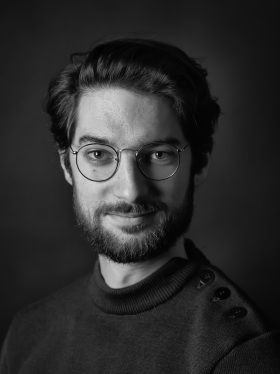

The Intelligence, Anticipation, and Influence Strategies domain conducts research on the strategic function of “knowledge and anticipation” highlighted in the 2008 Defense White Paper. The primary aim of this program is to contribute to a more detailed understanding of intelligence in its broadest sense (i.e., as information, process, activity, and organization). it also aims to contribute to the consolidation of analytical approaches, particularly in the field of anticipation; finally, it works on the various dimensions of so-called “hybrid” warfare, in particular the influence and manipulation of information. The field also contributes to strengthening the hybrid nature of IRSEM by disseminating notes that lie at the intersection of academic research and open-source intelligence analysis.

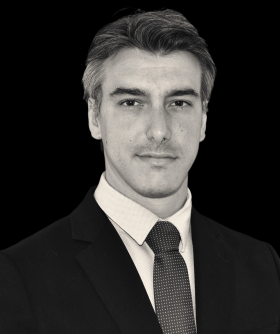


The Europe, Transatlantic Area, Russia domain analyzes strategic and geopolitical developments in North America, Europe, Russia, and the Eurasian area, which includes Eastern Europe (Moldova, Ukraine, Belarus), the South Caucasus (Armenia, Georgia, Azerbaijan), and the five countries of Central Asia. It focuses in particular on the competition between powers in this area, developments in the role of NATO, maritime security, and strategies of influence.

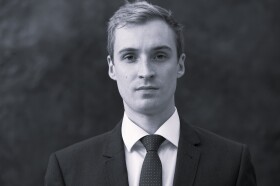

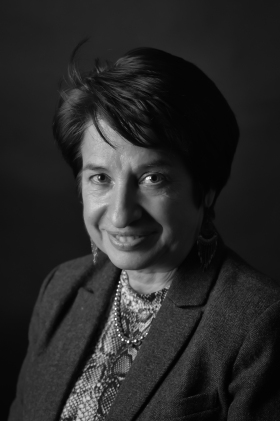
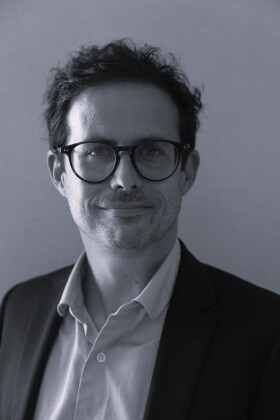


The Africa-Asia-Middle East domain analyses strategic and geopolitical developments in Africa, Asia, and the Middle East, focusing on the following cross-cutting themes: political authoritarianism and economic liberalization in emerging countries; the role and place of armies and security apparatuses in the functioning of states and societies; strategic and regional security issues; ideologies, nationalism and the reshaping of regional inter-state balances.
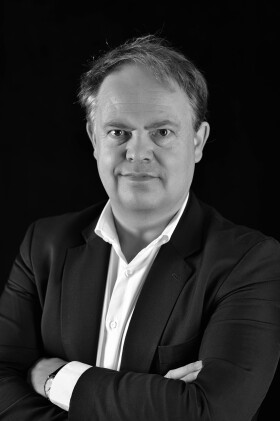
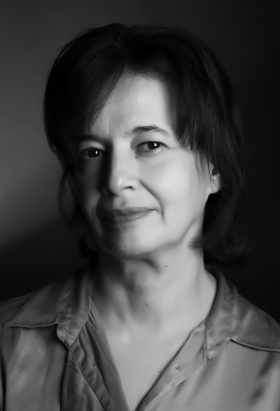
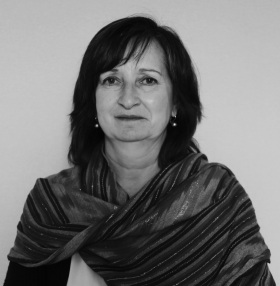


The Armament and Defense Economics domain focuses on economic issues related to defense and, more broadly, addresses strategic issues arising from technological developments, issues of access to natural resources, and environmental challenges. Research in this field is based on a multidisciplinary approach, both qualitative and quantitative, drawing on a variety of scientific fields: defense economics, history of technology, and geography.



The Strategies, Norms and Doctrines domain focuses on the study of contemporary armed conflicts, particularly their political, military, legal, and philosophical aspects. The research topics developed in the publications and events focus on international law, particularly from the perspective of technological issues (cyber, artificial intelligence, robotics), deterrence doctrines, arms control with the fight against proliferation, and nuclear disarmament. Changes in international relations and their implications for power and security, as well as the philosophy of war and peace, are also part of the field of study.

The research support team is led by the Secretary General and is organized into two divisions:
Administrative support (secretarial, human resources, accounting);
Head of Support: contact@irsem.fr
Executive Secretariat: secretariat-direction@irsem.fr
Human Resources: recrutement@irsem.fr
Research promotion (publications, communication, doctoral and postdoctoral grants, multimedia).
Communication and press relations: communication@irsem.fr
Publishing: contact.publications@irsem.fr