Facing a pandemic: african armies and the fight against Covid-19
Télécharger la version pdf
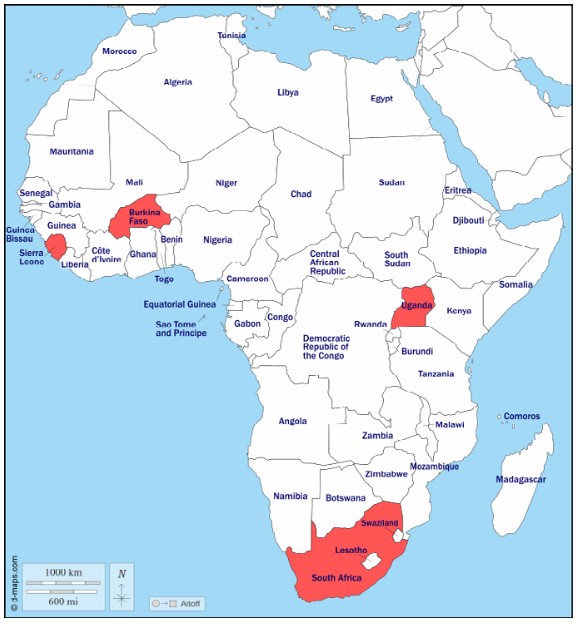
The COVID-19 pandemic saw armed forces play an important role in the implementation of policies aimed at fighting the spread of the virus, or at alleviating the side effects of COVID-related restrictions. In many countries, they have engaged in humanitarian, policing or medical interventions, sometimes in rupture with their traditional tasks, and sometimes in continuity as was the case for African states that had been affected by Ebola. This report studies the domestic deployment of militaries to manage the pandemic on the African continent and analyzes the COVID-19 crisis as a case study of continuity and change: both within civil-military relations more broadly and within the armed forces in particular. It report focuses on four cases: Sierra Leone by Maggie Dwyer and Osman Gbla; Burkina Faso by Aboubacar Maïga; Uganda by Moses Khisa; and South Africa by Lindy Heinecken. In those four cases, military engagement in the pandemic go from being out of the ordinary, to cases where it followed previously established norms. These case studies provide explanations for these variations, highlighting the importance of history and context in shaping civil-military relationships and the military’s place within the broader security apparatus. It also points to the short and long term impact of the pandemic on the armed forces’ professional identity, and to the vulnerabilities they experienced due to their living conditions and their broad range of tasks ?
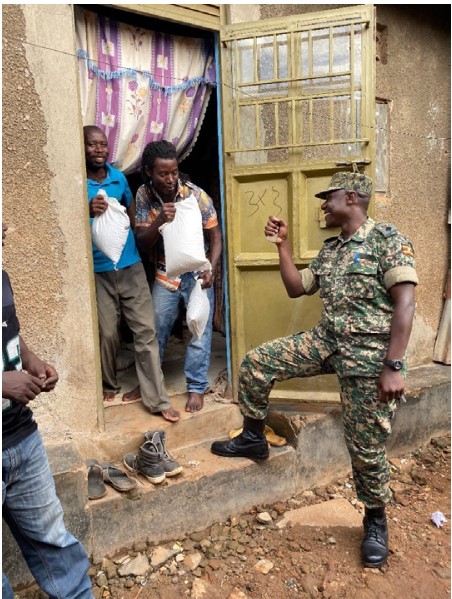
A soldier from the Uganda People’s Defence Force distributes food in one of Kampala’s shantytowns in April 2020
Source: UPDF Spokesperson Facebook Page.
Introduction
Deploying the Military to Manage a Public Health Crisis, between Business as Usual and New Practices
Anne-Laure Mahé and Nina Wilén
Published on 23 April 2020, on the official Facebook Page of the Uganda People’s Defence Force, the picture opposite was shot during a relief food distribution in Kampala’s shantytowns. The “exercise aimed at supporting the most vulnerable people affected by the partial lockdown due to COVID-19”, as the text describing the picture in the Facebook post explains.(x) As such, it depicts what has become a common scene in many countries during the current pandemic: the armed forces engaging in humanitarian, policing or medical interventions, implementing policies aimed at fighting the spread of the virus, or at alleviating the side effects of COVID-related restrictions.
The armed forces have been working alongside medical professionals and police forces in many countries on the African continent and beyond: Latin America,(x) Asia(x) and Europe.(x) In part, this reflects a global trend of securitization of the pandemic, meaning that it has been discursively framed as a security issue, a process that makes it both logical and easier to mobilize the institutions that are traditionally in charge of security issues, such as the armed forces. The securitization of diseases is nothing new: similar processes were observed during both Avian flu(x) and Ebola(x) outbreaks. In the latter case, the United Nations Security Council declared the 2014 outbreak a “threat to international peace and security”.(x) Norms and standards for this type of military intervention were nevertheless already established in 1994 in the “Oslo Guidelines on the use of foreign military and civil defence assets in disaster relief”, developed by the United Nations (UN) (with the word “foreign” being added in 2007(x)). However, in contrast with the recent Ebola outbreak, the current pandemic has seen few examples of foreign military interventions. Instead, the “war” against the virus is led first and foremost at the domestic level by national militaries. Here, policies implemented in reaction to the crisis contribute to further blur the boundaries between internal and external security, and to expand the range of tasks traditionally attributed to the armed forces.(x)
The goal of this report is to empirically study the domestic deployment of militaries to manage the pandemic on the African continent. In this perspective, the COVID-19 crisis is a case study of continuity and change: both within civil-military relations more broadly and within the armed forces in particular. The report focuses on four cases: Sierra Leone by Maggie Dwyer and Osman Gbla; Burkina Faso by Aboubacar Maïga; Uganda by Moses Khisa; and South Africa by Lindy Heinecken. The chapters draw on recent field research conducted by the authors, including interviews and observations, as well as secondary sources such as media reports and grey material.
The individual country-case analyses enable us to look at variations in practices, in perceptions by the population, and in conceptualization: from cases where the military’s intervention is exceptional and out of the ordinary, to cases where it follows previously established norms. These case studies provide explanations for these variations, highlighting the importance of history and context in shaping civil-military relationships and the military’s place within the broader security apparatus.
Military Involvement in a Health crisis: Business as Usual?
That armies take on new or unfamiliar roles in different circumstances is not something new or unique for African states. Military support to civilian authorities during epidemics or health crises is one of the core tasks cited in most national security documents or mission statements.(x) Yet, it remains a somewhat controversial task given that it is not considered as part of the military’s “core business”. This being said, it draws on historical experience from the military’s role in earlier health crises, dating back to the periodic pandemic influenza between 1500 and 1900, and later the “Spanish Flu” in World War I, amongst others. With epidemics such as Ebola and SARS, recent years have again seen calls for armed forces to play a greater role in planning for, and responding to, health crises.(x)
In the most recent pandemic – COVID-19 – militaries across the world have been mobilized primarily for three types of tasks: logistic support; medical capacity and care duties; and finally, more traditional security related tasks, such as maintenance of order and patrolling.(x) The division of these three tasks has varied between countries, but overall, logistical support such as deploying and setting up (temporary) medical infrastructures; transporting patients and distributing medical equipment, appear to be the most common tasks performed by the military.(x) In some cases, the armed forces have also developed equipment and products related to the fight against COVID-19. For instance, in the second chapter, Aboubacar Maïga describes how the Burkinabe armed forces produced face masks and hydroalcoholic gel within their own facilities. In several states, including our four cases, the armed forces have also been used for more traditional security-related tasks, such as increasing border security, control lockdown measures, and the protection of strategic locations.
Although the use of the military for these types of tasks has been most common in Latin America, states in both Africa and Europe have also employed their security forces for such work. In some cases, this has led to the abuse of power, such as in El Salvador, where President Nayib Bukele ordered the police and the military to “be tougher with people violating the quarantine”. The advice was followed strictly by Salvadorian security forces according to reports documenting arbitrary detentions and excessive use of force.(x) Yet, some states in Africa also saw security forces occasionally using excessive measures to ensure the respect of restrictions, as Moses Khisa and Lindy Heinecken describe in chapters 3 and 4.
For the African states that had already been severely affected by Ebola, the military’s involvement in a health crisis is nothing new. Liberia and Sierra Leone, two states that were particularly badly affected by Ebola, were forced to develop extensive civil-military cooperation, not only with their domestic armed forces, but also with external militaries, which were deployed to contain the crisis.(x) As Maggie Dwyer and Osman Gbla explain in the first chapter, the Republic of Sierra Leone Armed Forces’ (RSLAF) extensive, and largely positive, involvement in handling the Ebola crisis was a key reason for its rapid deployment to support civilian authorities in the current COVID-19 pandemic. The military’s implication in the Ebola crisis in West Africa was somewhat surprisingly called for by the Médecins Sans Frontières’ president at the time, Joanne Liu, who asked that “states immediately deploy civilian and military assets with expertise in biohazard containment.”(x) Surprising, as humanitarian NGOs often prefer to address crises without military involvement.
The recent pandemic has illustrated the military’s versatility and the limits of civilian authorities’ capabilities and capacities to handle crises. Yet, while the military has proven to be a force to count on for these types of crises, there are also more critical questions that need to be asked with regard to the military’s suitability and preparedness for the variety of tasks assigned to it during the current pandemic.(x) The Italian military, for example, was suddenly charged with driving truckloads of diseased COVID victims to mortuaries, a task that raised questions regarding possible post-traumatic stress disorders for unprepared soldiers.(x) At the same time, as Maggie Dwyer and Osman Gbla explain, the Sierra Leonean military realized that, in spite of their previous experience with Ebola, they needed to change their approach from a robust to a softer approach in their work with civilians, as the character of the disease, with less visible symptoms and a significantly lower mortality rate, prompted a high degree of denialism of COVID-19 among the population. Hence, even in countries where there are precedents of military intervention in health management, there have still been instances of going beyond “business as usual” to develop new approaches.
The latter examples also raise broader questions regarding what type of security issues the armed forces should be tasked with. The last few decades’ debates on human security have generated a much wider perspective on different types of security, yet not offered as much reflection regarding which actors should be tasked with ensuring the “softer” security. Instead, the mandates for the armed forces have been stretched to encompass a broad range of duties, some of which evoke ethical questions in addition to more pragmatic, training-related aspects.(x)
A Case Study in Militarism and Militarization Processes
From a critical perspective, the involvement of the military in managing the COVID-19 pandemic can be interpreted as a case study for the prevalence of militarism and militarization processes in contemporary Africa and beyond. While the definitions of these concepts are contested, militarism is broadly understood as a set of “beliefs supportive of the efficacy and value of military influence, solutions and perpetual preparation for war”,(x) while militarization “refers to the qualitative and quantitative expansion of those beliefs, military practices, modes of social organization and discourses”.(x) Since the 1990s, the merger of development and security into the security-development nexus has contributed to the expansion of militarism in Africa, with military institutions and values invoked to advance humanitarian and developmental ends.(x) Armed forces have hence become increasingly legitimate actors within social, political, and economic realms that were previously considered outside of their purview. From this perspective, the military’s various roles during the pandemic follow a broader trend of increased militarization of issues that traditionally have been within the scope of development actors. In chapter 3, Moses Khisa provides an example of this, describing the involvement of the Uganda People’s Defence Force in the distribution of food relief supplies, a task that traditionally falls under the realm of humanitarian efforts.
These practices raise questions, as noted above, one of which relates to the fact that the armed forces are not necessarily trained to deal with some of their new missions, nor with the affected populations. They may therefore use tools developed to deal with external security threats in a domestic setting. This might for instance lead to the use of excessive violence when fulfilling law enforcement missions that are usually the purview of police forces, such as the implementation of lockdowns. Excessive use of force has for example been a problem in South Africa, as Lindy Heinecken describes in chapter 4. There, the military has been accused of gross violations of human rights, especially in black townships, reactivating the legacy of military brutality of the Apartheid era.
Many African states have complicated civil-military relations, due on the one hand to colonial legacies whereby the armed forces have been politicized to oppress domestic political opponents and, on the other hand, to a lack of professionalization, both in terms of a military ethos and capabilities.(x) Yet, the use of the military to assist in the COVID-19 response is not necessarily problematic to the same extent in all cases. In Sierra Leone, Maggie Dwyer and Osman Gbla argue that the police, having not benefited from the post-war security reforms as much as the military, are perceived as less professional than the military institution. In Burkina Faso too, Aboubacar Maïga explains that reactions to the army’s involvement have been mostly positive, reinforcing trust in the institution.
In addition to influencing civil-military relations more broadly, militarization processes also impact gender relations in different ways. Research has shown that militarization, rather than improving security, might expose civilians, especially women, to more abuse.(x) This is linked to the fact that military institutions often promote a highly militarized masculinity, which is constructed in opposition to, and hierarchically superior to, different types of femininities, thus reinforcing a gender hierarchy detrimental to women’s power.(x) One of the consequences of the militarization of COVID-19 has been the use of militarist language. President Macron told the French population that: “We are at war”, drawing on militarist metaphors to fight the virus.(x) Women, representing the frontline workers globally in the fight against COVID-19 as caregivers both in the public and the private sphere, have therefore somewhat paradoxically been included in the militarist discourse as “corona warriors”.(x) Yet, these “warriors” have suffered disproportionately from the impact of the virus and the subsequent restrictions. Lockdowns have increased domestic violence against women worldwide, while the additional burden related to caregiving – to both children and the elderly – has to a large extent fallen on women, given existing gender roles.(x) In many African countries, women, who are overrepresented in the informal economy, have also been disproportionately affected by lockdowns, reducing their economic power and thereby increasing their vulnerability to different types of violence, including the militarized law enforcement.
Conclusion
The COVID-19 pandemic can, in itself, be conceptualized as a case study of the armed forces’ evolving roles and related professional identities, as well as of their relationships with other security forces, and of civil-military relations more broadly. Yet, there are significant variations between states, as the following case studies demonstrate. Focusing on African states, these articles underline both continuity and change as well as divergences and similarities in the challenges that armed forces across the world face when tasked with new or uncommon tasks.
Given the timeliness of the study, and the current difficulties in conducting fieldwork, the following case studies are important contributions, not only to the literature on civil-military relations and militaries in Africa more generally, but also to the emerging research on COVID-19 and its consequences. Future research on these topics can further develop our understanding of armies as heterogeneous and non-monolithic institutions, especially by focusing on the vulnerability that many armed forces have experienced during the pandemic due to their living conditions and their broad range of tasks.
Republic of Sierra Leone Armed Forces and the COVID-19 Response: A Growing Domestic Focus for the Army
Maggie Dwyer and Osman Gbla
Abstract
During the COVID-19 pandemic the Republic of Sierra Leone Armed Forces (RSLAF) has been heavily involved in the country’s response efforts and taken on a large number of roles. This article explores how the army became the “go-to” organization during the pandemic by situating it within the post-war security reform efforts and past experiences with Ebola. It will show that RSLAF’s actions during COVID-19 is not an anomaly but rather part of a pattern of the army’s involvement in domestic emergency response efforts. These missions demonstrate the flexibility and broad capabilities of the armed forces and represent a dramatic reputation shift. Yet, it also raises questions about the implications of an increasingly domestically oriented military and suggests growing imbalances between the armed forces and other security forces such as the police.
Introduction
During the COVID-19 pandemic, the Republic of Sierra Leone Armed Forces (RSLAF) has been heavily involved from the beginning of the country’s response efforts and taken on an increasingly large number of roles. As a Brigadier General involved in leading the response explained, “military personnel are engaged in almost all the activities of the different pillars established for the response to COVID-19 at the national, district and chiefdom levels.”(x) This article will explore how the army became the “go-to” organization for the COVID-19 epidemic by situating it within the post-war security reform efforts and past experiences with Ebola. RSLAF’s heavy involvement in COVID-19 is not an anomaly but rather part of a pattern of the army’s increasing involvement in domestic emergency response efforts, including the cholera outbreak (2012), Ebola (2014-2016), flooding/mudslides (2017), and COVID-19 (2020-present). On the one hand, these missions demonstrate the flexibility and broad capabilities of the armed forces and represent a dramatic shift from the abusive reputation they had during the civil war. On the other hand though, it raises questions about the longer-term implications of an increasingly domestically oriented military and suggests growing imbalances between the armed forces and other security forces such as the police.
Research for this article involved interviews with leading military members of the COVID-19 response efforts in and around Freetown in August 2020.(x) It builds on a wider research project by the authors related to the RSLAF, which has included multiple rounds of interviews over many years.(x)
The Army’s Role in the COVID-19 Response
RSLAF’s involvement in the COVID-19 response can be seen through the roles of its most senior General Officers all the way down to rank and file soldiers on the frontlines of the efforts. Starting at the senior ranks, many active duty and retired military officers hold top decision-making positions within the national response efforts. Most notably, the Minister of Defence, Kellie Conteh, was assigned as the Interim Coordinator of the National COVID Emergency Response Centre (NaCOVERC), which leads and coordinates the national response efforts. Many other pillars of the NaCOVERC structure are also led by military personnel including Operations, Situation Room, Quarantine, and Logistics.(x)
On the more technical side, RSLAF hosts one of the main COVID-19 treatment centres in the country, staffed by both military and civilian health professionals. The country’s military hospital, called 34 Military Hospital, was responsible for treating the country’s first case (on 31 March 2020) and subsequently established Sierra Leone’s first COVID-19 treatment centre within its facilities.(x) The central role that 34 Military Hospital has played in the COVID-19 response is related to the longstanding, strong reputation of the facility and its doctors, many of whom were trained abroad as part of ongoing military exchange programmes with partner countries. Following the centre at 34 Military Hospital, two other COVID-19 community centres were set up within military bases. These include treatment facilities but are also meant to provide a space for self-isolation for members of informal settlements whose living environment makes self-isolation especially challenging.(x) While these centres are located on military facilities, they are intended to serve both civilians and military personnel. Additionally, when civilian medical staff went on strike in July 2020, patients from other civilian hospitals, including the Infectious Disease Unit at Connaught Hospital, were transferred to military-run facilities.(x)
Beyond the area of treatment, RSLAF has also been involved in quarantine measures and enforcing other government policies related to the virus. In Sierra Leone, those with COVID-19 are required to quarantine in their homes for two weeks. The military has played a large role in enforcing quarantines and assisting those who are not allowed to leave their homes.(x) For example, along with police and other members of the case management teams, they deliver food and water to quarantined homes, collect/transport testing samples and deliver test results. Soldiers have also been involved in the Compliance Enforcement Mechanism System (CEMS), which has involved teams that enforce preventative measures in public spaces such the wearing of face masks and other government issued orders.(x)
Finally, the armed forces played what could be considered more traditional military roles through the enforcement of national border control points. A concern that an increase in cross border movement could lead to higher rates of COVID-19 in Sierra Leone led to the military deploying additional troops to 51 border chiefdoms, which included 144 border crossing points. During a period of restricted internal domestic movement, the armed forces also enforced inter-district movement restrictions.(x)
COVID-19 Response in Relation to Security Reform and the Evolving Nature of RSLAF
The expansive role that RSLAF has played during the COVID-19 pandemic can be linked to security reform efforts that have dramatically shifted the capabilities, focus, and image of the forces from earlier decades. When Sierra Leone emerged from its eleven-year civil war, it was clear there was a dire need to reform the country’s security sector. The army in particular was undisciplined, operationally ineffective, and seen as abusive by the civilian population. Even before the civil war, the military had gained a poor reputation due to a series of coups and counter-coups.(x) Therefore, “a pressing requirement for post-war reconstruction was to transform the army into a stabilizing force that could protect the country’s territorial integrity and, most importantly, to establish a clear and meaningful role for it outside of politics.”(x) Reform of the armed forces was one element of a much wider state-building effort following the war.(x)
The army reform involved an extensive (re)training, advisory, and institution-building programme led primarily by the UK through its International Military Advisory and Training Team (IMATT). IMATT was actively engaged in Sierra Leone’s defence sector from 2000 to 2013, with over 150 personnel in country at its peak.(x) Although challenges remain, overall the long-term commitment to rebuild the Sierra Leone army has largely been viewed as successful in developing a more effective, apolitical, and professional force.
The reform process involved more than technical training of troops; it also restructured the defence sector to bring the forces under democratic civilian control. Previously, the “Sierra Leone Ministry of Defence had been a centrist and bureaucratic organization controlled by the military, a state of affairs that led to corruption, lack of professionalism and the absence of inventiveness among the military members.”(x) Following the reforms, civilians held senior positions in the military administration, which led to “a closer working partnership between civilians and military, with the two sections being regarded as a fully integrated team.”(x) Many senior members in the MOD have significant experience in both the military and civilian sectors, which likely assists in collaborative efforts such as the COVID-19 response and the past Ebola response.(x)
The achievements of the army reform have not been fully mirrored in the Sierra Leone Police (SLP). A range of challenges remain for the SLP including politicized recruitment and chain of command, lack of professional ethos, significant divisions within the force and a poor reputation with the public.(x) For example, polling data has indicated that the force is one of the least trusted state organizations and viewed as highly corrupt.(x) While it is beyond the scope of this paper to provide a full comparison, the important result for this analysis is that over time the army became a stronger institution than the police, in terms of training, command structure, resources, and morale. The army has the remit to support the police in exceptional circumstances, under the Military Aid to the Civil Authorities (MACA) framework, which has been invoked in the COVID-19 circumstances. The substantial role that RSLAF has taken on in several emergency response missions in recent years, in particular the leadership role in the COVID-19 response, draws attention to the imbalances between other domestically oriented response organizations such as the police and rescue services. A former Deputy Inspector General of the SLP has warned that the regular involvement of the army in domestic circumstances has at times created tensions and resentment between the police and army, which could hinder missions that require coordination.(x)
As one British military advisor noted, “the army is almost a victim of its own success, the military is now the default setting for any situation, they call on them almost too early.”(x) While the foreign advisors were part of the reform that brought closer engagement between military and civilian leadership, there was also a sense that the military could become over-engaged in domestic matters, a topic we shall return to in the conclusion.
With limited external threats to Sierra Leone, attention in the reform process began to turn to international peacekeeping as a potential mission for RSLAF and training shifted to prepare for peacekeeping deployments.(x) Sierra Leone sent company-sized units to the United Nations-African Union Mission in Darfur (UNAMID) starting in 2010, and deployed a battalion to the African Union Mission in Somalia (AMISOM) in 2013. It was envisioned that the Somalia deployment would be a regular rotation, but it ended after one deployment due to the Ebola outbreak. RSLAF was able to utilize its AMISOM deployment experience and preparation within its response to domestic crises. In 2015, many of the same peacekeeping soldiers who returned from AMISOM were immediately deployed to the Ebola response efforts, specifically to be part of Operation Northern Push, which occurred in the final phase of the epidemic.(x) These individuals were seen to have important operational experience from the peacekeeping mission and some had received specialized medical training as part of the deployment.(x) Additionally, the battalion that was planned to replace the first AMISOM deployment was converted to an Ebola Response Battalion.(x) During the COVID-19 response, the Peacekeeping Mission Training Centre was repurposed and used as one of the community treatment centres for those with the infection.(x)
Learning from Ebola
A key reason for the Government of Sierra Leone quickly calling on RSLAF for its COVID-19 response is their significant relevant experience during the Ebola outbreak. The response efforts were initially led by the Ministry of Health, but it soon became apparent that the organization lacked the structures and experience to lead a nationwide containment effort. A public emergency was declared 4 months into the epidemic, which formally brought the armed forces into the response effort.(x) Their responsibilities grew several months later when the National Ebola Response Centre (NERC) was established and led by the Defence Minister at the time, Alfred Palo Conteh.(x) The NERC acted as a command and control centre, with RSLAF represented in the situation room with a wide range of actors including international organizations and international military personnel (primarily British). In addition to their role at the national level, the army also operated district command centres, placing them in coordinating and active response roles throughout the country.(x) The wide range of tasks that soldiers were involved in include enforcing home quarantines, the construction of treatment centres, providing security for hospitals and medical centres, manning checkpoints, conducting health checks on public transport, enforcing public order alongside the police, and assistance in burial teams.(x)
All informants for this research acknowledged the significance of RSLAF’s Ebola experience in preparing them for COVID-19. They highlighted that much of the organizational command structure replicated the ones established during Ebola, and many of the tasks that soldiers are engaged in are similar. Yet, they also pointed out that there are significant differences, areas they are struggling with, and aspects that have intentionally changed from the way they were done during Ebola. One of the differences between the two health response efforts as noted by members of RSLAF has to do with “the character of the disease.”(x) Nearly all interviewees noted that there was a much higher degree of denialism about COVID-19 among the populations they engage with, due to the much less visible symptoms and significantly lower mortality rate compared to Ebola. This has made it harder to convince many people to adhere to the required precautionary measures and has led to even more objections to quarantines than were seen during Ebola. A Lieutenant Colonel at NaCOVERC commented that there was a need to move away from the “usual militarized response” when engaging with individuals who may have COVID-19. He explained, “we now have a strategy of using psychosocial staff members that go around preparing the minds of positive cases for moving into the treatment centres rather than using a military approach.”(x)
Another significant difference between the two response efforts as explained by RSLAF interviewees is the level of international assistance. During the 2014-2016 Ebola outbreak, the virus was largely contained to West Africa. Yet there was fear that it could spread beyond. The international community provided significant assistance including sending medical teams, advisors, and military personnel, building treatment facilities, donating a wide range of supplies, and providing direct financial support to assist in the payment of local personnel employed to assist in the response. As one senior officer at NaCOVERC explains, “most of the countries that were major funders of the Ebola response are now themselves victims of COVID-19, struggling to address the carnage in their own backyards.”(x) As a result, there has been less international assistance and “the situation presents financial and logistical constraints regarding equipment and payment of response staff members.”(x) For RSLAF members on the frontlines of the response efforts the financial constraints have meant a shortage of protective gear and other logistical supplies. Senior officers noted their concern about increased COVID-19 risks for soldiers but also commented that their families are also placed at higher risk as a result of the shortages. As the above points show, Ebola was a significant learning experience for COVID-19 but did not provide an exact template. Rather, it has required significant and ongoing adaptation by RSLAF.
Conclusion
This article has demonstrated how RSLAF’s active role in the COVID-19 response efforts should be seen in relation to past milestones for the organization, including army reform efforts and Ebola response. Their role in COVID-19 builds on what has become a clear pattern of regular military involvement in domestic crises. What is less clear is what this will mean for the future of the force and its role in the state. The unease that some have with the domestic involvement of the army in Sierra Leone relates to wider theories on civil-military relations, which warn that “political armies” can be a result of over-involvement in domestic affairs. Militaries that are continually called in for crisis scenarios may become overly involved in political matters and/or view civilian counterparts and other security agencies as incompetent.(x) As Nina Wilén notes, during military involvement in COVID-19 “the civil-military balance may become skewed, resulting in an emboldened and politicized military prone to intervene directly, or at least to use its new position to receive more resources.”(x)
A common response to concerns of politicized militaries has been to define their role in narrow terms, often limited to external security threats.(x) This draws a clearer line between the work of police and militaries. In the case of Sierra Leone, RSLAF maintains an external mandate but has regularly been needed to supplement the police, which highlights the imbalance between the two security organizations. There is the threat that this pattern could further lower morale in the police and increase rivalries between the police and the military.(x)
However, there are many trajectories for armed forces and there are also advantages and positive signs to RSLAF’s COVID-19 response efforts. It has demonstrated the versatility of the organization and their ability to incorporate a diverse range of experiences into responses to new challenges. The army’s central role highlights civilian leadership’s trust in the organization and has furthered working relationships with civilian organizations. The army’s role in the COVID-19 response may also provide RSLAF with valuable experience working with civilian populations, which could be applied to other missions such as peacekeeping.
One important area that remains uncertain is how the response efforts will shape RSLAF’s reputation with the wider Sierra Leonean population. A positive reputation has been one of the significant achievements of the reform process, with the armed forces ranked as one of the most trusted organizations in the state. Yet, survey data shows these trust levels dipped slightly after the Ebola response, potentially due to some associating them with unpopular policies or heavy-handed responses.(x) A similar pattern could occur after COVID-19, but it is also possible that they will be viewed even more favourably as a force interested in protecting the country in the face of a deadly pandemic.
Many of the questions raised by RSLAF’s involvement in COVID-19 extend beyond one crisis and highlight ongoing civil-military challenges. Central to this is navigating the fine balance between building a strong and effective military and ensuring the organization remains apolitical. The problem and its answer partially lie outside the military as more effective health services, police, disaster relief, and other social services could limit the need for military involvement. Of course, these are financially significant and long-term goals. In the meantime, Sierra Leone will have to grapple with how much military involvement in domestic affairs is “too much”.
The Burkinabe national armed forces in the fight against COVID-19
Aboubacar Maïga
Abstract
How did the National Armed Forces (FAN) become involved in the national response to COVID-19 in Burkina Faso? In principle, the FAN is assigned to missions to defend the national territory against external and traditionally military threats. However, in exceptional and emergency circumstances, it can be mobilized or requisitioned for the execution of internal security missions and/or others unrelated to traditional military matters. In this respect, it has provided its expertise in the fight against COVID-19 through, among other things, multi-faceted support in terms of human, material, health, and logistical resources. This support, although considerable and varied, reveals difficulties that reveal the need for the reform of the FAN in anticipating, preventing, and responding to military and/or non-military threats.
Introduction
Burkina Faso recorded its first cases of COVID-19 on 9 March 2020, with a couple of pastors coming back from a stay in Mulhouse, France. However, the government had already adopted its “COVID-19 epidemic preparedness and response plan” in February 2020.(x) It was intended to be “a tool for responding to the SARS-CoV-2 infection through the increased mobilization of stakeholders and technical and financial partners”.(x) In this sense, several strategic actors were called upon, including the National Armed Forces (Forces Armées Nationales), the FAN.
The FAN is assigned to defend the sovereignty and integrity of the national territory against any external aggression and/or threat.(x) However, it is often also tasked with managing certain domestic emergency situations, such as natural disasters and health crises. As such, it has been involved both in the national response to COVID-19 and the fight against terrorism. As the leader of the political opposition stated, “Burkina is today fighting two wars: one against terrorism and the other against COVID-19”.(x) To face these two issues simultaneously is undoubtedly a great challenge. How did the FAN become involved in the national response to COVID-19 in Burkina Faso and what type of tasks has it been given? To answer these questions, we shall first describe the various kinds of intervention implemented by the FAN, and then proceed with some critical observations. In this article, the FAN includes the regular military forces (army and air force) as well as the National Gendarmerie. The latter is – as most gendarmerie forces – hybrid in nature, since it is officially attached to the Ministry of Defence but is at the service of the Ministry of Internal Security.(x)
The FAN’s involvement in the national response to COVID-19
The FAN is involved in non-military issues on an exceptional basis. In the case of COVID-19, it was during a session of the Supreme Council of National Defence on 14 March 2020, that “the Head of State declared “war” on the coronavirus epidemic, which has become a major issue of “health security”.(x) The current involvement is both based on institutional mechanisms and what has been characterized as securitization: presenting a situation as an existential threat, requiring exceptional measures to be dealt with.(x) Article 24 of Decree No. 2005-025/PRES/PM/SECU/MATD/DEF/MJ of 31 January 2005 on the organization of law enforcement in Burkina Faso, and Articles 4 and 12 of Law No. 032-2003/AN on internal security, stipulate that the FAN can be requisitioned for domestic security purposes, to manage natural disasters and environmental risks. This means that, “the military response to the COVID-19 health crisis could also be based on already existing mechanisms related to crisis and conflict”. (x) Two facets of this involvement can be highlighted: how the military internally dealt with the threat of the pandemic, and how it supported the broader national response.
The Military’s Internal Management of COVID-19
Internally, the FAN had to protect their own elements on the different fronts, and to ensure they were able to support to the national response against the pandemic. Indeed, “With a deployment of more than five thousand (5,000) men and women, all engaged in the front line against the Armed Terrorist Groups (ATGs), a contamination within the operational set-up would have posed a serious threat to the military counter-terrorism strategy”.(x) This is why as soon as COVID-19 was declared an “international public health emergency”, “the Joint Operations Centre alerted the military hierarchy to the need to take measures to protect military personnel deployed on the ground”(x), and a crisis committee was set up. Its role was to define measures to avoid, or at least limit, the spread of the virus both on the frontlines and in the barracks. Simultaneously, the FAN adopted the restrictive measures decreed by the government and worked to raise awareness among the troops about the pandemic and its potential impacts on the effectiveness of the institution. They also worked to ensure availability of the main protection kits against COVID-19 (masks, hydroalcoholic gels, liquid soaps, etc.).
In addition, the military hierarchy decided to suspend the deployment of contingents to some areas, while at the same time repatriating elements that were participating in training courses or missions abroad in partner countries such as Egypt, Morocco, the United States and France.(x) Bilateral arrangements were made for their return home.
The multiple types of contribution to the national response against COVID-19
The military’s contributions to the national response to the crisis can be observed in several areas.
Military expertise within central structures: First, the FAN brought several military doctors, nurses and health attachés to the main central structures in charge of preparing the national response to COVID-19. These included the National Committee for the Management of Epidemics COVID-19 (Comité national de gestion des épidémies COVID 19 – CNGE COVID 19), the Centre for Operations of Response to Health Emergencies (Centre des opérations de réponse aux urgences sanitaires – CORUS) and the COVID Taskforce. Created by Order No. 2020/018/PM/MS/MINEFID/MATDCIMRAH/MEEVCC, under the direction of the Prime Minister, the CNGE COVID 19 is the coordinating body for the implementation of the various strategic and financial plans to counter COVID-19 in Burkina Faso. As for the COVID-19 Taskforce, it is a crisis cell set up by President Kaboré, mainly responsible for evaluating government measures adopted as part of the national response to the health crisis, and for making strategic proposals.
Military medical assistance: Second, the military supported the national response by providing human and infrastructural resources. It made its health personnel available to certain health services; for example, “some sixty members of FAN were deployed to the Yagalda Ouedraogo University Hospital (CHU-YO) to provide regular support day and night”.(x)
At the structural level, it mobilized some of its infrastructures: the medical centre at Camp General-Sangoulé-Lamizana, the garrison office and the Research and Analysis Laboratory of the Military Commissary (Laboratoire d’étude et d’analyse de l’intendance militaire). The medical centre was used for the production of hydroalcoholic gels. The garrison office was involved in the management of fatalities, processing the remains “by disinfecting them and placing them in a secure mortuary wrapping before placing them in the coffin”.(x) As for the laboratory, also located at Camp General Aboubakar Sangoulé, it has been put at the service of research, particularly the analysis of tissues and samples.
Military logistical support: Third, from a logistical perspective, the FAN contributed to the implementation of a reception and triage centre at the Yalgado University Hospital, the manufacturing of masks and the production of hydroalcoholic gels.(x) With a capacity of more than 50 beds, the reception centre aimed to improve the management of the influx of potential patients and guarantee them better support and treatment. It also aimed at managing the panic surrounding the disease and the multiple visitors at the CHU-YO. According to its General Director, Constant Dahourou, “in the health services, there was a kind of psychosis because the patients who arrived, even if it was not related to COVID-19, the staff was reluctant to receive them [...]. We therefore thought of asking the army for a tent. They went beyond our expectations”.(x)
The manufacturing of the masks was carried out through the army’s tailor’s shop, within Camp Guillaume Ouédraogo, which was working at a rate of more than 5,000 masks per day.(x) It enabled the government to alleviate the difficulties related to the importation of masks and the potential shortages. The supply of hydroalcoholic gels and liquid soaps was ensured through the Research and Analysis Laboratory of the Military Commissary.(x) However, the stocks of hydroalcoholic gels and liquid soaps that were an important part of the protection kits against COVID-19 soon ran out.(x) To prevent speculation and an excessive price inflation of those items, the Minister of Trade, Industry and Handicrafts intervened by decree to set a price cap.(x) At the same time, the army was asked to put several thousand litres of hydroalcoholic gel and liquid soap on the market.(x)
Military support for lockdown measures: Fourth, in response to the magnitude of the crisis, Burkina Faso, like several other countries, adopted a series of restrictive measures to better control the evolution of the pandemic and guarantee greater health security for its population. These included a ban on gatherings of more than 50 people, the closure of land and air borders, and the introduction of a curfew and quarantine of towns with at least one positive case of COVID-19. The ban on gatherings of more than 50 people resulted in the closure of places of worship (churches and mosques), schools, markets, yaars,(x) etc. On 21 March 2020, a nationwide curfew was declared, running from 7 pm to 5 am. A state of health alert and quarantine were adopted at the end of a Council of Ministers on 26 March.(x)
Mobilization of the army appeared necessary in order to guarantee the effectiveness of these measures and to ensure the security of spaces dedicated to containment and screening. Thus, a mobile brigade of the gendarmerie at Camp Paspanga was assigned to patrol to monitor compliance with the curfew. “We do day and night patrols to ensure compliance with the measures enacted by the executive,” said Colonel Yaya Traoré, Director of Organization and Employment at the National Gendarmerie Headquarters.(x) These various patrols arrested and fined thousands of offenders. However, they not only focused on repression; their presence in the cities was intended to be a deterrent and they were tasked with raising awareness among the population about the need to respect the restrictive measures.
In addition, the gendarmerie, through the Camp Paspanga Territorial Brigade and its headquarters, was given responsibility for managing the paper-based laissez-passer. The requirement for these passes was aimed at improving control over travel to and from the quarantined towns.
Overall, the FAN contributed in many different ways to the successful implementation of the national response to COVID-19. However, this military participation was not without consequences, and some critical observations can be made.
Some critical observations on the military response to COVID-19
The involvement of the FAN has had several consequences. A few of them are examined below.
Impacts on the Political, Military and Civilian Spheres
At the political level, the involvement of the FAN opened a window of opportunity for the government, particularly for the President, to improve its reputation. By instrumentalizing the situation to a certain extent, the president tried to restore the image of a leader concerned about, and invested in, the protection of his population. This, in a context where the persistence of terrorist attacks on Burkinabe territory has provoked a crisis of confidence in the government and in the army.(x) The terrorist situation has eroded the foundations of the presidency’s legitimacy by producing the image of a powerless leadership, to be compared to his predecessor Blaise Compaoré, who had managed to make Burkina Faso a kind of “safe haven” that had never known any terrorist attacks or kidnappings. Hence, the health crisis offered new possibilities for the government to improve its legitimacy, in particular to balance its poor track record related to the prevention and managing of terrorist threats. In this sense, “emphasizing the contributions of the armed forces served as a catalyst to, as well as proof of the state’s involvement”.(x) This emphasis was done through a multi-faceted communication effort on the actions of the FAN in the fight against COVID-19. The State used print and audiovisual media to broadly publicize these actions. The “Grande muette”(x) also voiced its actions in the media and on social networks, through its official pages. Thus, countering the “invisible enemy” of COVID-19 were the “visible heroes” of the FAN.
At the military level, given the fact that several activities were halted due to the pandemic, the military has largely been able to protect its troops from COVID-19. Strategies of internal management provided the necessary protection for the various operational sites and barracks. However, regarding external operations, those “were forced to adapt, to be put on hold or even frozen when some of them had just been set up”.(x) Due to the risk related to operations, but also to the opportunity that COVID-19 presented for some non-state armed groups, security forces had to redefine their strategies in order to reconcile the need to respect restrictive measures to protect operational sites and populations, with the need to fight the armed non-state actors.
At the civilian level, the involvement of the FAN was also a factor in strengthening, even improving, relations with civilians. Of course, incivilities and defiance towards public authority posed a challenge to its interventions in support of internal security forces. Nonetheless, the various types of assistance provided by the military made it possible to display a more positive image as an institution concerned with the protection of its fellow citizens’ health. For instance, one Internet user, quoted by Bamouni, wrote: “Long live our army, which is acting on all fronts: anti-terrorism, production of hydroalcoholic gel, masks...Kudos to you!”(x)
Similar statements of empathy and encouragement towards the army were posted on the official pages of various regiments. They can be interpreted as a sign of renewed confidence, and an indicator of a trend towards improved civil-military relations. However, while it is true that the involvement of the FAN has been positive on several levels, some challenges remain.
Limited involvement of the military response to COVID-19
FAN’s involvement in the health crisis was only limited, due to its internal organizational difficulties and the terrorist context.
At the organizational level, the FAN is characterized by both human and material challenges. Recruitment problems prevent the institution from adequately reflecting the national diversity, for example. The territorial presence of the security network remains very limited, with grey areas that are more or less beyond the army’s control, or in which it is simply absent.(x) This situation is further exacerbated by increasing terrorist attacks: “Burkinabe forces are completely absent from 30 per cent of the territory and unevenly distributed over another third of the territory [...]; only 18 per cent of the forces are on the front line (exposed to combat situations)”.(x) This hampers a higher level of ownership of the fight against armed attacks, both external and internal, and consequently limits the investment of the FAN in the health crisis.
At a material level, shortcomings in terms of weapons and other military equipment limit the operational capabilities of the FAN. For instance, the air force is characterized by a lack of aircrafts in its fight against terrorism. Moreover, under President Compaoré, the Presidential Security Regiment (Régiment de Sécurité Présidentielle – RSP) was the best trained and equipped unit, to the detriment of the rest of the army and the gendarmerie. After the 2011 mutinies, several garrisons were stripped of their magazines to the point where some regiments ran out of ammunition.(x) The dissolution of the RSP in December 2015 led to major material losses, further exacerbating the shortcomings.(x) This situation has been compounded by the economic and financial issues that limit the organizational and functional effectiveness of the FAN.
Furthermore, and as noted previously, the terrorist crisis particularly complicates the involvement of the military in the management of the health crisis. Of course, as Eddie Komboïgo, the head of the opposition, explained: “it is clear that terrorism causes more deaths than the coronavirus in our country”;(x) but the Burkinabe State cannot afford to deprive itself of the support of the army in the fight against the pandemic. Yet, investing in these two fronts, despite the internal challenges mentioned above, is undoubtedly likely to diminish the army’s effectiveness on both fronts. The combination of the two challenges makes the role of the FAN in the context of the pandemic unique.
Conclusion
The FAN provided major multidimensional support in the fight against COVID-19, although this was not without issues given some organizational and contextual difficulties. These difficulties highlight the need for armies to be prepared to anticipate, prevent, and respond to certain military and/or non-military threats. As Benazir Hilali and Nathaniel Axle explain: “The army must learn to prepare itself to be surprised and to assume, as of today, a true governance of risks”.(x) This requires a reflection on how to improve the linkages between internal and external security missions, since the Burkinabe state cannot shirk its responsibilities at both levels.
Countering COVID-19 in Uganda: The Role of the Military
Moses Khisa
Abstract
The military and security agencies have played key roles in fighting the COVID-19 pandemic in Uganda in a range of response areas including law enforcement, surveillance and monitoring, relief supplies and medical activities. Under Uganda’s current government and president, the primary source of power is the military. So, in responding to the pandemic, the default strategy was to place the armed forces, particularly the national army, at the centre of COVID-19 response activities and planning. Despite the military’s positive contributions to countering the pandemic, there were excesses and abuses committed by the armed forces in the course of implementing Standard Operating Procedures (SOPs), lockdowns and curfews.
Introduction
Uganda was among the first African countries to institute swift and stringent rules to counter the COVID-19 pandemic. President Yoweri Museveni shut down Uganda’s only international airport at midnight on 22 March 2020, a day after the country registered its official positive case.(x) The President then declared a total national lockdown on 30 March.(x) At Entebbe airport, arriving passengers were subject to a mandatory 14-day quarantine. Because of the swift response, in the early months of the pandemic the Uganda government received praise for its handling of the pandemic. With a recent history of epidemics like Ebola and Marburg viruses, Uganda had some institutional and infrastructural advantage and experience, which contributed to informing the COVID-19 response.(x)
However, given its novelty, COVID-19 presented huge challenges to public health systems, not just in Uganda but all around the world. As the virus wreaked havoc in Britain, Italy, the United States and other Western nations in late spring 2020, analysts and specialists made dire predictions for Africa: Africans were up for slaughter and devastation.(x) This grim prediction was not without basis but perhaps with a bit of bias. The African continent is poor, and most African states have weak, underdeveloped and resource-constrained systems for responding to emergencies particularly public health crises.
In late spring and early summer 2020, the primary concern was how African authorities would curb the spread of the virus and contend with the test that awaited public health systems. For countries with limited resources and underdeveloped civilian government institutions, mobilizing the full force of the state became an overarching necessity, and this included summoning the military and the armed forces to get involved in the situation. In Uganda, the military and security agencies have played key roles in fighting the COVID-19 pandemic in a range of response areas including law enforcement, relief supplies and medical activities. This paper takes a close look at the role of Uganda’s military and security apparatus in countering the pandemic, underlining both the positive contributions but also the perverse actions observed in the course of fending off an unprecedented public health crisis.
Because the fulcrum of Uganda’s current government and the primary source of power for the President is the military, in responding to the pandemic the default strategy was to place the armed forces, particularly the national army, at the centre of COVID-19 response activities including those that are ordinarily the remit of civilian institutions. As a military man himself, President Museveni is predisposed to have more faith and trust in the military than in civilian institutions and individuals.
Uganda’s COVID-19 Response and Situating the Military’s Role
The first officially registered positive case of COVID-19 in Uganda was on 21 March 2020, an individual who travelled from Dubai.(x) While the number rose rapidly in the weeks that followed, the total count remained very small. At Entebbe international airport, the initial response was to screen arriving passengers with a simple temperature check and take basic travel information, the same approach used in handling Ebola and Marburg. However, the health team at the airport was soon overwhelmed and the Ministry of Health had to bring in additional personnel. In addition, it later became necessary to carry out testing, isolation and contact tracing.
Arriving passengers were subject to mandatory quarantine. However, because of lapses and alleged bribery, there was suspicion that some people got through without quarantining and the very first possible cases likely slipped through undetected.(x) This information apparently reached the President who ordered the immediate deployment of the military including the army’s medical personnel.(x) Following the first positive test, the government attempted to contact-trace and detect individuals who had travelled from the same country and all those who had been in contact with such persons, but this was difficult in a country with porous borders, poor record-keeping and limited logistical resources compounded by institutional inefficiencies.(x)
In the early weeks and months, testing was limited to a few thousand samples per day. For successive weeks, most of the daily testing reports returned no positive cases. This was to change as cases emerged from government institutional quarantine centres and from truck drivers crossing the border especially from Kenya and Tanzania. However, even as the virus spread, the registered cases remained quite low, reaching 100 cases on 6 May, a month and a half after the first positive case was reported. Given the limited testing capabilities, it is likely that the case count was a lot higher.
From the outset, Museveni saw the COVID-19 pandemic as a security matter for which the military and security agencies had to play critical and central roles. He defined the pandemic as war, thus making a discursive construction of COVID-19 as a security operation that necessitated a supplementary budget complete with classified expenditure.(x) On 29 March 2020, the government tabled before parliament a 284 billion shilling supplementary budget, approximately 76 million dollars, of which the Ministry of Health was allocated 82 billion shillings and security 81 billion shillings (29 and 28 per cent, respectively). In the end, parliament approved 104 billion shillings (28 million dollars) for health and 77 billion shillings (20 million dollars) for security.(x)
Approaching the pandemic as a security matter was in line with Museveni’s overall understanding of his government’s core remit as one of primarily ensuring security, even though this may well mean regime security in a narrow sense and not so much national security as a broad public good. As I show below, the Uganda People’s Defence Forces (UPDF) and other security agencies played a range of roles, but most important of all was enforcing Standard Operating Procedures (SOPs) and implementing restrictions imposed by the government. As one analyst noted, “if considered that SOPs is a lexicon more common in the military to denote granular instructions to achieve a task, it follows that the widespread usage of the terminology in COVID-19 response represents a normalization of the pandemic as war.”(x) This discursive construction of the pandemic as war meant that “rather than have public health at the forefront of enforcing measures, security agencies took centre stage, which in the end endangered the lives of people.”(x)
The Military’s roles in countering COVID-19
The military has played central roles in responding to and fighting the pandemic in four core areas: law enforcement, surveillance and monitoring, relief supplies, and medical operations. I take up each seriatim.
Law enforcement: lockdown, curfew and campaign restrictions
Very early on, as the pandemic swirled across the world, the Ugandan government promptly announced a nationwide lockdown on 30 March. In a densely populated country, particularly around the capital Kampala and its environs, it was bound to be a humongous logistical undertaking to enforce a lockdown under social conditions where people generally do not stay indoors as they live by going out. The government had to rely heavily on the military and intelligence agencies and their personnel, paramilitary Local Defence Unit (LDU), the International Security Organization (ISO), presidential representatives at the district level and the regular police.
After declaring a national lockdown, the President gave Resident District Commissioners (RDCs) – who are presidential representatives at the subnational level – discretionary powers to grant permission for any movement deemed necessary due to, for example, health emergency. The bulk of the work of ensuring that citizens did not violate the lockdown and SOPs fell directly on the LDU, a paramilitary outfit working under the command of the UPDF, and the regular Police. Especially in and around Kampala, every police post and station had military personnel. This was necessary in beefing up the capacity for law-and-order enforcement, but it created operational problems concerning the chain of command and accountability between military and police personnel.
While in other countries, particularly in the West, governments could draw on technology and sophisticated tools of surveillance as well as the fear of penalty for violating lockdowns, in a poor country like Uganda the government had to rely almost entirely on the threat of physical force.(x) Presidential directives introduced blanket measures with little regard for the different needs of citizens, thus the lockdown negatively affected many who live under an informal economy, earn and live on a day-by-day basis.(x) The LDUs as well as military and police personnel committed excesses including the assault of civilians in the course of implementing the presidential directive restricting the movement of people and conduct of normal business.(x)
In the later stages of the pandemic, the government lifted the more restrictive lockdown regime and instead shifted to curfew enforcement, which initially ran from dusk to dawn, and was then extended to 9 pm until 6 am. The curfew remained in place until another national lockdown was announced on 18 June 2021 and lasted 42 days. The curfew is still in effect at the time of this writing. As with the lockdown, the task of implementing curfew hours fell on the police and the military with the LDU as the primary source of personnel supply charged with enforcement.(x) They erected roadblocks on major roads leading to and from the capital, Kampala, and along highways across the country. In addition to conducting arrests at roadblocks, the police and military carried out operations to arrest people engaged in social activities that ostensibly violated SOPs and the different decreed restrictions like home parties and other forms of social gatherings. A blanket ban on public transportation created difficulties for people who needed urgent healthcare such as expectant mothers and individuals with existing health conditions like HIV.(x)
However, it is worth noting that lockdown restrictions, SOPs, curfews and other forms of social constraints largely applied in and around Kampala and other major urban centres but not so much in rural Uganda where the vast majority of Ugandans live and where there is mobility that is more mundane. Away from the gaze of the state and the enforcement machinery of the military and police, people tended to go about most of their social and economic activities, albeit not to the fullest extent as they would under normal circumstances. This is a characteristic feature of much of rural Africa, where the reach of the state is limited.
As the initial extreme restrictions wore out and the pandemic took a toll on the public imagination, Uganda soon entered an election campaign season in the second half of 2020, starting with party primaries ahead of general elections slated for January 2021. At the beginning of the campaign season, the country’s COVID-19 status was generally less worrying. Positive cases remained low and there were no officially confirmed deaths. Rather than fighting the virus as the security threat that Museveni had initially conceived, which would have meant limiting or even postponing campaigns, primary elections went on uninterrupted. At this point, the COVID threat took the backseat for a while. As the season moved toward campaigning for the general elections, the incumbent seized the pandemic as a weapon and an excuse for repressing his opponents using the military and police forces. It became more about protecting Museveni than fighting the virus.(x)
In the final weeks of campaigning, at the close of the year and start of 2021, the political landscape was largely characterized by frequent arrests of opposition leaders, tear-gassing and dispersing opposition campaign rallies and gathering allegedly for violating SOPs issued by the Ministry of Health and the Electoral Commission. Authorities capped the number of people converging at a rally at 200. But opposition candidates severally addressed big gatherings that clearly offended the cap imposed by the Ministry of Health and the Electoral Commission. Their defence was that they were not responsible for people coming out spontaneously, uninvited and gathering in big crowds. Even then, they argued, the incumbent candidate, Yoweri Museveni, was also engaging in similar practices although Museveni insisted that his campaign activities remained restricted to small-group meetings with select local leaders.
Surveillance and monitoring
In responding to the pandemic, the Ugandan government undertook surveillance measures that were both medical and political, the former concerned with detecting and managing COVID cases, and the latter had to do with the security dimensions of the crisis. In both, the military and security agencies played central roles. In the early days of the pandemic, the biggest problem for the Ministry of Health was how to handle people entering the country via Entebbe international airport and through overland border posts.
At Entebbe, the key challenge was how to process arriving passengers via mandatory quarantine while at the road ports of entry, the main source of concern was trucks from the coast in Kenya and Tanzania serving not only Uganda but also Burundi, DRC, Rwanda and South Sudan. To handle screening, testing and quarantining arriving passengers, the Ministry of Health frantically improvised makeshift arrangements and stopgap measures. It introduced “institutional quarantine” centres. Initially, passengers were required to quarantine at select hotels near Entebbe airport, but this became untenable as numbers piled up in the final days before the airport shutdown. Staying in an airport town hotel meant that the financial cost to individuals, both those returning home and visiting, was astronomical. Subsequently, the government made better quarantine accommodation plans and at no cost to arriving passengers.
The President deployed military personnel at the airport, other major operational points and at quarantine centres both to beef up the medical teams and to ensure people in quarantine did not leave. As with enforcing lockdown and curfew, the military worked with police to supply the personnel required for monitoring and surveillance of individuals subjected to mandatory 14-day quarantines. When the government intensified testing, it quickly became apparent that long-distance truck drivers were the leading source of new cases coming in from the two coastal nations of Kenya and Tanzania where cases had rapidly grown, particularly in Kenya. Cargo trucks were allowed normal operations even during the lockdown. Because test results would take long to return, police and the military had to escort truck drivers to limit contact with locals in the areas they passed as they transited through Uganda to neighbouring countries (Burundi, DRC, Rwanda and South Sudan).
At the level of political surveillance, as he was facing re-election and at a time of notable waned legitimacy, Museveni needed the full force of the military and the state intelligence apparatus to guard against the possibility that a pandemic could serve as a possible exogenous shock that would threaten his hold on power. To that end, among other things, fighting the pandemic provided a handy justification for using the military and security apparatus to restrict activities of the opposition, drawing on classified budgetary allocations for the purposes of political mobilization and shuffling command personnel with an eye on securing re-election.
Pandemic food relief supplies
For a country where the majority of citizens lead a subsistence life, live hand to mouth and survive by being out in the fields or at physical workstations, a national lockdown was unprecedented, unbearable and painful for many ordinary Ugandans. With mounting outcries over the dire survival conditions of especially poor Ugandans, the government provided basic food items to the most needy, especially in and around Kampala. Here, the UPDF took the lead, working through the Office of the Prime Minister and the Relief and Disaster Preparedness Department in managing the logistics of procuring and distributing grain and beans.(x) The UPDF did not take over food distribution directly; rather it was through “Operation Wealth Creation” (OWC), an anti-poverty and financial empowerment government programme run by the military.(x) The head of OWC is General Salim Saleh, President Museveni’s brother, deputized by Lieutenant General Charles Angina, a serving officer. Within the Office of the Prime Minister, there was the office of the Coordinator of the National Emergency and Coordination Operations Centre, headed by Brigadier Stephen Oluka, a serving military officer, which attests to the direct role of military personnel in running emergency relief activities.(x)
As often happens with many government programmes and projects, the procurement and distribution of pandemic food relief supplies was initially dogged by reports of corruption and poor quality supplies.(x) But by handing the task of food supplies to a programme under the UPDF, Museveni once again underscored his faith and belief in the military as his most trusted agency, able to deliver under conditions of emergency and urgency. In undertaking this task, LDUs under the supervision of military officers liaised with local political leaders in identifying and reaching households in need of food supplies even though sometimes deliveries did not necessarily go to the neediest in society.
Medical operations
The ultimate task in responding to a pandemic is the medical operations that a country is able to marshal. Like many poor nations, Uganda has a weak and under-resourced healthcare system, limited hospital capacities, shortages of medical supplies and staff. An investigative report by the Daily Monitor newspaper in late 2020 painted a dire picture of the country’s sole national referral hospital not to mention the regional referral hospitals.(x) In the early days of responding to the pandemic, the Ministry of Health drew from the resources and expertise of the military to shore up the COVID-19 response including utilizing UPDF doctors, the UPDF medical directorate and hospital, which has a specialized isolation and treatment centre.(x) These resources from the military were handy in assisting the Ministry of Health in a range of areas including isolation and treatment, incident management and the overall strength of the government response. More specifically, the UPDF set up a 100-bed field mobile COVID-19 hospital with intensive care facilities, deployed military medical specialist at the national referral hospital and dispatched teams to regional referral hospitals.(x)
The national Covid-19 taskforce and the multi-sectoral coordinating committee both had military representation and participation. Initially under civilian leadership, the President subsequently tapped Lieutenant Colonel Henry Kyobe as head of the COVID-19 incident management team. Having serving military officers in charge of a civilian office creates complications in civil-military relations. It is not clear whether the uniformed personnel report to civilian officials or to their bosses in the military. Overall, the UPDF’s medical directorate played a critical role in augmenting the public health infrastructure needed to combat the pandemic.(x) From the time of handling the Marburg outbreak, the military’s role in national health emergencies has been central and so was the case with the response to COVID-19.(x)
Conclusion
The Covid-19 pandemic has spotlighted civil-military relations in Uganda in quite instructive ways, underscoring the public roles and place of the military in civilian governance over and above the traditional responsibilities expected of the military and security forces. From policing and enforcing order to managing relief supplies and medical activities, the Ugandan military sat at the centre of the country’s concerted attempts to combat the COVID-19 pandemic. Whether justifiably or otherwise, the military maintains an oversized role in Ugandan society. Seen in the context of an election season, the pandemic response entailed the fusion of public health and political goals.
In handing responsibility and lead positions to military individuals and institutions, the President sought to ensure that the pandemic response regime was in the hands he trusted and among people he was assured would implement his directives. Yet this complicates the functioning of governmental institutions and agencies with the chain of command between civil and military institutions and individuals not being clear. Worse still, when not properly handled, the securitization and militarization of a public health crisis like the COVID-19 pandemic compounds rather than ameliorates the situation.
Combatting COVID-19: roles and challenges associated with the deployment of the South African military
Lindy Heinecken
Abstract
This chapter focuses on the deployment of the South African National Defence Force as part of the country’s response to the coronavirus COVID-19 pandemic. The military was deployed in both law enforcement and in support of other state departments, and the largest since the end of Apartheid. While the military served in various roles to help and save lives, its involvement in law enforcement tasks, where it used excessive force, tarnished its efforts as a “force for good”. Both civilian oversight and accountability measures had to be improved, to ensure that the conduct of soldiers respected the human rights of citizens.
Introduction
On 5 March 2020, the Minister of Health announced the first case of COVID-19 in South Africa. Subsequent to this, President Cyril Ramaphosa declared a National State of Disaster on 15 March and implemented immediate measures to mitigate the further spread of the virus on 26 March 2020. Several governance structures were quickly put in place to manage the spread of the disease, including an inter-ministerial Committee on COVID-19, an Emergency Operations Centre and a National Command Council chaired by the President himself.(x) Based on their recommendations, the government mandated level-5 lockdown measures that restricted the movement of people, with the exception of those who work in essential services. Everyone was required to stay at home, a strict social distancing policy was enforced, religious gatherings, schooling and other socio-cultural functions suspended, and the sale of alcohol and cigarettes were banned. The alcohol restriction was intended to reduce the impact of alcohol-related trauma cases on hospital beds and cigarette sales to mitigate the risk of COVID-19 transmission from sharing cigarettes/tobacco pipes and other health risks.(x)
At the same time, President Cyril Ramaphosa announced that he was to deploy the South African National Defence Force (SANDF) to enforce the national lockdown regulations and support other government departments in need. This deployment was authorized in terms of the stipulations in the Constitution of the Republic of South Africa, 108 of 1996, Section 201 (2), the Defence Act, 42 of 2002 as well as Section 18 and the Disaster Management Act (DMA), no 57 of 2002. The President appeared on national television dressed in combat gear, symbolizing his role as Commander in Chief of the SANDF and explained to the public that this decision was taken to save lives and to defend South Africa against the “invisible COVID-19 enemy”.(x) Given his concern, that the soldiers would resort to the use of excessive force, he briefed them and said:
This is not a moment for skop, skiet en donner (kick and assault). This is a moment to be supportive of our people. When they see you patrol with your guns, they will be fearful, but make sure that when they see you, they see the kindness of the state of South Africa. Go out and have the best of missions, this is a mercy mission, this is a life-restoration mission, this is a life-saving mission, this is a life-giving mission. Go out and save the lives of South Africans.(x)
Nonetheless, the deployment of the SANDF raised a number of concerns, from the brutal legacy of the military stemming from the Apartheid era, to the constitutional and legal base for the deployment, the extent of civil oversight, conduct of the soldiers, and whether the military was suitably trained, funded and prepared for this mission, which required them to help, protect and save lives, not destroy lives.(x) Accordingly, the aim of this chapter is to provide an overview of how the SANDF was deployed and the challenges this posed. The findings show that the deployment of the military in a law enforcement or coercive role tarnished the public image, trust and relations with civilians due to their misconduct and excessive use of force, overshadowing their role as a “force for good”, as humanitarians.
Nature and extent of deployment
Initially, the deployment involved only 2,820 members across the whole of South Africa.} This is the maximum capacity that the South African Army can deploy, specifically in relation to the SA Infantry, which has only 8 deployable battalions, some of whom were committed elsewhere, such as borderline control and peacekeeping operations. However, on 21 April, citing the rapid spread of the COVID-19 pandemic, the President announced the deployment of 73,180 SANDF troops, including the Regular, Reserve and Auxiliary Force, which is the total size of the military.(x) Although the presidential order put the entire defence force on call-up, this was a practical decision to avoid obtaining approval for adjusted force levels. The COVID-19 deployment was codenamed Operation Notlela (Lockdown) with the purpose of helping to combat the spread of the coronavirus as part of the national state of disaster.
In terms of law enforcement, most of the soldiers deployed were from the South African Army Infantry Foundation with no less than 33 infantry companies deployed at the height of the COVID-19 lockdown.(x) Their tasks, together with those of the police, were to ensure compliance with lockdown regulations to limit the spread of COVID-19. These included roadblocks at all national routes and major routes to monitor, control and ensure adherence to the regulations; at vehicle control points; foot patrols in quarantine areas, tavern taxi ranks, beaches and shopping malls, as well as vehicle patrols.(x) In addition to the law enforcement support to the SAPS, the SANDF’s COVID-19 deployment included health, humanitarian and logistic support to various other government departments’ COVID-19 response objectives.
This was evident in the first COVID-related SANDF deployment that involved the repatriation of South African citizens from Wuhan Province in China in March 2020. In terms of health and humanitarian support, the SANDF assisted several provincial Departments of Health in various capacities, including decontamination, distribution of food parcels, health screening and COVID-19 awareness education. The South African Military Health Services (SAHMS) assisted in the establishment of ICU/Hi-Care facilities and rendered administrative support in the form of the data capturing of medical records at 15 overburdened hospitals across the Gauteng and Eastern Cape Provinces.(x) The medical task groups deployed, typically consisted of doctors, nurses and clinical associates (approximately 55 members), who stepped in to provide relief to hospitals under severe strain during the peak of the pandemic.(x)
In addition to this, the SANDF supported the general running of hospitals, with services including orderlies, the provision of drivers, porters and the rendering of financial and human resource administration, safety and security. A further 39 primary healthcare teams comprising 185 members (36 doctors, 84 nurses and 65 auxiliary staff) were deployed to assist the National Department of Health with mass screening and testing initiatives. These teams made use of tented primary health care facilities that enabled the screening and testing of citizens that otherwise would have to be transported to screening and testing venues. The teams were deployed in both urban and rural areas, or to areas where there was no infrastructure. In addition to this, five decontamination teams consisting of 43 members were placed on standby to provide decontamination services, should an outbreak occur.(x)
Beyond this, the SANDF provided logistical support that included the deployment of 180 SANDF engineers in support of the Department of Water and Sanitation to provide water purification and to distribute drinkable water to areas where there was a water shortage.(x) For example, a total of 16,407,000 litres of water were purified, with over 15,058,500 litres being delivered to communities without access to water.(x) While the main burden fell on the SA Army, members of the SA Navy and SA Air Force also contributed to these missions. For example, the SA Air Force availed just about all serviceable aircraft to transport personnel, personal protective equipment (PPEs), ventilators and other medical supplies throughout the country.(x) Beyond this, some of the Air Force bases were set up as temporary bases for quarantine purposes. These sites included a housing section, medical support component, ablution, and scullery and washing facilities. Setting this up was relatively easy, given that the Air Force deploys such facilities and therefore has the technical and logistical support to manage the system.(x)
Problems associated with deployment
While the SANDF served mainly as a “force for good” during the SANDF pandemic, there have been a number of concerns surrounding the employment of the military. Initially, the rapid deployment of the SANDF raised questions about whether there was not enough time for proper planning and preparation, which had an effect on the soldiers in relation to their training and actual mission-ready preparedness.(x) Despite concerns that the military was not trained, prepared and funded for these types of operation, they managed to perform a range of functions within their means.(x) This can be largely attributed to the fact that for a number of years, the SANDF has deployed in support of the police, in border control and a wide range of humanitarian missions. Just prior to the Operation Notlela, the SANDF was called upon to deal with the gang violence on the Cape Flat.(x) Hence, the SANDF was already overstretched at the time of this deployment.
Besides this there were concerns about whether they were fit for purpose, given that their tasks involved having to help, save and protect people, for which they are not specifically trained.(x) Here the greatest problem was not whether they could provide support, but the effect of military culture on the conduct of soldiers in terms of their interaction with the public. Especially during the initial phases of lockdown 5 (26 March – 30 April), soldiers were found guilty of a range of human rights abuses. These included shootings, baton and gun beatings, tear-gassing, humiliation, abusive language, water bombing, invasion of private backyards, and death.(x) Especially in the black townships, soldiers were seen using “corrective punishment” on civilians by making them do push-ups and frog-jumps for failure to adhere to lock-down regulations.(x) The most serious and prominent case published was the death of Mr. Collins Khosa, who died from blunt force trauma to the head after being assaulted and tortured by members of the SANDF and local municipal law enforcement agency for drinking in his backyard with friends.(x)
In this regard, the United Nations (UN) Human Rights Office raised alarm about the use of excessive force in several countries, including South Africa, during the COVID-19 lockdown. This was in response to the very “heavy handed” and “highly militarized” approach that the government adopted, especially during the early phase of the lockdown.(x) The claim was made that where the military was deployed in a coercive role, to enforce compliance and obedience – and where their political masters shape their role as “having to deal with an enemy” – one can expect military personnel, trained for war and the use of violence, to act in a certain way.(x) Hence, where the military and police infringe on the democratic and human rights of citizens and abuse their power and authority, it tarnishes the image of the military. During the lockdown period and based on media reports, it became apparent that there is “distrust between the citizens of South Africa and the government, and more specifically the SANDF”.(x) The problem is that “where the military is not seen as a trusted, legitimate institution, communities might deliberately disregard national relations and act out in ways that provoke the soldiers”.(x)
Concerns around the deployment of the SANDF from both the public in general, opposition parties and civil society demanded that there be greater oversight, accountability, and transparency of the military. The Minister of Defence and Military Veterans came out strongly against the heavy-handedness of soldiers and went as far as to say that soldiers should refrain from using any kind of force, even when provoked.(x) The President too appealed to the military to be supportive of the people, to treat citizens with kindness “even to the point where they may want to give you roses”.(x) Authorities acknowledged the need for accountability, as well as the importance of taking a human rights approach to policing during the lockdown.(x) In this regard, the office of the Military Ombudsman found that the conduct of the soldiers involved in the killing of Collins Khosa were “improper, irregular and in contravention of the Code of Conduct, Operational Order and Rules of Engagement”.(x) The problem was, that there was no specific code of conduct for Operation Notlela.
When the SANDF is deployed in service in cooperation with the police there must be a code of conduct and operational procedures approved by the Minister of Defence. While there is such a general code of conduct, De Vos (2020) claims that one specific to Operation Notlela was not in place.(x) This was considered a failure by military leadership and Minister of Defence. Subsequently, on 15 May the courts ordered the Department of Defence to institute mechanisms to ensure that the human rights of citizens are respected; that all members act in accordance with the Constitution and the law; use minimum force; establish mechanisms for civilians to report allegations of cruel and inhumane treatment and to ensure that alleged incidents are completed, and reports submitted to the Court within three weeks when an incident occurs. On 21 May, the SANDF issued specific guidelines and a Code of Conduct specific to Operation Notlela in terms of how to behave when confronted with public looting/disturbance; when provoked, insulted or treated with disrespect; when dealing with the public during roadblocks, and so forth.(x)
In turn, the public through the media was made aware of their rights and the mechanisms available to report instances of misconduct, cruel or inhumane treatment. In terms of the Military Ombud Act 4 of 2012, the mandate of the Ombud is to investigate complaints lodged by a member of the public regarding the official conduct of a SANDF member.(x) As of 27 May 2021, the Office received a total number of 56 complaints from members of the public with regard to the misconduct of members of the South SANDF, of which 39 have been finalized. The nature of the complaints includes SANDF members visiting a tavern, taking and drinking alcohol, throwing empty cans at the tavern owner and assaulting him. They also allegedly stole a cash register and loaded alcohol worth thousands of rands in police vans.(x) This was the highest number of official conduct complaints received since the establishment of the Office in 2012. Most of these complaints pertained to the deployment of soldiers to enforce COVID-19 lockdown rules.(x)
Conclusion
Irrespective of the critique, the SANDF demonstrated that it is able to respond to national disasters at short notice, even with their limited capacity.(x) As reflected in the range of tasks performed, the military contributed to saving lives and the wellbeing of many South African citizens through both their law enforcement and humanitarian efforts. Operation Notlela officially came to an end on 30 September 2020, but this was not an easy task for the 8,000 soldiers committed to this deployment. Reports are that they served under difficult conditions, running out of food, having limited access to running water and living in deplorable condition. (x)
What is important to realize, is that Operation Notlela came at a time when the SANDF was under severe strain in terms of its commitments to protect the border, involvement in other internal security deployments, and African peace missions. Beyond this, the Defence Review of 2015 warned that the Defence Force was in a state of critical decline and not able to meet current standing commitments.(x) Yet, the SANDF continues to protect the country in the most difficult times, as seen during the recent unrest, this force for good goes mostly unnoticed – until there is a crisis, or there is some public or human rights scandal. For the SANDF, it is time to reflect on how this pandemic has not only affected its relationship with the citizens of South Africa, but its future role in society.
Given the political volatility in the country, exacerbated by the COVID-19 pandemic, the deployment of the SANDF in domestic roles is inevitable, as witnessed with the widespread outbreaks of public protest, violence, and looting.(x) Both the police and the military presently lack the capacity to deal with riot control and public present. The SANDF is currently ill-equipped to deal with these tasks and the point has now come to revise the force design and structure to be more in line with the actual roles and functions it is required to perform.(x) What COVID-19 and the recent unrests in the country have highlighted is the need to revisit the resourcing of its critical capabilities to enable a rapid and effective response to crises. This of course does raise questions about whether it marks a return to a militarized state where the country has to rely on its military for internal peace and stability, and emergencies such as COVID-19.(x)
Afterword
Anne-Laure Mahé and Nina Wilén
In Burkina Faso, Sierra Leone, Uganda and South Africa, political authorities created ad hoc institutions to deal with the COVID-19 crisis that included prominent roles for the military. This mirrors global trends, which have seen militaries across the world taking on a diverse set of COVID-related tasks and roles.(x) Nonetheless, context matters.
First, while some armies under study are well funded and characterized by high capacities, such as in South Africa, others have been facing difficult conditions for a long time. In Burkina Faso, the multiplication of terrorist attacks since 2015 already posed a challenge to a military with limited equipment and operational capacities. The pandemic, now a second battlefront, has stretched the institution’s capacities further, threatening its efficiency in the fight against terrorism. This heavy workload in difficult conditions could contribute to the dissatisfaction of members of the armed forces in the long term, and thereby raise the risk of military coups in a region that has recently seen a resurgence of both failed and successful coups (Guinea in 2021, Mali in 2020 and 2021, and Niger in 2021).
Political authorities might nevertheless be wary of increasing military funding and capacities because they face the so-called “guardianship dilemma”: strong armed forces are at the same time a force that protects the state and a threat for the rulers.(x) Additionally, a better-funded military might alienate local populations if their economic hardships are not simultaneously alleviated, and if increased capacities do not come with proper rules of engagement in domestic contexts. As the cases of South Africa and Uganda demonstrate, higher capacities can go hand in hand with instances of excessive force, fragilizing civil-military relationships. The impact of armed forces’ involvement during the pandemic on those relationships remain to be seen in the medium and long term. Looking at the Afrobarometer data on trust in the army from 2016/2018, trust was already low in South Africa, while it was the highest in Burkina Faso, where according to the empirical study its intervention was well-received overall. Yet, trust was high in Uganda too, although here, the COVID response was heavily politicized by the presidency for purposes other than just containing the health crisis and abuses were decried.
Second, context matters to understand why the deployment of the military was viewed positively in some states (Sierra Leone and Burkina Faso), while it prompted criticism in others (South Africa and Uganda). More specifically, history matters. In Sierra Leone, the legacy of the security sector reform after the civil war, and of the fight against Ebola meant that the armed forces were considered a reliable actor to handle crises, both in terms of capacities and conduct. As shown in the figure above, civil-military relationships seemed built on a generally high level of trust, nurtured by years of security sector reforms. On the opposite end of the spectrum, in South Africa, the concerns about human rights violation by the military, especially in black townships, raised the question of the enduring legacy of the Apartheid era. In Uganda, the mobilization of the army to fight the pandemic took place in the context of an autocratic, highly personalized regime that has long relied on the military institution to stay in power. Not surprisingly therefore, President Museveni used the military’s historically oversized role to handle the COVID-19 crisis. These studies show that both global norms and dynamics of securitization, as well as each state’s historical and political context, together shape the military’s tasks and behaviour during the current health crisis.
Levels of trust in the army in Burkina Faso, Sierra Leone, South African and Uganda
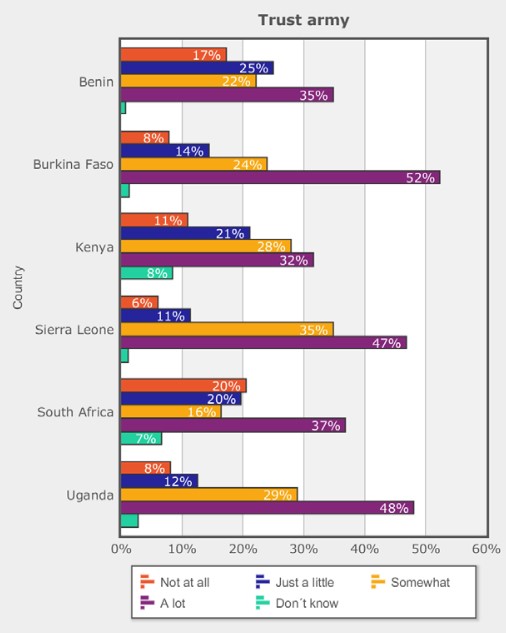
Source: Afrobarometer, Round 7 (2016/2018)
Third, the domestic contexts are important because the pandemic and its military responses do not take place in a void, but rather in specific political junctures. In Uganda, the pandemic coincided with an election year, adding to the increasing challenges Museveni’s rule has faced from opposition politicians. But the health crisis was also an opportunity to enforce regime maintenance, as it was used to restrict attendance to political rallies and repress opponents. In Burkina Faso, the military’s involvement and its publicization in various media was a way for President Roch Marc Kaboré to improve his image and his legitimacy, in a context of a crisis of confidence stemming from the persistence of, and inability to prevent, terrorist attacks. Of course, such a strategy can backfire in cases of abuse or inefficiency, as we saw in South Africa where the military’s heavy-handed responses drew criticism from the population.
Taken together, these case studies show that the pandemic has provided both opportunities and challenges for rulers – autocratic or democratic – as well as military institutions to assert their relevance and strengthen or reform themselves.
Authors
Dr. Maggie Dwyer is a lecturer in the School of Social and Political Science at the University of Edinburgh. Her research is focused on security, politics, and development, primarily in West Africa. She is leading the Economic and Social Research Council funded project “Return from Peacekeeping: Mission Effects on Veterans, States, and Communities.”
Dr. Osman Gbla is an Associate Professor of Political Science at Fourah Bay College, University of Sierra Leone and the founder of the Centre for Development and Security Analysis (CEDSA). He is a leading expert on security sector reform and hybrid security governance, conflicts and peace building in West Africa.
Prof. Lindy Heinecken is Chair of the Department of Sociology and Social Anthropology, Stellenbosch University, South Africa. Her recent book is titled South Africa’s Post-Apartheid Military: Lost in Transition and Transformation. She has published widely in the field of defence transformation and civil-military relations. She is currently the President of the International Sociological Association (ISA) Armed Forces and Conflict Resolution Research Committee (RC01).
Dr. Moses Khisa is an Assistant Professor of Political Science at North Carolina State University. He is a graduate of Makerere University and has a PhD in political science from Northwestern University, USA. His research and teaching interests include the political economy of development, politics of institutional change, civil-military relations, among others. He is a columnist for Uganda’s Daily Monitor newspaper and a research associate with the Centre for Basic Research, Kampala.
Dr. Anne-Laure Mahé is the East Africa Research Fellow at the Institute for Strategic Research (IRSEM, Paris). She holds a PhD in Political Science from the Université de Montréal and was a postdoctoral fellow at the Montreal Centre for International Studies (CÉRIUM) before joining IRSEM. Specializing in comparative politics and African studies, she conducts research on authoritarian regimes and is especially interested in the relationships between their resilience and development policies. She notably works on the case of Sudan.
Aboubacar Maïga is a doctoral student in the Department of Political Science at the Université de Montréal. As part of his thesis, he is working on the correlation between international politico-military strategies and the survival dynamics of Africans leaders, particularly in Burkina Faso and Chad. Beyond the thesis, his research interests focus on democracies and authoritarian resilience, security studies, African armed forces, terrorism, politico-military crises, and comparative politics.
Prof. Nina Wilén is Director for the Africa Programme at the Egmont Institute for International Relations and Associate Professor at the Department of Political Science at Lund University. She is also a Global Fellow at the Peace Research Institute in Oslo (PRIO). Her research interests include the military’s role during and after conflict, the politics of peacekeeping operations, and gender and the military. Geographically, her research has focused on Sub-Saharan Africa, where she has conducted fieldwork in Niger, Liberia, the DRC, Burundi, Rwanda and South Africa. Since January 2020, Nina has been the Editor-in-Chief for International Peacekeeping.
1. Uganda People’s Defence Force Spokesperson, “Food distribution extends to Wakiso District”, Official Facebook page, 23 April 2020.
2. “The work of military forces in the context of the COVID-19 crisis”, Red de Seguridad y Defensa de América Latina, Newsletter n°2, July 2020.
3. Euan Graham, “The armed forces and COVID-19”, International Institute for Strategic Studies, 8 April 2020.
4. François Delerue, Édouard Jolly, Léa Michelis, Anne Muxel, Florian Opillard and Angélique Palle, “Covid-19 et mobilisation des forces armées en Europe et aux États-Unis”, Note de recherche 107, Institut de Recherche Stratégique de l’Ecole Militaire, 5 November 2020; Lucie Béraud-Sudreau, “Covid-19 as an opportunity for European Armament Cooperation ?”, Research paper 111, Institut de Recherche Stratégique de l’Ecole Militaire, 25 January 2021.
5. Melissa G. Curley and Jonathan Herington, “The securitization of avian influenza: international discourses and domestic politics in Asia”, Review of International Studies, 37:1, 2011, 141-166.
6. Daniel Messelken, “On the duty to care during epidemics”, in Daniel Messelken and David Winkler (eds.), Ethical Challenges for Military Health Care Personnel, Routledge, 2018, 144-164.
7. Resolution of the Security Council of the United Nations, S/RES/2177, 2014.
8. Daniel Messelken, ‘On the duty to care during epidemics”.
9. Nina Wilén, “The Military in the Time of COVID-19: Versatile, Vulnerable, and Vindicating”, PRISM, 9:2, 2021, 21-33.
10. Nina Wilén and Lisa Strömbom, “A Versatile Organisation: Mapping the Military’s Core Roles in a Changing Security Environment”, European Journal of International Security, forthcoming 2021.
11. Adam Kamradt-Scott, “Saving Lives. The civil-military response to the 2014 Ebola outbreak in West Africa”, The Lancet, 387, January 2016, 13-15.
12. Euan Graham, “The armed forces and COVID-19”, International Institute for Strategic Studies (IISS), 8 April 2020.
13. “The work of military forces in the context of the COVID-19 crisis”; François Delerue et al., “Covid-19 et mobilisation des forces armées en Europe et aux États-Unis”.
14. Human Rights Watch, “El Salvador: Police Abuses in COVID-19 Response”, 15 April 2020.
15. Adam Kamradt-Scott, “Saving Lives.The civil-military response to the 2014 Ebola outbreak in West Africa”.
16. Daniel Messelken, “On the duty to care during epidemics”, 5.
17. Nina Wilén, “The Military in the Time of COVID-19: Versatile, Vulnerable, and Vindicating”.
18. Elvira Pollina, Agnieszka Flak, “COVID-19 Italy: Military fleet carries coffins of coronavirus victims out of overwhelmed town”, National Post, 19 March 2020.
19. Nicole Jenne and Rafael Martínez, “Domestic Military Missions in Latin America: Civil-Military Relations and the Perpetuation of Democratic Deficits”, European Journal of International Security, online first, 15 November 2021.
20. Philippe M. Frowd and Adam J. Sandor, “Militarism and its limits: Sociological insights on security assemblages in the Sahel”, Security Dialogue, 49:1-2, 2018, 71.
21. Cynthia Enloe, Globalization and Militarism: Feminists make the Link, 2nd edition, 2016, 11, cited in Philippe M. Frowd and Adam J. Sandor, “Militarism and its limits: Sociological insights on security assemblages in the Sahel”.
22. Rita Abrahamsen, “Defensive development, combative contradictions: towards an international political sociology of global militarism in Africa”, Conflict, Security & Development, 19:6, 2019, 543-562.
23. Jonathan Fisher and Nina Wilén, African Peacekeeping, Cambridge University Press, forthcoming 2022.
24. Anna Stavrianakis and Maria Stern, “Militarism and security: Dialogue, possibilities and limits”, Security Dialogue, 49:1-2, 2018, 3-18; Cynthia Cockburn, “Gender relations as causal in militarization and war: A feminist standpoint”, International Feminist Journal of Politics, 12:2, 2010, 139-157.
25. Nina Wilén and Lindy Heinecken, “Regendering the South African army: Inclusion, reversal and displacement”, Gender, Work & Organization, 25:6, 2018, 670-686.
26. Rym Momtaz, “Emmanuel Macron on coronavirus: ‘We’re at war‘”, Politico, 18 March 2020.
27. Asha Hans, “COVID-19 The New Normal: Militarization and Women’s New Agenda in India”, Global Campaign for Peace Education, 30 June 2020.
28. Nina Wilén, “How the indiscriminate virus reinforced our inequalities and the lessons we can draw from this when it is all over”, Egmont Institute, 20 March 2020.
29. Interview with Brigadier General, 18 August 2020.
30. All cited interviews specific to COVID-19 are with current and retired military officers involved in the National COVID Emergency Response Centre (NaCOVERC) or in roles related to it within RSLAF. For anonymity, their names and exact roles are not listed.
31. Research for this article was funded by the ESRC project “Return from Peacekeeping: Mission Effects on Veterans, States, and Communities” grant number ES/S00579X/1.
32. Interview with RSLAF Colonel, 19 August 2020.
33. Interview with RSLAF LtCol, 21 August 2020.
34. Mayors Migration Council, “Inclusive City COVID-19 Responses and Recovery”.
35. Emma Bailey and Olivia Farrant, “Responding to Covid-19: Reflections from King’s Sierra Leone Partnership,” December 2020.
36. Author interviews with NaCOVERC personnel August 2020; also highlighted in Prince Musa, “COVID-19: Sierra Leone army tours borders”, Politico, 27 March 2020.
37. Interview with RSLAF LtCol, 21 August 2020.
38. Interview with Brigadier General, 18 August 2020.
39. Maggie Dwyer, Soldiers in Revolt: Army Mutinies in Africa, London: Hurst Publishers, 2017, 101-123.
40. Peter Albrecht and Cathy Haenlein, “Sierra Leone’s Post-Conflict Peacekeepers”, The RUSI Journal, 160:1, 2015, 28.
41. Peter Albrecht and Paul Jackson, “State-building through security sector reform: The UK intervention in Sierra Leone”, Peacebuilding, 2:14, 2014, 83-99.
42. Cathy Haenlein and Ashlee Godwin, “Containing Ebola: A Test for Post-Conflict Security Sector Reform in Sierra Leone”, Stability, 4:1, 2015, 6. IMATT was then replaced with a much smaller International Security Advisory Team (ISAT).
43. Osman Gbla, “Security sector reform in Sierra Leone”, in Len Le Roux and Yemane Kidane (eds.) Challenges to Security Sector Reform in the Horn of Africa, ISS Monograph Series, No. 135, 2007, 23.
44. Ibid., 23-24. For more on civilian roles in defence sector see Osman Gbla, “Security sector reform under international tutelage in Sierra Leone”, International Peacekeeping, 13:1, 2006, 78-93.
45. For example, Interim Coordinator of NaCOVERC is the Minister of Defence, Kellie Conteh. Conteh is a retired Brigadier General and held the civilian position of National Security Coordinator from 2000 to 2012.
46. Ashlee Godwin and Cathy Haenlein, “Security-Sector Reform in Sierra Leone”, The RUSI Journal, 158:6, 2013, 34-35.
47. Ibid., 35.
48. Al Shek Kamara, Essays on the criminal justice system in contemporary Sierra Leone, Freetown, Sierra Leone: Sierra Leonean Writers Series, 30-32.
49. Author interview, 24 November 2016.
50. Peter Albrecht and Cathy Haenlein, “Sierra Leone’s Post-Conflict Peacekeepers”, 29.
51. Author interviews, November 2016.
52. Author interviews with members of LEOBATT1, November 2016 and February 2020.
53. Peter Albrecht and Cathy Haenlein, “Sierra Leone’s Post-Conflict Peacekeepers”, 32.
54. Interview with RSLAF Brigadier General, 18 August 2020.
55. Osman Gbla, “Hybrid Security Governance Responses to Crises: The Case of the Ebola Response in Sierra Leone”, Stability, 7:1, 2018, 6.
56. Similar to the example of Kellie Conteh, Alfred Palo Conteh also has a background as a military officer before moving into civilian leadership roles.
57. Osman Gbla, “Hybrid Security Governance Responses to Crises”.
58. Cathy Haenlein and Ashlee Godwin, “Containing Ebola”.
59. Interview with RSLAF LtCol, 21 August 2020.
60. Ibid.
61. Interview with RSLAF Colonel, 19 August 2020.
62. Ibid.
63. Kees Koonings and Dirk Kruijt, “Military politics and the mission of nation building”, in Kees Koonings and Dirk Kruijt (eds.), Political Armies: The military and nation building in the age of democracy, London: Zed Books, 2002, 9-34.
64. Nina Wilén, “The Military in the Time of COVID-19: Versatility, Vulnerability, and Vindicating”, PRISM, 9:2, 2021, 28.
65. Gavin Cawthra and Robin Luckham, “Democratic control of the security sector: The scope for transformation and its limitations”, in Gavin Cawthra and Robin Luckham (eds.), Governing Insecurity: Democratic Control of Military and Security Establishments in Transitional Democracies, London: Zed Books, 2003, 322.
66. Al Shek Kamara, Essays on the criminal justice system in contemporary Sierra Leone.
67. Afrobarometer, “Corruption, trust, and performance of political leaders: Findings from Afrobarometer Round 6 Survey in Sierra Leone”.
68. Ministry of Health, Preparedness and response plan for the COVID-19 epidemic in Burkina Faso, February 2020. (This plan will be revised in April 2020 to take into account the evolving dynamics of the pandemic both in Burkina Faso, which recorded its first case on 9 March 2020, and in the rest of the world.)
69. Ministry of Health, Plan de préparation et de riposte à l’épidémie de Covid-19 au Burkina Faso, Revised, April 2020.
70. These include Law No. 74-60/AN establishing the national army, Law No. 26/94/ADP on the general organization of national defence, Decree No. 2004-146/PRES/PM on defence policy, Decree No. 2005-025/PRES/PM/SECU/MATD/DEF/MJ of 31 January 2005 on the organization of the maintenance of law and order in Burkina Faso, Decree No. 2015-1149/CNT establishing the national security and defence council, etc.
71. O.H.L, “Burkina : Le terrorisme fait plus de mort que la Covid-19”, Lefaso.net, 14 April 2020.
72. See Act No. 032-2003 on internal security.
73. Benazir Hilali and Nathaniel Jowitt, “L’armée burkinabè dans la gestion de la pandémie de la Covid-19: une armée fragile face à la crise sanitaire”, Paix et sécurité en Afrique subsaharienne, 1, September 2020, 25-38.
74. Barry Buzan, Ole Weaver, Jaap de Wilde, Security: A New Framework for Analysis, Boulder, London: Lynne Rienner Publishers, 1998.
75. Benazir Hilali and Nathaniel Jowitt, “L’armée burkinabè dans la gestion de la pandémie de la Covid-19: une armée fragile face à la crise sanitaire”.
76. Didier Yves Bamouni, “Retours d’expériences sur la contribution des forces armées du Burkina Faso à la lutte contre la Covid-19”, Paix et sécurité en Afrique subsaharienne, 1, September 2020, p. 39 - 47.
77. Ibid.
78. Ibid.
79. Benazir Hilali and Nathaniel Jowitt, “L’armée burkinabè dans la gestion de la pandémie de la Covid-19: une armée fragile face à la crise sanitaire”.
80. Tiga Cheick Sawadogo, “Lutte contre le Covid-19 : L’armée et son travail dans l’ombre”, Lefaso.net, 8 May 2020.
81. Ibid.
82. Ibid.
83. O.I, “Covid-19 au Burkina : Le Premier ministre visite les unités de production de chloroquine et de masques”, Lefaso.net, 21 April 2020.
84. Edouard Kamboissa Samboé, “Rupture du gel hydro alcoolique : L’armée burkinabè met le produit à la disposition des populations”, Lefaso.net, 25 March 2020.
85. Yvette Zongo, “Coronavirus au Burkina : Le gel hydroalcoolique est introuvable”, Lefaso.net, 12 March 2020.
86. Order n°2020-0119/MCIA/SG fixing a price cap for gels, hydroalcoholic solutions and masks.
87. Edouard Kamboissa Samboé, “Rupture du gel hydro alcoolique : L’armée burkinabè met le produit à la disposition des populations” ; Yvette Zongo, “Coronavirus au Burkina : Le gel hydroalcoolique est introuvable”.
88. The yaar, in the Morée language, refers to small markets that are located in certain districts or sectors of a town and/or village.
89. It is by decree n°2020-239 of 30 March 2020, that the government declared a state of health alert on the basis of law 23/94/ADP on the Public Health Code, dated 19 May 1994.
90. Tiga Cheick Sawadogo, “Gestion des décès Covid-19 : La difficile mission du Bureau de garnison des Forces armées nationales burkinabè”, Lefaso.net, 7 May 2020.
91. “Burkina Faso : sortir de la spirale des violences”, International Crisis Group, Report nº287, 24 February 2020.
92. Benazir Hilali and Nathaniel Jowitt, “L’armée burkinabè dans la gestion de la pandémie de la Covid-19: une armée fragile face à la crise sanitaire”.
93. Literally translated as “the great mute”, this expression is used to refer to the military in most French-speaking African countries. The term originates in France and it is said to be inherited from the French colonists who participated in the establishment, in terms of organization and training, of these various African armies.
94. This was the case for the United Nations Multidimensional Integrated Stabilization Mission in Mali (Minusna), the capacity-building and law enforcement missions (EUTM Mali, EUCAP Sahel) and the Takouba force, see “Réordonner les stratégies de stabilisation du Sahel”, International Crisis Group, Report No. 299, 1 February 2021.
95. Didier Yves Bamouni, “Retours d’expériences sur la contribution des forces armées du Burkina Faso à la lutte contre la Covid-19”.
96. Niagalé Bagayoko, “Vers une réforme du système de sécurité burkinabè?”, Observatoire du monde arabo-musulman et du Sahel, September 2017; “Burkina Faso : sortir de la spirale des violences”.
97. “Burkina Faso : sortir de la spirale des violences”.
98. Ibid.
99. Maggie Dwyer, “Situating Soldiers’ Demands: Mutinies and Prtests in Burkina Faso”, Third World Quarterly, 38:1, 2017, 219 - 234; “Burkina Faso : sortir de la spirale des violences”.
100. O.H.L, “Burkina : Le terrorisme fait plus de mort que la Covid-19”.
101. Benazir Hilali and Nathaniel Jowitt, “L’armée burkinabè dans la gestion de la pandémie de la Covid-19: une armée fragile face à la crise sanitaire”.
102. “Museveni shuts down Entebbe airport, closes all borders”, The Observer, 21 March 2020.
103. “Museveni imposes 14-day COVID-19 lockdown”, The Observer, 30 March 2020.
104. Interview with Ministry of Health official, who requested anonymity, 21 September 2020.
105. “Coronavirus: Africa would be next epicenter, WHO warns”, BBC, 17 April 2020.
106. Ronald Olum and Felix Bongomin, “Uganda’s first 100 COVID-19 cases: trends and lessons”, International Journal of Infectious Diseases, 96, 2020, 517-518.
107. Interview with a journalist at one of Uganda’s leading media houses.
108. Ibid.
109. Ibid.
110. Interview with Tabu Butagira, senior editor and investigative reporter, Daily Monitor newspaper, 28 November 2020.
111. Proscovia Nambatya, “Uganda’s Covid-19 Supplementary Budget: Pandemic Response or Cash Bonanza?”, CHR Michelsen Institute: U4 Blog Post, 16 July 2020.
112. Tabu Butagira, “Securitising Covid-19: Ugandan and rebel Museveni’s antidote”, Daily Monitor, 23 October 2020.
113. Interview with a senior Uganda health journalist who requested anonymity, 12 April 2021.
114. Interview with Eriasa Mukiibi, Managing Editor, Daily Monitor, 21 December 2020.
115. Social media personal correspondence with a senior Ugandan health journalist, 9 April 2021.
116. “Elogu locals accuse forces of brutality”, Daily Monitor, 7 April 2020; Sylvie Namwase, “Uganda’s army and violence: how Covid-19 is offering hints of change”, The Conversation, 12 May 2020.
117. Interview with Eriasa Mukiibi, Managing Editor, Daily Monitor, 21 December 2020.
118. Social media personal correspondence with a senior Ugandan health journalist, 9 April 2021.
119. Ibid.
120. Interview with Andre Bagala, senior crime reporter for Daily Monitor, 22 December 2020.
121. Interview with Charles Bichachi, former Executive Editor, Daily Monitor, 28 November 2020.
122. I thank an anonymous reviewer for pointing out this fact.
123. “Top OPM officials sent to anti-corruption court”, Daily Monitor, 9 July 2020.
124. Daniel Kalinaki, “Investigation: how lack of oxygen, poor health sector is killing Covid-19 patients in Uganda”, Daily Monitor, 30 November 2020.
125. Interview with Ministry of Health official, 21 September 2020.
126. “Covid-19: Medical workers from armed forces leave Mulago”, Daily Monitor, 27 April 2020; Sylvie Namwase, “Uganda’s army and violence: how Covid-19 is offering hints of change”.
127. Interview with Ministry of Health official, 21 September 2020.
128. Interview with Charles Bichachi, former Executive Editor, Daily Monitor, 28 November 2020.
129. Emmanuel Sekyere et al., The impact of Covid-19 in South Africa, Africa Programme Occasional Paper, April 2020.
130. Lynsey Chutel, “Taking on Covid-19, South Africa goes after cigarettes and booze too”, The New York Times, 8 May 2020.
131. Kgomotso Ramushu, “Feminise the pandemic: Covid-19 and gender inequality in South Africa”, Corona Times, 25 June 2020.
132. Tshidi Madia, “Ramaphosa deploys the military on a mission of kindness, not ‘skop en donner’”, News 24, 26 March 2020.
133. Craig Bailie, “South Africa’s military is not suited for the fight against Covid-19. Here’s why”, The Conversation, 28 May 2020.
134. Parliamentary Monitoring Group, SANDF Deployment and involvement in Covid-19 Measures: Complaints against SANDF members during lockdown; with Minister, Meeting Summary, 22 April 2020.
135. “Infantry to be police backbone during the coronavirus lockdown”, Defence Web, 24 March 2020.
136. Janse van Rensburg et al., SSR on Parliament’s contributions to SSG/R and sustainable development Goals, DCAF (forthcoming).
137. Ibid.
138. Nkosi, “SA Military Health Service provides relief”, SA Soldier Magazine, 27:7, 2020, 12.
139. Guy Martin, “SANDF highlights its contribution to Operation Notlela”, Defence Web, 1 September 2020.
140. Parliamentary Monitoring Group, Extension of SANDF deployment to combat spread of COVID-19; Border safeguarding and Operation Notlela; Outcome of enquiry into the break-in & theft of assault rifles at Lyttelton Military Base; with Minister, Meeting Summary, 27 August 2020.
141. SANDF, Update to the Joint Standing committee on Defence on the SANDF participation in Operation Notlela, 22 July 2021.
142. Makubela, “Air Force reinforces Operation Notlela endeavour”, SA Soldier Magazine, 27:7, 2020, 16.
143. Makubela, “Air Force Base Swartkop pitches a mobile quarantine unit”, SA Soldier Magazine, 27:7, 2020, 17.
144. Johan Burger, “Preparation is key to policing a crises like Covid-19. Institute for Security Studies”, Institute for Security Studies, 20 April 2020.
145. Lindy Heinecken, “Covid 19: South Africa’s neglected military faces ‘mission impossible’”, The Conversation, 2 April 2020.
146. Lindy Heinecken, “The army is being used to fight Cape Town’s gangs. Why it’s a bad idea”, The Conversation, 17 July 2019.
147. Greg Nicolson, “Curfew concern: are the soldiers going to shoot civilians”, Daily Maverick, 1 May 2020.
148. Erin McCandless et al., “What South Africa needs to forge a resilience social compact for Covid-19”, The Conversation, 13 May 2020.
149. Charles Cilliers, “Watch: Police and SANDF force Soweto residents to do hard exercise as punishment”, The Citizen, 30 March 2020; Tom Head, “SANDF soldiers slammed for giving citizens ‘humiliating punishments’”, The South African, 30 March 2020.
150. Pierre De Vos, “The Collins Khosa case points to a failure of leadership by the Chief of the SANDF and Defence Minister”, Daily Maverick, 7 May 2020.
151. Azarrah Karrim, “Covid-19: UN Human Rights Office concerned by excessive force, death reports during SA lockdown”, News24, 28 April 2020.
152. Pierre Du Toit et al., “Coronavirus: Army Moves from ‘Peacetime’ to ‘Wartime’ Footing as 21-Day National Lockdown Announced”, News24, 23 March 2020.
153. Petrus Bester et al., ”Deployment of the South African National Defence Force for Covid-19: A cast study on governance”, AJPSDG, 3:1, 2020, 105-129.
154. Jaré Struwig et al., “Not a ‘skop, skiet en donner’ moment: Defence Force deployment in the time of Covid-19”, Human Sciences Research Council, 6 April 2020.
155. Parliamentary Monitoring Group, SANDF Deployment and involvement in Covid-19 Measures: Complaints against SANDF members during lockdown; with Minister, Meeting Summary, 22 April 2020.
156. Tshidi Madia, “Ramaphosa deploys the military on a mission of kindness, not ‘skop en donner’”, News24, 26 March 2020.
157. Good Governance Africa (GGA), Patrolling during a Pandemic, Recommendations, May 2020.
158. Ntshengedzani Singo, “Military Ombud includes investigation into the conduct of members of the SANDF”, SA Soldier Magazine, 27:10, 2021, 9.
159. Pierre De Vos, “The Collins Khosa case points to a failure of leadership by the Chief of the SANDF and Defence Minister”.
160. William Gumede, “Complaints against the SANDF”, University of the Witwatersrand Johannesburg, 28 April 2020.
161. Africa Criminal Justice Reform (ACJR), Covid-9 and the Defence Force powers and functions, ACJR Inforsheet3 – Covid 19 & SANDF, 15 May 2020.
162. SABC News, “Military Ombud report Investigation into SANDF Members’ conduct during lockdown”, YouTube, 9 June 2021.
163. Parliamentary Monitoring Group, Military Ombud on investigation of alleged misconduct by soldiers; Progress to improve conditions of service of soldiers; Follow-up on allegations against Minister, Meeting Summary, 27 May 2021.
164. Defence Web, “Notlela deployment showed SA Army readiness”, Defence Web, 27 January 2021.
165. Sipho Mabena, “Forgotten troops running out of food during deployment”, The Citizen, 8 October 2020.
166. Department of Defence (DOD), South African Defence Review, Defence review, 2015.
167. Defence Web, “Civil Unrest Update: 2500 troops to be deployed, no state of emergency”, Defence Web, 13 July 2021.
168. Petrus Bester et al., “Deployment of the South African National Defence Force for Covid-19: A cast study on governance”.
169. Lindy Heinecken, “The army is being used to fight Cape Town’s gangs. Why it’s a bad idea”.
170. Nina Wilén, “The Military in the Time of COVID-19: Versatile, Vulnerable and Vindicating”, PRISM, 9:2, 19 March 2021, 21-33.
171. Blake R. McMahon and Branislav L Slantchev. 2015. “The guardianship dilemma: Regime security through and from the armed forces”, American Political Science Review, 109:2, 2015, 297-313.