The Sahel at the Centre of the World - Lessons from a Geopolitical Margin
Download the PDF version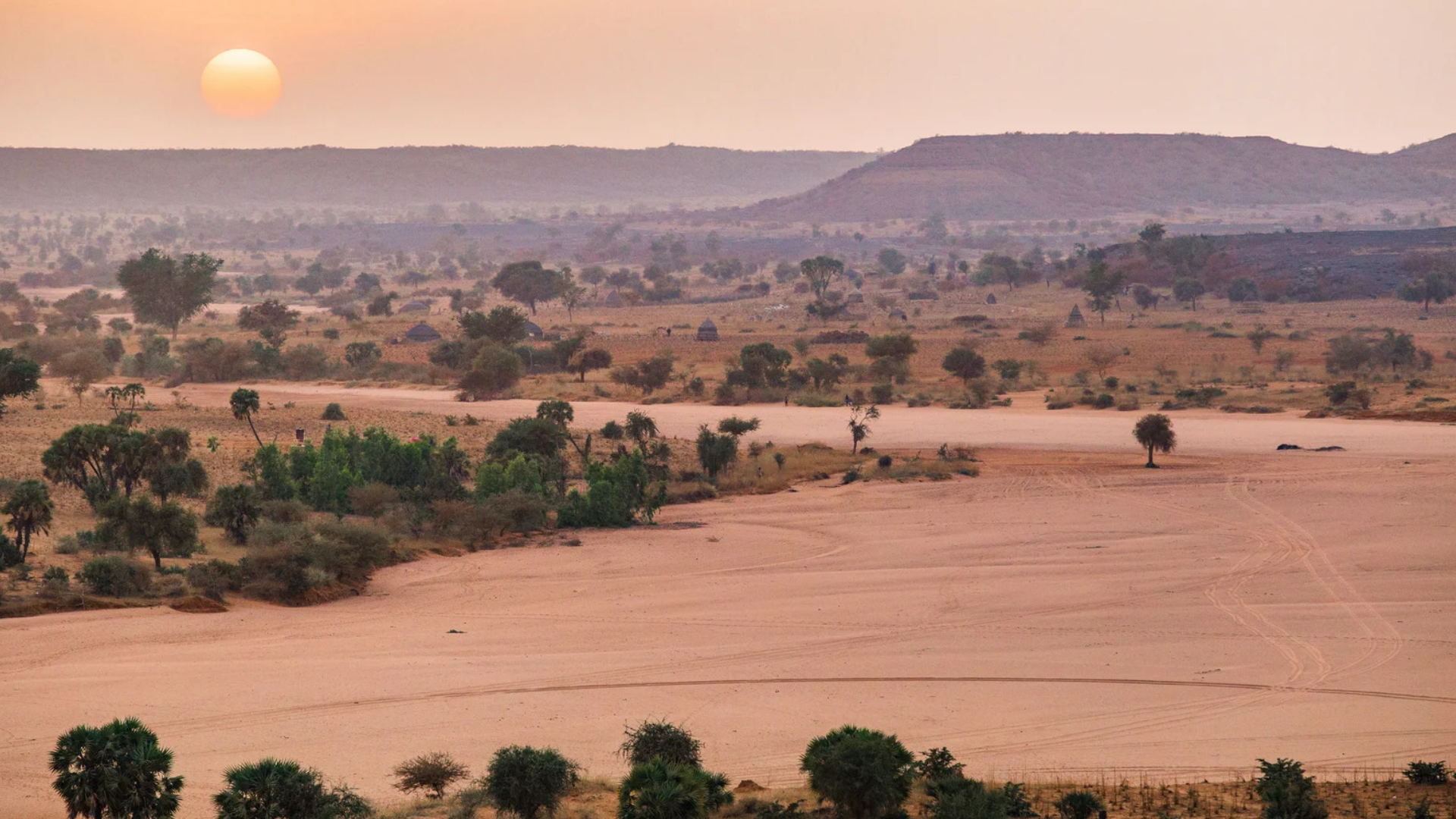
Long perceived as a margin of the world, the Sahel has become one of the major centres of global jihadism. This brief analyses the paradox of a peripheral region that has become central, showing how armed groups have transformed the territorial constraints of the periphery into strategic resources. The full findings are available in Study No. 138, entitled Sahel, au centre du djihadisme mondial.
What if we have misunderstood the Sahel? What if ten years of military intervention, through Operation Serval (2013) and then Operation Barkhane (2014-2022), have failed to reveal the underlying dynamics of the Sahelian crisis? These two questions deserve to be asked today in light of the continuing territorial expansion of jihadist groups. Initially established in the peripheries of the Sahelian states (Mali, Burkina Faso and Niger), the al-Qaeda-affiliated Group for the Support of Islam and Muslims (GSIM) and the Sahelian branch of Islamic State have considerably expanded their reach. Some capitals, such as Bamako, are seeing their supply routes come under increasing pressure, while Sahelian jihadism is now spreading into Gulf of Guinea states that had previously been relatively spared, such as Benin, Togo and Côte d'Ivoire. In just a few years, the post-Barkhane Sahel appears to have become one of the new epicentres of global jihadism, both in terms of its geographical spread and the scale of the violence unfolding there. More than 40,000 deaths since 2022 are reportedly attributable to Sahelian jihadists.
The Sahel offers an opportunity to critically examine our perception of the world and, more specifically, our understanding of what makes territories attractive. How can a space long regarded as a margin of the world and as an unattractive territory now find itself at the heart of geopolitical, jihadist or trans-criminal dynamics that extend far beyond its borders? The Sahelian paradox lies precisely in this reversal of centrality, which consequently invites us to question the criteria by which we define a territory's centrality and attractiveness. Two epistemological questions then arise: how do we construct or produce our knowledge of a territory-in this case, the Sahel? And is the Sahel really such an 'unattractive' territory, or have we simply defined its attractiveness using criteria that prevent us from grasping the dynamics unfolding there?
The Sahel may, above all, be marginalised by the way we measure centrality. The absence of conventional forms of economic attractiveness, such as investment, infrastructure, formal employment, a significant state presence or urban density, does not mean an absence of attractiveness altogether. On the contrary, this territorial marginalisation may have helped sustain conditions favourable to actors who thrive in the interstices of legal globalisation and see this 'vast semi-arid expanse' as offering places of refuge conducive to their growth. This observation deserves emphasis in a Sahelian context marked by the state's difficulties in making certain territories and populations fully legible and governable. It may also be that the 'eye of the state' has long paid less attention to certain peripheral territories, thereby reinforcing our interpretative frameworks. Yet our constructed perception of the Sahel's marginality does not mean that it is isolated. On the contrary, these 'blind spots' have created favourable conditions for another form of integration into the world, based on illicit commercial flows (trafficking, migration, etc.).
This logic helps explain how jihadist groups have gradually transformed territorial constraints-and the Sahel's marginality-into strategic advantages and resources. Uncontrolled state peripheries become spaces of mobility; local conflicts, opportunities for recruitment and arbitration; trade routes, instruments of pressure and toll collection; borders, spaces of connection and circulation; and state margins, spaces conducive to imposing new norms and building an alternative legitimacy. In other words, jihadist territorialisation rests more on control over populations, their resources or commercial flows than on establishing uniform control over space as conceived through our administrative divisions.
This peripheral position may have offered Sahelian groups a strategic advantage and a space for reorganisation and adaptation less exposed to international counter-terrorism efforts. Indeed, these groups' capacity to adapt may also be explained by a second paradox, this time linked to the peripheral position occupied by Sahelian jihadist groups in the global geography of jihad. During the first two decades of the twenty-first century, al-Qaeda and then Islamic State concentrated their propaganda efforts primarily on the Levant (Syria and Iraq) and the southern Red Sea regions (Yemen and Somalia). By contrast, the Sahel became connected to these two major organisational centres of global jihadism later and more gradually. The creation of GSIM through the unification of local groups, and its pledge of allegiance to al-Qaeda, date to 2017, while Islamic State's affiliation with its 'parent organisation' took almost four years. Adnan Abu Walid al-Sahrawi pledged allegiance to the organisation in May 2015; it officially recognised that pledge more than a year later, in October 2016, and formalised the Sahelian branch's institutional affiliation in 2019.
This distinction between a jihadist centrality and its Sahelian peripheries is also evident in the military responses across different theatres. While the United States and its Western and Arab allies concentrated a substantial share of their military resources on the Levant and the Middle East, the Sahel was addressed primarily through a French counter-insurgency operation conducted with the support of African partners. This difference in approach itself reflects a form of historical marginality in the Sahel: France thus prioritised military expertise centred on personnel, grounded in the deployment of troops on the ground, knowledge of Saharan spaces and cooperation with local forces and militias, with varying degrees of success. Operation Barkhane thus sometimes seemed to perpetuate modes of intervention inherited from an earlier French military history, as though the Sahel's geographical marginality were compounded by a form of historical marginality in military strategic thinking and practice.
Since the end of Barkhane in 2022, this dynamic has taken on a new dimension. The Sahel has thus become simultaneously more marginal in certain representations and more central to certain global dynamics (jihadism, illicit trafficking and Russian influence). On the one hand, this new jihadist marginality is one that we have gradually constructed in our representations. For more than a decade, Western societies have favoured an essentially security-focused reading of the Sahel, gradually transforming the image of a peripheral space (empty and arid) into that of one of the world's most dangerous regions. For the French and Europeans alike, it has therefore become difficult to discuss counter-terrorism, irregular migration from Africa or drug-trafficking routes without emphasising the central role the Sahel is said to play. For a decade (2013-2022), the response to such issues was primarily centred on security and military action, helping to confine the region to a new form of marginality: that of a territory defined solely through the prism of the jihadist threat.
On the other hand, the expansion of jihadist groups itself helps produce a new territorial centrality: that of a space that has become one of the main centres of contemporary jihadism. By controlling certain territories, GSIM and Islamic State in the Sahel have redirected those territories' possibilities and network connections. They also construct their own territoriality by reconfiguring human and economic flows and spatial connections. At the local and regional levels, they experiment with governing communities by practising a 'tempered jihad', between coercion and accommodation of local realities. These attempts suggest the possible emergence of a jihadist proto-state across a greater or lesser part of the Sahel. It would therefore be crucial to understand the norms produced by these groups and how they spread within communities, helping to foster a sense of belonging. At the transnational level, they also embed themselves in existing networks and economies, taking advantage of certain trade routes and illicit activities that connect the Sahel to other spaces of globalisation. The traffic of drug between Latin America and Europe is the principal illustration.
In the Sahel, ultimately, marginality and centrality are not opposed: they coexist and reinforce one another. The gradual institutionalisation of jihadist groups in the Sahel offers an opportunity to question our own perception of the world and the analytical frameworks we use to try to understand it. The Sahelian paradox thus compels us to rethink the relationship between marginality and centrality. While the margin does indeed represent a position removed from the world, it can also be a place where new centralities are produced. The Sahel shows that territories we regard as margins or peripheries can both be performative and, for other actors, lie at the heart of the world.