
The art of the diplomatic deal short term bargain or long-term realignment between Israel and Sudan?
Download the PDF version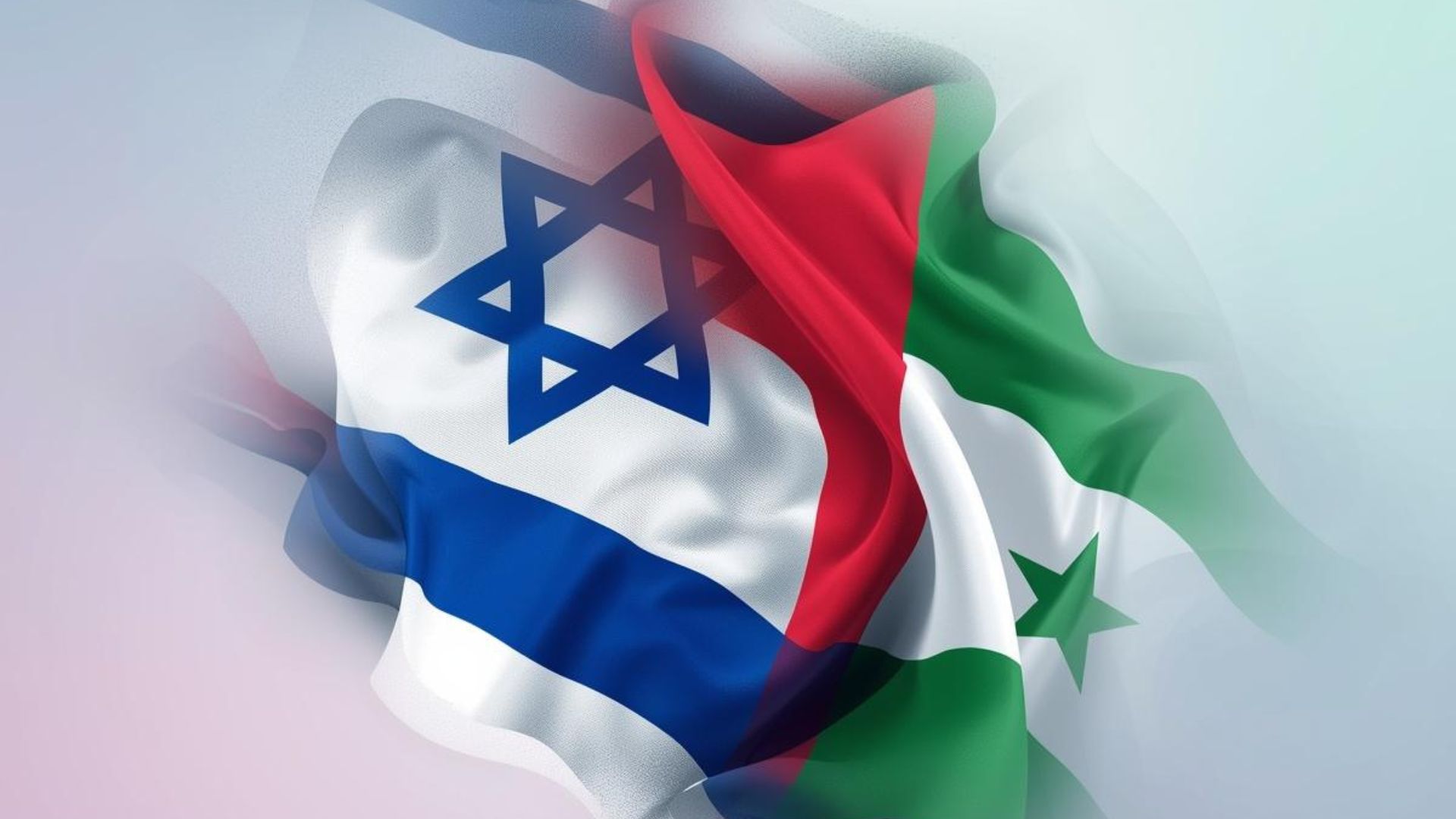
The signing of a joint statement between the United States, Sudan, and Israel on October 23, 2020, appears to usher in a new era in the relations between Tel-Aviv and Khartoum: one of normalization. However, the tangible policies and developments to which this term refers remain vague, especially due to the uncertainty of the Sudanese political situation, as the country began a democratic transition in 2019. What are the consequences and durability of this new iteration of deal diplomacy promoted by Donald Trump? This agreement was made possible by Trump and Netanyahu who – in tandem – were able to capitalize on structural factors making space for a rapprochement between the three states. Its public nature constitutes a break with the covert diplomacy carried out by Israel in the region, and affects the actors involved differently. This publicity stunt diplomacy is sought after by Donald Trump and Benjamin Netanyahu, who are trying to translate these diplomatic successes into domestic political gains. However, it also highlights dissension within the Sudanese political class, some of whom perceive the deal as “blackmail” by the United States in exchange for the country’s removal from the list of state sponsors of terrorism.
Introduction
On October 23, 2020, in the Oval Office where the press was invited, Donald Trump was rejoicing. The United States, Sudan and Israel had just signed a joint declaration. It prefigured an agreement on the “normalization” of relations between the two countries, with Sudan officially recognizing the existence of Israel. Although it awaited formal ratification by Sudan’s legislative council as part of the country’s democratic transition, which began in 2019 with the end of the military and Islamist rule of Omar al-Bashir, this “agreement” in the making was touted as a major diplomatic success by the Trump administration. With eleven days to go before the American presidential election, it was seen as a success for the Republican candidate’s campaign, which asserted him as a “deal maker” whose boldness, strong character and negotiating skills could disrupt the diplomatic game and shift the lines. This, of course, did not ensure his electoral victory. Furthermore, a year later, with Sudan’s legislative council still not created, “normalization” remains a distant horizon, though small steps have been taken behind the scene on the military front(x).
This “deal diplomacy” was in continuity with a narrative Donald Trump started in The Art of Deal, published in 1987. He made a point of implementing a transactional diplomacy, where nothing is free and the balance of power is used to impose the conditions most advantageous to the United States, as if it were straight out of his election slogan: Make America Great Again. However, the announcement of the joint declaration was received with circumspection in Israel and criticism in the Sudanese press. It was signed in a context where major financial difficulties, heavy flooding in September 2020, and the influx of refugees from Ethiopia were weakening the Sudanese government in charge of the transition. The agreement with Israel was seen as the price to pay for being removed from the U.S. State Sponsors of Terrorism (SST) list, and those events thus demonstrated the government’s weakness in relation to American power. Meanwhile, public opinion remained – and still is – hostile to any rapprochement with the former enemy. In Israel, commentators compared the agreement to “smoke and mirrors”, its exact content remaining confidential(x).
It is therefore more appropriate to speak of a “rapprochement” between the two countries rather than of a normalization of relations, which would involve more substantial political decisions such as the opening of embassies. Al-Burhan, the president of the Sudanese Sovereign Council (SC) and architect of this rapprochement, minimized its scope, speaking of “reconciliation instead of normalization”, and recalling that “So far, we have not concluded an agreement […] We will sign with the other two parties, America and Israel, on the aspects of cooperation”(x).
Given center stage and promoted by the actors themselves, deal diplomacy as it was implemented by Donald Trump in relation to the Middle East has paradoxically scarcely been investigated in academia(x). Three constitutive elements can be identified. First, the use of the term “deal” reveals a conceptualization of diplomacy inspired by the economic sphere. Political decision-making is motivated by market analysis, the identification of actors’ interests and their leverage. By positioning himself as belonging to the business world rather than as a professional politician, Donald Trump makes a point of presenting his actions as pragmatic, hence as distinct from an ideological approach. The political goals of building a just world order are replaced by well-identified American interests which must be maximized.
Second, it is based on the establishment of a power relationship as the main means of action. Thus, states’ agency in negotiations depends to a large extent on the balance of power they manage to establish. The ability of Israel to position itself as an ally of the United States in the region is based on a good interpersonal relationship between the two heads of state, as well as on a common understanding of the international system, particularly the need for a military response to a nuclear Iran. Conversely, Sudan can be seen as a state with little bargaining power, blackmailed by the United States.
Finally, this deal diplomacy is characterized by the strong personalization of negotiating practices. During Donald Trump’s term, foreign policy has thus largely been led from within the White House, giving primacy to direct communication with a broader public via Twitter and marginalizing the traditional channels, mainly the State Department. Similarly, in Israel, Benjamin Netanyahu conducted foreign policy from his cabinet, without consulting either his Foreign Minister or his Defense Minister Benny Gantz, with whom he had to share the post of Prime Minister in the framework of the emergency coalition set up in the spring of 2020. In Sudan, this agreement was seen as the result of efforts conducted by General Abdel Fattah al-Burhan without the approval of Prime Minister Abdallah Hamdok. Al-Burhan was the chairman of the SC, an institution in which the army occupied half of the seats and that oversaw the transition alongside the civilian government. In this context, the legitimacy of the deal depends on the legitimacy of these leaders, since they commit a great deal of their political capital to its design.
In this respect, the various initiatives launched by the Trump/Netanyahu tandem regarding the recognition of the existence of Israel by Arab and/or Muslim countries were aimed at compensating for the failure of the “deal of the century”, which aimed to put an end to the Israeli-Palestinian conflict. Announced with great pomp by Donald Trump, who entrusted his son-in-law Jared Kushner with the task of carrying it out and who got personally involved in the matter, this deal was immediately rejected by the Palestinian Authority. This damaged the American president’s credibility. The successive announcements of agreements between Israel and Muslim countries have evidently been used to alleviate these damages and to cast Donald Trump as the man who brought peace to the Middle East, something his direct predecessor failed to do(x).
Did the rapprochement between Israel and Sudan prove the relevance of deal diplomacy? Was it a rupture with past relationships and practices between the two countries? This agreement was made possible by the Trump/Netanyahu tandem, which was able to capitalize on the structural conditions allowing for a rapprochement between the three nations (I). It constituted a break with the covert diplomacy carried out by Israel in the region, which affected the actors involved differently. While the publicity of the deal had harmful effects on the Sudanese transition, it was sought after by Donald Trump and Benjamin Netanyahu, who were trying to translate these diplomatic successes into domestic political gains (II).
An unsurprising deal? The Israel-Sudan rapprochement is in continuity with short and medium-term dynamics
The signing of the diplomatic “deal” is the result of a calculation of the interests of the various parties involved, in which the costs and benefits of the “good deal” are weighed and negotiated. This does not mean that it should be seen as an ex nihilo creation, attributable only to the talent of the negotiators. The Israel-Sudan rapprochement was made possible by long-term structural dynamics and not only by short-term calculations. These dynamics were of two kinds: first, the emergence of Iran as a “common enemy” for Israel, some of the Gulf countries and the United States; and second, the growing inclusion since the 2000s of the Horn of Africa, and in this case Sudan, in the sphere of influence of the Gulf monarchies. This evolution of the regional and international geostrategic situation explains how Sudan, a country of moderate influence that was ostracized by the international community during the 1990s, has been involved in this deal, all in the name of pragmatism.
The emergence of Iran as a common enemy
The immediate context for the joint statement by Sudan, Israel and the United States was the signing of the Abraham Accords between the United Arab Emirates (UAE), Bahrain and Israel on September 15, 2020. These agreements ratified a normalization of relations between the monarchies and Israel, which until then had been denied recognition in the absence of the creation of a Palestinian state. They have also been endorsed by Saudi Arabia, although the kingdom has not engaged in a similar formal process with Israel(x). They were also supported by the United States, whose diplomacy was able to overcome Bahrain’s reluctance. This announcement created momentum for the normalization of relations between Sudan and Israel insofar as, although these were not the first agreements signed between Arab countries and Israel, it reduced the external cost of such a diplomatic deal in the eyes of a public opinion that favored solidarity with the Palestinians. General Abdel Fattah al-Burhan himself justified the agreement by arguing that Sudan too, like other countries, had the right to normalize its relations with Israel in order to fight its diplomatic isolation, rejecting the interpretation of the deal as blackmail(x). By signing this joint declaration, Sudan did not risk isolating itself from other Muslim countries. Emirati diplomacy actually played a leading role in the rapprochement between Sudan and Israel(x).
Although they were presented as a step towards “peace in the Middle East” – a peace that was not envisioned in the same manner by all the stakeholders – these agreements came after a decade of unofficial rapprochement between these states, particularly on security issues. For the Gulf countries, and for Israel, the growing influence of Iran in the region and beyond motivated this rapprochement, which contributed to the construction of a trans-regional anti-Iranian “front” that has been undergoing for ten years. As Fatiha Dazi-Héni reminds us, Iran has taken advantage of the instability in Iraq and the aftermath of the “Arab springs” in Syria and Yemen to strengthen its position vis-à-vis the Gulf States. This was facilitated by Gulf internal disputes, which have called into question the ability of those states to guarantee regional security(x). The “Gulf crisis”, a term that refers to the 2017 decision by Saudi Arabia, the UAE, Bahrain, and Egypt to sever diplomatic relations with Qatar and impose an air, sea, and land embargo, produced a coalition that stood against an Iran-Qatar-Turkey axis(x). These events also took place against a backdrop of American disengagement in the region that began under the Obama presidency and continued under the Trump administration.
The increasing number of clashes in the Strait of Hormuz – missile attacks on tankers in May 2019, drone attacks, the boarding of a British oil tanker by the Islamic Republic of Iran, attacks on Aramco oil facilities in September 2019 – worried the international community. It raised fears of a “tanker war” similar to the one that occurred between 1984-1988 as part of the Iran-Iraq war, during which many oil tankers were sunk(x). Bordered by Iran to the north and Oman to the south, the Strait of Hormuz is of major strategic interest: part of the world’s oil transits through its waters. The Houthis in Yemen have claimed responsibility for some of these attacks. They are supported by Iran in their fight against the central government, which is allied to Saudi Arabia and the Emirates. In this context, the repeated statements of the American president on the need for the Gulf countries to be able to ensure their own defense pushed the Emiratis and the Saudis to draw closer to Israel in order to form an alliance to counter Iran, which became a common enemy(x).
Indeed, Israel has considered Iran a threat to its survival since the 1979 Islamic revolution, against which a policy of containment needed to be implemented, reproducing the policy adopted towards Nasser’s Egypt, Iraq and Syria in the 1950s and 1960s. Israel had then set up a clandestine alliance called “Trident” with Iran, Turkey and Ethiopia(x). Known as the “periphery doctrine”, this foreign policy was based on building more or less formal and clandestine networks of alliances with non-Arab countries and geographically distant Arab countries or minorities. Sudan was briefly part of this periphery after its independence in 1956. This was motivated by its new leaders’ desire to ensure the country’s autonomy in relation to Egypt. The idea of an integration of the two states did indeed circulate at the time, based on the model promoted by Nasser of Pan-Arab federalism(x). The 1973 Yom Kippur War, the overthrow of the Haile Selassie regime in 1974 in Ethiopia and its replacement by the socialist Derg regime, and finally the Iranian revolution contributed to bringing an end to this first periphery.
The Abraham Accords, along with Israel and Sudan’s joint declaration, have been interpreted as a strategy to form a “new periphery”, an idea that supposedly emerged in 2011/2012(x). This strategy would include the recent development of relations with Azerbaijan, Cyprus, Greece and several African countries, especially in East Africa. In the Red Sea region, this new periphery would make it possible to confront Iran as well as Erdogan’s Turkey, which is very active on the conflict in Palestine. The civil war that has affected South Sudan, a long-standing ally of Israel, since 2013 may also have made Sudan a more attractive partner(x). In this regard, it should be noted how Israel’s international relations cannot be analyzed solely within the geographical limits of the “Middle East” region, even if they remain anchored in the conflict with Palestine and characterized by the search to safeguard a state seen as a “besieged citadel” encircled by hostile powers.
These objectives of combating Iranian power were also in line with those of President Trump, who pursued a firm stance towards Iran. While the Obama administration alternated between clandestine military actions – including the “Olympic Games” cyberattack on the Iranian nuclear site of Natanz carried out in cooperation with Israeli services – and diplomatic gestures of openness, Donald Trump favored a military response to the threat of a nuclear Iran. Fulfilling a campaign promise, he withdrew in May 2018 from the 2015 international nuclear agreement (JCPOA), instituted sanctions and pressured his European allies to do the same. The assassination in January 2020 of General Ghassam Soleimani, head of the powerful Iranian special forces al-Quds, is emblematic of this so-called “maximum pressure” policy aimed at “flexing muscle” against the Tehran regime(x). The emergence of a common enemy, which has been in the making for many years, thus allows for the formation of alliances that may appear “unnatural” at first glance. For Sudan, however, this new strategic situation is problematic: the country has long maintained good relations with Iran, which it does not consider a security threat. It is above all the extension of the sphere of influence of the Gulf monarchies in the Horn that explains Sudan’s role in these diplomatic deals.
Sudan’s geopolitical repositioning from Pan-Islamic ideology to pragmatism
The announcement of the rapprochement between Israel and Sudan demonstrated and contributed to the growing influence of the Gulf monarchies over the Horn since the 2000s(x). This alliances’ shift is in line with the evolution of Sudanese foreign policy since the end of the 1990s. During this period, it turned away from a foreign policy guided by Pan-Islamist ideology that had resulted in diplomatic isolation and instead opted for a pragmatic approach aimed above all at maximizing the regime’s interests. A second turning point was the independence of South Sudan, which deprived the country of most of its oil resources and marked the beginning of a gradual deterioration of the economic situation. To face this challenge, Omar al-Bashir adopted a foreign policy that was clearly a search for “clients” willing to provide the regime with resources to keep it afloat. This tied the country more closely to the political dynamics of the Gulf.
While rumors of a collaboration with Israel circulated as early as the 1990s, the first ten years of Omar al-Bashir’s regime were characterized by a diplomacy based on a Pan-Islamic ideology. This was developed by Hassan al-Turabi, leader of the National Islamic Front (NIF), a political organization born out of the Sudanese Muslim Brotherhood movement that, in alliance with a faction of the army, carried out the 1989 coup. The regime’s eminence grise and ideologue, Tourabi’s ambition was to make Sudan the epicenter of a global Islamic renaissance and to coordinate the region’s Islamist movements to create an “Islamist International” to restructure the existing world order(x).
In concrete terms, this proactive foreign policy consisted of welcoming armed Islamic groups such as the Egyptian Jama’a al-islamiyya, the Palestinian Hamas or the Algerian FIS to Sudan. Osama bin Laden, for example, settled in Khartoum between 1991 and 1996, prompting the U.S. decision to place the country on the SST. This policy did not only irritate Western countries, but also close neighbors. The organization of the Popular Arab and Islamic Conferences in 1991, 1993 and 1995 was interpreted by Saudi Arabia as a desire to compete with the Islamic Conference. Sudan’s support for Iraq in the Gulf War deteriorated relations with Iran, a key ally. There were rivalries with Egypt, Uganda and Ethiopia, the latter two having supported the South Sudanese rebel movement. The assassination attempt on Egyptian President Hosni Mubarak during the Organization of African Unity conference in Addis Ababa in 1995 was both a low point in these relations and a turning point. Sudan was quickly accused by the Egyptian president of having provided logistical and financial support to the assassins, which Omar al-Bashir and Hassan al-Tourabi denied. The attack discredited their foreign policy and laid the foundations for the schism between the two statesmen, which took place in 1999 with the military leader taking the advantage(x).
Under the influence of the regime’s new undisputed leader, Sudan’s foreign policy became more pragmatic. This was helped by the start of oil exports in 1999, which enabled Sudan to find a new ally: China. These economic exchanges were accompanied by sustained security cooperation. China, but also Iran, Saudi Arabia, Turkey, and the UAE became the main suppliers of arms to a regime that had made its security apparatus one of the central pillars of its domination(x). For several years, the regime managed to simultaneously maintain good relations with the Gulf states and Iran, even using their growing competition to its advantage. This diplomatic strategy of multiplying the number of clients became particularly essential to the regime’s survival after 2011, when South Sudan voted for independence. This deprived the regime of its main source of income, because most of the oil wells were located in the territory of the new state and their exploitation was complicated by the outbreak of the South Sudanese civil war in 2013. As Sudan progressively sank into a deep economic crisis, its withdrawal from the SST became a major foreign policy goal. It was – and still is – conceived as a crucial step to solve the country’s economic problems. Omar al-Bashir is said to have raised the idea of a rapprochement with Israel in his last years in power, following the commonly held view that the road to Washington goes through Jerusalem(x). It is therefore important not to consider the rapprochement between Israel and Sudan as a result of the 2018/2019 revolution, which, by putting an end to an Islamist regime, would have given enough ideological room to accommodate this rapprochement. The conditions making the deal possible have been coming together since the pragmatic shift of the early 2000s. The trend only accelerated after 2011.
The end of the oil rent also meant the end of one of the regime’s only “export goods”. A new one emerged in the mid-2010s: militiamen that the regime had used to conduct its wars in the peripheral regions, particularly in Darfur. In 2016, Omar al-Bashir severed diplomatic ties with Iran, using the sack of the Saudi embassy in Tehran by demonstrators in January 2016 as a pretext, and joined the Saudi coalition in Yemen(x). This shift had been initiated in 2014, when the government ordered the closure of Iranian cultural institutions in Khartoum and expelled Iranian diplomats, accusing the country of spreading Shiite Islam(x).
In Yemen, Sudan provided the bulk of the troops fighting on the ground. They were composed of members of the Rapid Support Forces (RSF), a paramilitary force created in 2013 from a part of the Janjaweed militias that acted on behalf of the government in Darfur(x). Khartoum was consequently effectively part of the Emirati-Saudi axis when the Gulf crisis erupted in 2017, but it managed to maintain cordial relations with Doha, which had long been a provider of significant humanitarian and development assistance to Sudan. The fall of Omar al-Bashir in April 2019 did not bring about a radical transformation in these relations. First of all, new troops were reportedly sent to Yemen in September 2020, despite a reduction during 2019, and Sudanese fighters were supposedly deployed to Libya by the Emirati security firm Black Shields Security Services, though this was without their consent since the firm pretended to hire them as guards who would work in the Gulf(x). Secondly, Qatar is part of the “Friends of Sudan” group formed in 2018, which aims to support the transitional government, and also includes Saudi Arabia and the United Arab Emirates(x). The impact of the hypothetical normalization with Israel on this fragile balance remains to be assessed. Finally, the Gulf states are using “riyal” diplomacy with the new Sudanese government, as they did with the old one, focusing on transactional monetary policy in order to push for normalization(x).
Deal diplomacy as a publicity stunt with marginal political successes
Reframing the deal in longer-standing regional and domestic dynamics helps nuance its spectacular dimension. The window of opportunity that made it possible was created by long-term structural dynamics as much as by the convergence of the shorter-term interests of various actors with their own, sometimes incompatible, agendas. The shift in Israel-Sudan relations thus corresponds to a context in which the conduct of foreign policy is subordinate to the fulfillment of domestic objectives. The translation of external gains into internal gains remains complex, however, and varies from one actor to another. This deal diplomacy appears above all to be the diplomacy of the publicity stunt, the purpose of which is to generate media coverage in service of the political messaging of its instigators, rather than the achievement of traditional foreign policy objectives. It constitutes a break with the covert diplomacy Israel used to practice in the Arab-Muslim world.
Israel’s break from covert diplomacy in the Arab-Muslim world
In order to counter the “three No’s” of recognition, negotiation and peace with Israel set by the Arab League countries in Khartoum in 1967, Israel practiced covert diplomacy in the region. This allowed it to work with countries that were reluctant to display their relations publicly, allowing Israel to maintain a presence while enabling African leaders to appease a hostile public opinion and to maintain a facade of solidarity with the Palestinians.
Two episodes of clandestine collaboration between Israel and Sudan took place, first between 1956 and 1958, in order to fight against Egyptian influence, and second in the early 1980s to exfiltrate Ethiopian Jews to Israel via Sudan(x). This second episode resulted from the efforts of General Nimeiry’s regime to secure much needed U.S. support after it had turned away from Soviet patronage in the early 1970s and as its survival was threatened by an economic crisis. However, in order to avoid alienating Arab countries, especially those opposed to the Israeli-Egyptian peace process and the Camp David Accords (1978), as well as neighboring Ethiopia, it was essential for Sudan to keep the operation a secret. Its existence was nonetheless revealed in Ethiopian newspapers in 1985, leading to fierce denials by the embattled president, who halted the operations and was overthrown that same year.
While no such cooperation of that scale is known to have taken place under the Islamist regime, the fact remains that during the period of détente initiated by the 1993 Oslo Accords and despite offensive official rhetoric towards Israel, Sudan never sought to engage in a direct conflict. According to Jacob Abadi there were rumors of security cooperation as early as 1993(x).
This clandestine diplomacy has the advantage of preserving the reputation and legitimacy of the regimes in place in the Arab-Muslim world, while ensuring their survival in the face of possible opponents by providing security assistance. In exchange, Israel obtains the assurance of not being attacked and isolates the Palestinians on the international stage. In this respect, secrecy is a condition for a win-win exchange. The rapprochement between Sudan and Israel therefore represented a break with these practices. Its public nature had a political cost for the transitional government, but the hope was that those were to be offset by the expected economic gains. Its announcement also added to the list of issues that had been dividing the civilian forces involved in the transition, which has included the peace process with rebel groups, the place of religion in the “New Sudan” and its future constitution, and the composition of the Transitional Legislative Council(x).
One of the main political costs of the rapprochement was that it had been interpreted as resulting from blackmail by two powers taking advantage of Sudan’s desperate economic situation. This damaged the image and legitimacy of the Sudanese government as well as the image of the deal itself in the eyes of the population(x). The U.S. demand for $335 million to be paid to the victims of the al-Qaeda attacks in Kenya and Tanzania in 1998 and in Yemen in 2000 added to this feeling. Since the country did not have that sort of wealth, the request was seen as another humiliation on social media and ridiculed, portrayed as a developed country asking for payment from a country affected by rapidly rising inflation, repeated shortages of basic goods and growing poverty. This deal exacerbated the divisions within the Sudanese political class, contributing to the precariousness of the transition.
While some stakeholders welcomed the joint statement, such as the Sudanese Congress Party and the Sudanese Revolutionary Front, which unites different rebel groups, it was also met with cross-party opposition. Sadiq al-Mahdi, who headed one of the main political parties, the Umma Party, until his death on November 26, 2020, voiced his disagreement, as did the Communist Party and the Baath Party on the left of the political spectrum. While those two have referred to the principle of the Three No’s, they have all insisted on the unconstitutionality of the deal to justify their opposition, rather than relying on ideological positions. Indeed, the transitional constitutional document does not give the government a mandate to take such a decision, which would need to be ratified either by an elected parliament or, in the meantime, by the transitional legislative council, an institution that has not yet been set up. The Israeli press was quick to point out these fragilities, with B. Michael attacking the “joke” of a deal in Haaretz: “This is a country [Sudan] that doesn’t even have a government – just military rule and a civil administration. Until not long ago, it was ruled by a loathsome tyrant who will stand trial at the International Criminal Court in The Hague for his role in the genocide and mass rape of women in the Darfur region”(x). The deal may have come too soon, born from the pressure of a Trump administration pressed by the U.S. electoral calendar and from an Israeli leader who was eager to bolster his image domestically without regard for the democratic values officially defended by Israel.
The publicness of the deal and the break with covert diplomacy must also be seen as part of a regional dynamic impulse by the willingness of the UAE to work towards this rapprochement, which is seen as being in their interest. They relied on Abdel Fattah al-Burhan to conduct it. This is demonstrated by his meeting with Benjamin Netanyahu in February 2020, which was reportedly a condition set by the American Secretary of State to his own meeting with the Sudanese General(x). It is important to note that it was al-Burhan who was coordinating the Sudanese action in Yemen and that the UAE and Saudi Arabia supported the security apparatus – the intelligence services and the military and paramilitary forces – when it turned against Omar al-Bashir during the revolution(x). The civilian government’s reaction to the February 2020 meeting, of which it denied any knowledge, was proof of the tensions created by the military’s initiative, tensions that were revealed because of the publicity that accompanied the diplomatic action(x).
This type of exchange – the SC chairman claiming to have the support of the government on the one hand, the cabinet denying it on the other – took place repeatedly in Sudanese media throughout 2020. The fact that Prime Minister Abdallah Hamdok finally signed the joint statement therefore tends either to cast suspicion on him as duplicitous, or to make civilians appear weak within the framework of transitional institutions where who was in charge of what remained unclear. But the rapprochement also impacted the military side of the transition, though mostly making it appear as more cohesive than the civilian one since the second strongman of the SC, RSF leader Mohammed Hamdan Daglo – known as Hemeti – lent his support to the process.
Debates about the respective roles of the military and civilians in the various aspects of the transition have been frequent, but they are particularly acute in the area of foreign policy. Abdel Fattah al-Burhan and Hemeti have been particularly active on this front, multiplying their visits abroad since 2019. In doing so, they exemplify a Sudanese foreign policy characterized by its securitization, i.e., its focus on issues understood to be related to security and therefore to be managed by security actors. The rapprochement with Israel fits all the more easily into this logic since the country’s African policy has been characterized since the 1960s by its securitization, with technical and military assistance replacing the traditional agricultural cooperation. Active or retired officers from the Israeli security apparatus provide their services to the continent’s leaders, playing a key role in the development of more cordial inter-state relations(x). The Sudanese case is nonetheless exceptional in its publicity, breaking with the informality, opacity and extra-legality of the security sector.
On the Sudanese side, the deal however did not necessarily seem to be a loss for all the actors in the political-security apparatus. It strengthened the position of the military and eroded the image of the civilian government, particularly of the Prime Minister. Yet, normalization may help him achieve one of its central objectives, namely the withdrawal of Sudan from the SST, which is hoped to lead to an improvement of the economic situation by allowing access to the IMF/World Bank’s Highly Indebted Poor Country Initiative(x). In this regard, the media announcement that Israel was sending 67,000 tons of wheat to Sudan was a quick way to demonstrate the benefits of the agreement and to turn public opinion in its favor(x).
However, the civilian actors in the transition, whether or not they are in government, should not be seen as totally powerless. The deal, in fact, was far from sealed from the start. The civilian government aligned itself with the critics by stating that normalization must be ratified by the legislature(x). This could be analyzed as a strategy to stall, to shirk responsibility for this sensitive issue, and even to postpone completion of the deal indefinitely. Indeed, the establishment of the transitional legislative council is particularly complex because it requires the various organizations that participated in the revolution – parties, unions, civil society organizations, rebel groups – to agree on the number of seats allocated to each. The heated disputes surrounding the process explain why this council, which according to the constitutional document was to be established by the end of 2019, did not yet exist. The interplay of official statements and their denials on both sides of the Red Sea also revealed the tensions between the new partners and the central issue of the clandestine/publicity dialectic in the conduct of the deal(x). Visits by Israeli delegations to Khartoum were regularly announced in the media and immediately denied by official Sudanese sources. However, by giving the impression that one of the two parties was lying or trying to hide something, these public exchanges provoked mistrust, exacerbating the risk of a continued erosion of popular support for the civilian government(x).
Deal diplomacy serves American and Israeli domestic policy
How to explain the Israeli break with covert diplomacy? It is officially justified by the political gamble that the “dividends” of peace, i.e., the economic prosperity brought by the normalization agreements, will reconcile public opinion with the “Zionist entity” by keeping the absence of Palestinian independence away from the limelight. The public statements of the SC chairman emphasized the economic value of these agreements, negotiated with an aid package for Sudan: “We must think of our people first”, he hammered in a televised address on October 27, 2020(x). This approach focused on economic gains is also typical of the Trump administration and was applied, unsuccessfully, to the Palestinians at the 2019 Manama conference in Bahrain. The economic component of the “deal of the century” was unveiled at that time, promising a Marshall Plan for Palestine with a $50 billion investment package over ten years, on condition that Palestinians give up their sovereignty over Jerusalem(x). However, such a basis for talks was rejected by the Palestinian Authority, which shows the limits of this exclusively economic approach to transactional diplomacy.
This shift to open diplomacy must also be analyzed in light of domestic political and institutional dynamics in Israel. Benjamin Netanyahu’s taking office in 2009 was accompanied by a change in the actors in charge of foreign policy. From then on, it was managed primarily from the Prime Minister’s Office, with the support of the Mossad(x). The presence of its director, Yossi Cohen, at different meetings is revealing of this personalization of the foreign policy conducted by the executive. The director was present during negotiations with the United Arab Emirates, Bahrain, and more recently during the secret meeting between Saudi Prince Mohammed Ben Salman and Benjamin Netanyahu, which took place without the Ministers of Foreign Affairs and Defense(x). The Ministry of Foreign Affairs was thus marginalized, which was reflected in a continuous and substantial decline in its budget, which fell by 0.2% in the overall state budget between 2009 and 2019(x). On the other hand, its media and hasbara service, Israel’s version of public diplomacy, gained its independence with a dedicated portfolio in the form of a Ministry of Strategic Affairs, with a budget of around $33 million(x). Its pre-eminent role explained why foreign policy decisions are analyzed in the light of their benefits in terms of communication(x). Thus foreign policy found itself subordinated to domestic policy, which must therefore be taken into account in the analysis of these agreements and particularly of the timing of the announcements.
During the Trump presidency, Israel positioned itself as a privileged ally of the United States, particularly through the promotion of a strong personal relationship between the two heads of state. Israel thus took full advantage of the Trump presidency to promote its strategic interests on the international stage. The recognition of Israeli sovereignty over the Golan Heights, the transfer of the American embassy to Jerusalem and the approval of the colonization of the West Bank are all issues that significantly evolved since the election of Donald Trump. Seen from Israel, the agreements with Sudan reinforced the stature of Benjamin Netanyahu as head of state and defender of the Jewish people, which had been weakened domestically by three successive elections since 2019, with the Likud leader unable to obtain a clear majority every time. In March 2020 he was forced to form an emergency government, for the sake of managing the coronavirus pandemic, and to alternate the role of Prime Minister with his rival Benny Gantz of the Blue and White party. The negotiation of these agreements was a way of sidelining his rival, who was kept up to date by the press. The official announcement also came at an opportune moment, as it sidelined the media coverage of Netanyahu’s trial following his indictment in three corruption cases(x). He was also facing a strong domestic challenge because of his alleged laxness towards the ultra-Orthodox community, with whom he is politically allied, in his handling of the Covid-19 pandemic(x).
However, the announcement of the Israel/Sudan rapprochement did not provoke the expected media frenzy and was received with relative disinterest by Israelis. Several factors can explain this. First, the announcement’s lack of transparency and the vagueness of what this agreement entailed meant that it was perceived as a political maneuver rather than a genuine diplomatic breakthrough. The Abraham Accords had already been received warily by a section of the military establishment, some of whom were loyal to the former Chief of Staff and at the time Minister of Defense Benny Gantz. Second, this geopolitical coup had a price for Israel, which half-heartedly had to accept that its American ally would sell F35 fighter jets to the Emiratis. Israeli demands for the acquisition of F22 stealth fighters, which would allow them to maintain their strategic advantage in the region and to credibly back the threat of a military option against Iran, remained unanswered by Washington. Finally, the agreements on the repatriation of Sudanese refugees, mainly from the Darfur region, were the topic of sharp criticism across party lines. The issue of refugee reception has a strong resonance in Israel’s political history, and the ethical need to offer reception to vulnerable people goes beyond the left/right divide as it echoes the history of Jewish statelessness in the twentieth century(x).
For the White House, with less than two weeks to go before the presidential election, Donald Trump’s political calculation was this: the agreement was a gift to his evangelical base, which is committed to the Israeli cause. The announcement was also intended to secure some of the Jewish vote in swing states such as Florida and Pennsylvania. While the popularity of the U.S. president in Israel was strong, it was much less so among American Jews, of whom more than 70 percent voted Democrat in the precedent election(x). The American president did not hide the fact that he was exploiting diplomatic gains to advance his domestic interests. His attack on the alleged inability of “Sleepy Joe” to conclude this agreement during a phone call to Benjamin Netanyahu, filmed by the press, demonstrated how much American foreign policy had been politicized. It also showed how diplomatic achievements were attributed to the sole merit of the negotiator, minimizing structural evolutions(x).
Thus, deal diplomacy is clearly a break with the practice of covert contacts aimed at allowing governments freedom of action outside the control of public opinion. Instead, it is based on a calculation: that of the ability of heads of state to capitalize politically on media-orchestrated announcements. However, the recent dramatic declarations of normalization do not necessarily translate into real progress, particularly because Israel is only one of the players in a complex game over which it does not have complete control. The fact that Sudan sees the rapprochement as the price to pay for the removal from the SST leads to a situation where Israel is dependent, on the one hand, on American willingness to bring this process to a successful conclusion, and on the other hand, on Sudanese ability to resist pressure until the removal is done. It was finally decided on December 14, 2020 but remained on hold for nearly two months because of the need for Congress to cooperate. Legally, the institution had 45 days to oppose the executive’s decision(x). For U.S. officials the issue was particularly sensitive because Sudan, having agreed to settle some of the lawsuits against it related to various terrorist actions, was insisting upon legislation to protect it from the remaining lawsuits, otherwise “normalization” would be moot(x). In this game of poker, Israel could only play the role of a lobbyist, testing the limits of its influence with both parties.
As a matter of fact, Israel’s policy towards Africa has had a mixed record. The constant reduction in the budget of Mashav, the flagship body of Israeli cooperation in agriculture, the cancellation of the African summit in Lomé in 2017, the reluctance to open embassies in countries of interest in the name of cutting costs and the lack of influence on the African bloc at the UN show the weaknesses of Israel’s influence in the region, which is steadily decreasing outside the security sphere. Africa represents only 2 percent of Israeli foreign trade(x). The “fruits” of open diplomacy with countries caught in a conflict of allegiances between their Arab identity, their solidarity with the Palestinian people and their interest in collaborating with Israel, often a perceived conduit to Washington, are sometimes traded off to instead reinforce the image of the Head of State on the domestic front, when in fact discretion would achieve more. The rapprochement with the UAE, Bahrain and Sudan also signals Israel’s relative failure to position itself independently from the American ally and to free itself from being associated with “the West”. Yet, Israel’s Africa policy initiated by Golda Meir was intended to undermine the moral arguments assimilating the struggle against South African apartheid with that of the Palestinian people. But there have been many obstacles to the achievement of this hasbara goal: the 2001 Durban summit, the reports of UN Special Rapporteur Richard Falk using the term apartheid to describe Israel’s occupation of the West Bank, and past alliances between Israel and authoritarian regimes centered on sharing security expertise.
Conclusion
By paving the way for potential normalization, the signing of the joint statement between Sudan, Israel and the United States completed the main effort of the Trump/Netanyahu Middle East foreign policy of reorganizing the region for a possible military confrontation with Iran. In this respect, the rapprochement between Israel, the UAE, Bahrain and Sudan was a decisive public relations victory and constituted a major legacy of Donald Trump’s regional policy. However, the longevity of these agreements and their role in the stability of the region remain to be seen. In the event of an open conflict with Iran, the Gulf states would suffer damages, especially in the Strait of Hormuz. The silence of the League of Arab States, an organization that includes Algeria, Tunisia, Lebanon, Yemen, Iraq and Syria, among others, consolidated a breach in Pan-Arab solidarity in support of an independent Palestinian state(x). Palestinian officials have been pushed to realign themselves with the Iran/Turkey/Qatar axis, countries that have strongly expressed their support for the Palestinian cause. Recep Erdogan did not hesitate to take advantage of this by posing as a defender of the Al-Aqsa mosque in Jerusalem, the third holiest place of Muslims, and by reactivating the heritage of the Ottoman Empire in his messaging to Palestinians(x). The Emiratis took the decision to no longer grant visas to nationals of thirteen Muslim countries, as a way of showing their disapproval of states that condemned such rapprochements(x).
In this context, the question of U.S. policy towards Tehran is key. As a candidate, Joe Biden had stated that he wanted to renegotiate a nuclear agreement with the Iranian regime, which was in trouble domestically because of the stranglehold of American economic sanctions and its poor management of the Covid-19 pandemic. The assassination of Iranian scientist Mohsen Fakhrizadeh, who held a senior position in the nuclear program, on November 27, 2020, could push a weakened regime into a military response. The operation was attributed by international observers to Israel, which did not officially acknowledge its involvement. Will the Ayatollahs’ regime wish to dialogue with the White House to renegotiate an agreement in this particularly tense context(x)?
Moreover, during the campaign the Democratic candidate had expressed his desire to emphasize respect for human rights in his foreign policy, a position that could embarrass Saudi Arabia, the United Arab Emirates and Israel. The return of a multilateral approach to international relations, however, must be balanced against the objective interests of the United States. In this regard, opposition to the jurisdiction of the International Criminal Court could provide a platform to solidify ties among the three states, all of which are under investigation by the court, although the October 2020 visit to Khartoum by the court’s chief prosecutor, Fatou Bensouda, suggested some openness on this issue.
Furthermore, the stability of the government in Khartoum remained fragile. The impact of the accords on the ruling coalition remained uncertain, and could contribute to a split between the military, which favored a rapprochement with Israel, and the more reluctant civilians. The recent influx of Ethiopian refugees into Sudan as a result of the conflict in Tigray added to the transitional government’s difficulties. The removal from the SST list was a major political victory for Sudan, for both military and civilian actors, but the economic situation did not improve as hoped, fueling dissatisfaction with the transition.
Translation by Benjamin Harding