
The legacy of war - The FSB’s grip and the expansion of the Russian security state
Download the PDF version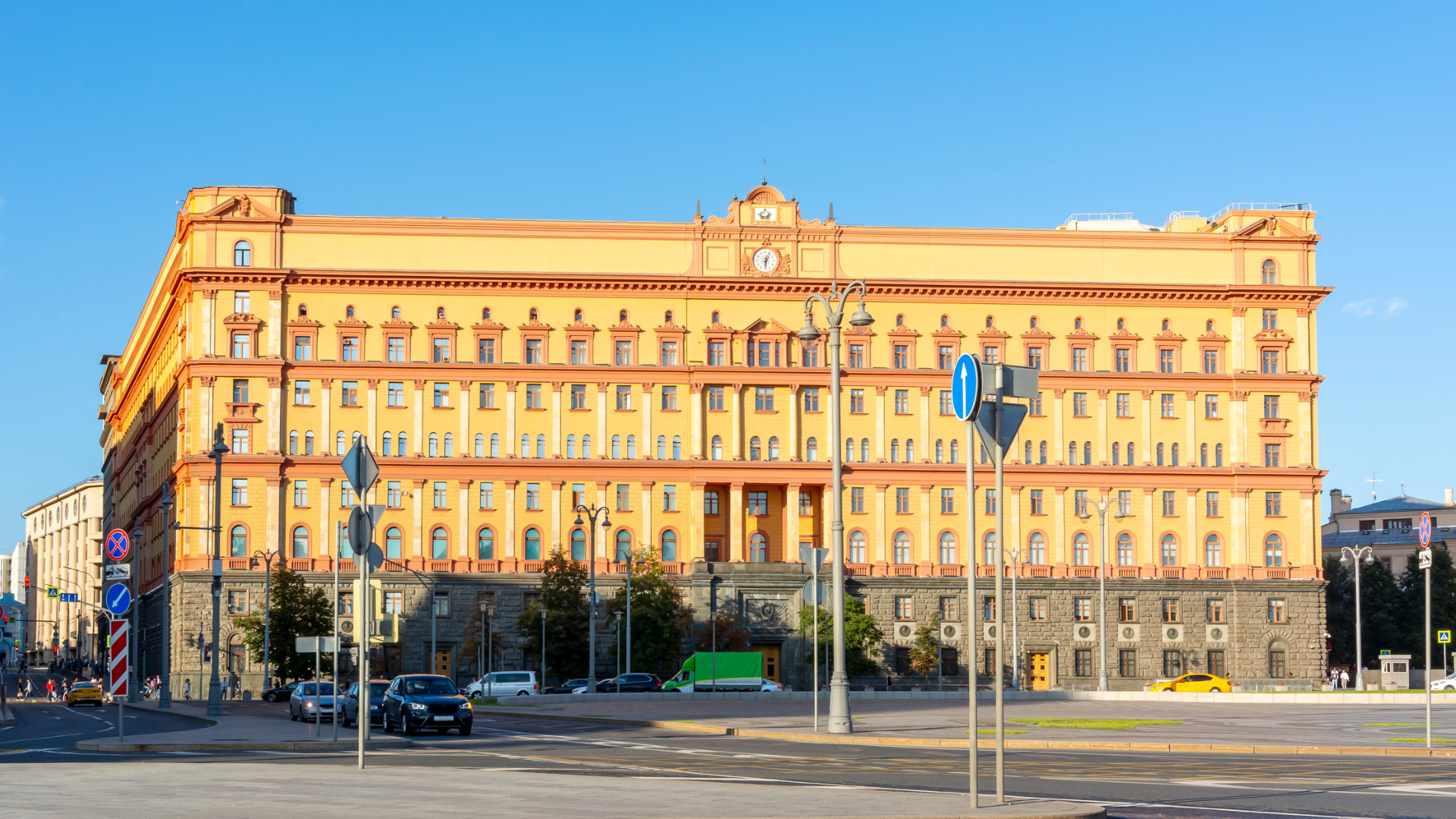
The war in Ukraine is strengthening the FSB’s grip on the Russian state and society. From control over the armed forces to population surveillance and transnational repression, the FSB’s powers have steadily expanded since 2022. Whatever the outcome of the war in Ukraine, its grip on society and influence over power relations will shape Russia’s future for many years to come.
Since Russia launched its full-scale invasion of Ukraine in February 2022, Russian intelligence operations on European soil - spanning sabotage, disinformation and espionage have attracted growing attention from security services, political authorities and the media. Understanding how these operations unfold, from the recruitment of agents on social media - often too readily labelled "disposable agents" - to the growing use of drones is essential to understanding the conflict's dynamics and its consequences.
This focus on operations however tends to obscure what they reflect: the ever-expanding role and functions of Russia's intelligence and security services. The military intelligence service, the GU, attracts particular attention because of its leading role in numerous operations across Europe. Yet if one intelligence service stands out for the continued expansion of its already considerable role and functions since 2022, it is the Federal Security Service of the Russian Federation, or FSB.
Three areas of activity offer particularly revealing insights into the war's already tangible legacy for Russia's political regime: military counterintelligence, control and surveillance of civil society, and transnational repression. The continued expansion of the FSB's powers shows how profoundly the war is transforming the regime, entrenching extensive forms of influence and control within the entire system. This transformation will have lasting effects on the country's future and its external relations, whatever the outcome of the conflict in Ukraine.
Expanding the Security State
The FSB's powers have gradually expanded over Vladimir Putin's successive presidential terms. Between 1999 and 2003, the FSB reintegrated several KGB functions that Boris Yeltsin had dispersed in the early 1990s. These included border control, countering political and ideological subversion, signals intelligence and cryptography. A major milestone in this institutional expansion came in March 2003, when the FSB absorbed the Federal Border Guard Service and its estimated 200,000 personnel. It subsequently took over some of the responsibilities of the Federal Agency for Government Communications (FAPSI). A presidential decree of June 1995 had set FSB staffing at around 77,600. By the mid-2000s, Germany's domestic intelligence services estimated that figure at nearly 350,000.
This growth has accelerated further since the invasion of Ukraine in February 2022. Expenditure explicitly allocated to the FSB in federal budget documents rose from 98.2 billion roubles in 2022 to 134 billion in 2026, an increase of approximately 3% after adjusting for inflation. These figures capture only a small share of the FSB's budget, however, since they mainly cover intelligence officers' pensions and social benefits; the operational budget being logically classified. These figures should nevertheless be considered alongside the increase in staffing and public funding for the Federal Protective Service (FSO), which main responsibility is to protect the president and other Russian leaders. Official documents show, in particular, that FSO staffing increased by 12% between 2020 and 2022, rising from 725 to 815 personnel. The war in Ukraine has thus reinforced the sustained expansion of resources available to the intelligence and security services.
Disciplining the Armed Forces
Military counterintelligence has long been a core responsibility of the FSB and its predecessor, the KGB. In the Soviet period, control over the military provided an essential means of preserving the party-state's power. This function has changed little since then. The Military Counterintelligence Department (DVKR) therefore performs a wide range of functions, from protecting classified information to preventing activities deemed extremist within the armed forces and combating corruption. To fulfil these missions, the FSB maintains permanent access to the institutions and personnel of the armed forces and the Ministry of Defence. In particular, it embeds officers directly within army units.
The war in Ukraine has nevertheless helped strengthen the FSB's grip on Russia's armed forces. Mutual recriminations over the initial failure of the offensive first exacerbated longstanding rivalries with the Ministry of Defence. The Wagner Group's rebellion in June 2023 intensified these quarrels even further. The seizure of the Southern Military District headquarters in Rostov-on-Don by Yevgeny Prigozhin's forces and its relatively unchallenged progression towards Moscow publicly exposed the weaknesses of the security apparatus.
Wagner's mutiny showed the Kremlin that the war in Ukraine could rapidly become a source of domestic instability. In particular, it exposed the dangers posed by the growing autonomy of armed formations, mercenaries and rivalries between their commanders. In the aftermath, the Kremlin sought to reintegrate paramilitary formations into chains of command under direct state control. It also sought to reassert presidential control over the military institution and its networks of influence.
The FSB bears considerable responsibility for both the failure of the invasion and the failure to prevent the mutiny. In the first case, the collapse of the February 2022 offensive exposed the shortcomings of the Fifth Service, whose responsibilities include political intelligence on Ukraine. Its excessively optimistic assessments fostered flawed expectations about the outcome of the invasion. In the second case, FSB military counterintelligence clearly exposed its failure in monitoring Wagner's activities. Paradoxically however, these failures of the FSB contributed to strengthen its role within the system. The ensuing broad anti-corruption campaign launched in 2024, with crucial support from the DVKR, enabled the FSB to tighten its grip on the Ministry of Defence and turn bureaucratic rivalries to its advantage.
This anti-corruption campaign provided a powerful means of extending the FSB's influence over the armed forces. Between 2022 and 2025, the number of arrests for corruption increased fivefold. The FSB participated directly in prosecutions in 89.6% of cases in 2025, demonstrating its dominant role in this campaign of repression. This wave of prosecutions coincided with the replacement of 19 of the 70 heads of the ministry's directorates, departments and services, representing more than a quarter of its administrative leadership.
The dismantling of Sergei Shoigu's networks marked the most spectacular manifestation of this purge. In April 2024, the arrest of Deputy Defence Minister Timur Ivanov launched a broad campaign of prosecutions targeting senior ministry officials. As a close associate of Shoigu, Ivanov oversaw, among other responsibilities, all military infrastructure and construction contracts. The DVKR conducted the entire offensive, which helped dismantle the patronage networks formed around the former minister and contributed to challenge their control over the institution's main financial flows.
Since 2022, the FSB has used its investigative and surveillance powers in the anti-corruption campaign, under the guise of restoring sound public finances and improving the efficiency of the war effort. Despite successive failures, it has thereby established itself as a central instrument of bureaucratic and political control over the military.
Controlling Society
The war has also enabled the FSB to expand its control over the entire Russian society. The legal instruments available to the FSB and the Ministry of Internal Affairs have grown substantially stronger since 2022. Federal Law No. 32-FZ of 4 March 2022 notably introduced several offences allowing criminal or administrative penalties against anyone who challenges the official account of Russian military operations. Convictions under this law amount to nearly 12,000 since 2022. In April 2023, the maximum penalty for treason also rose to life imprisonment. The European Union Agency for Asylum records around 360 convictions for treason, espionage or confidential cooperation with foreign actors in 2024, and 224 in the first half of 2025 alone.
The FSB has also gained wider powers to control information exchange and communications. The law of 20 February 2026 now requires telecommunications operators to suspend their services immediately at the FSB's request in circumstances defined by presidential acts. The law exempts telecommunications companies from contractual liability when this requirement causes an interruption. It thus effectively subjects private operators to the FSB's orders and security decisions, while denying users any avenue to seek recognition of the harm these disruptions may cause.
Since 1 April 2026, Article 15 of Federal Law No. 40-FZ of 3 April 1995 on the FSB has also allowed the service to obtain copies of databases held by any Russian organisation, including private entities, whenever it deems the information necessary for its duties. An order from the FSB leadership or a territorial head suffices to secure access to these data, without prior judicial authorisation. The law requires the destruction of copies once they have served their purpose. However, it leaves the procedures for receiving and destroying them to the FSB director.
These restrictions now directly affect the functioning of Russian society and the conduct of the war effort itself. Internet shutdowns, presented as a means of countering Ukrainian drones, have multiplied since 2025. They disrupt electronic payments, banking services, transport and everyday economic activity. The independent communications monitoring project Na Svyazi recorded 655 shutdowns in June 2025 alone, compared with 69 in May. In March 2026, restrictions lasting nearly three weeks in Moscow and St Petersburg notably paralysed transport apps, payment terminals and many digital services.
More paradoxically still, restrictions on Telegram since February 2026 have disrupted the communications of Russian armed forces deployed in Ukraine. These forces rely heavily on the platform to coordinate operations, share tactical intelligence and drone imagery, organise logistics and raise private funds to purchase equipment. Lacking sufficiently effective and widely available military communications systems, many Russian units use this civilian application to transmit target coordinates, coordinate strikes and communicate between air defence units. The restrictions have therefore prompted unusual protests among military personnel and pro-war bloggers. Some have denounced the risks to soldiers' safety and operational effectiveness.
Together, these measures demonstrate the growing precedence of security imperatives over all other considerations. The drive to tighten control over information, communications and society tends to take priority over economic efficiency and operational requirements of the war effort. This development reveals what is often a fundamental contradiction in decision-making systems dominated by security concerns: by subordinating political, economic and military imperatives to ever greater demands for surveillance and control, they usually end up weakening what they seek to protect and causing the dysfunctions they are supposed to prevent.
Repression Beyond Borders
The expansion of the Russian security state also extends beyond its borders. Russia's security services have a long history of transnational repression against political opponents, journalists, deserters and former intelligence officers whom they regard as traitors. In the 1930s, the NKVD devoted much of its activity to pursuing, abducting and assassinating White Russian exiles in Europe. Cases from this period include General Yevgeny Miller in Paris in 1937 and Leon Trotsky in Mexico in 1940. The practice continued throughout the Cold War and survived the collapse of the Soviet Union. Vladimir Putin has revived the practice and made increasing use of it since the year 2000s. Examples include the assassination of Zelimkhan Yandarbiyev, the former separatist president of the Chechen Republic in Qatar in February 2004, the poisonings of Alexander Litvinenko in the United Kingdom in 2006 and Sergei Skripal in 2018. Yet the practice has intensified considerably since the invasion of Ukraine. A study published in May 2025 recorded 89 cases of Russian transnational repression between 2022 and 2024, compared with 29 between 2014 and 2021. This represents an eightfold increase in the annual average number of documented cases.
The FSB plays a central role in this enterprise, particularly its Second Service, which handles the protection of the constitutional order and counterterrorism. Other FSB entities may also participate in such activities. As the direct successor to the KGB's Fifth Directorate, responsible for political and ideological repression, the Second Service effectively acts as the regime's secret police, repressing all forms of dissent, including within Russian opposition organisations abroad. The FSB considers these organisations' ties to activists and sympathisers still in Russia sufficient grounds to place them under surveillance.
Since 2022, the Second Service has significantly intensified its infiltration and surveillance operations against Russian exile communities. Alongside traditional methods of intimidation and surveillance, it increasingly uses judicial and administrative procedures, extradition requests and pressure on host countries. These practices are particularly prevalent in the post-Soviet space. In September 2024, Kazakh authorities arrested Yevgeny Nakaznenko, a Russian national who had protested against the war, on the basis of a wanted notice issued by Moscow, and detained him pending extradition.
Since 2022, Russian transnational repression has also drawn on a growing number of bilateral judicial cooperation agreements with states willing to collaborate with Moscow. Over the past three years, Russia has concluded agreements between prosecution services with more than twenty countries, spanning the Maghreb, sub-Saharan Africa, Southeast Asia and Latin America. These agreements notably seek to facilitate information exchange and cooperation in criminal proceedings. They allow the Kremlin to request assistance from foreign authorities, particularly through requests from Russia's Prosecutor General's Office, to secure the arrest and potential extradition of individuals wanted by Moscow. By drawing on international judicial cooperation mechanisms, they help extend the geographical reach of repression beyond Russian territory.
This repression also reaches European countries and the United States. It relies in particular on the recruitment of agents within opposition networks, sometimes before they even leave Russia. In Poland, the arrest in July 2024 of Igor Rogov, a former Russian opposition activist who had taken refuge in the country in 2022, revealed that the FSB had recruited him before his departure from Russia. Rogov subsequently monitored Russian exile communities in Poland for the FSB. In France, the General Directorate for Internal Security (DGSI) also thwarted a plot to carry out a violent attack in October 2025 against Vladimir Osechkin, founder of the NGO Gulagu.net and a Russian opposition figure living in exile in Biarritz. The authorities arrested and placed under formal investigation four individuals, three of whom had conducted reconnaissance around his home several months earlier. More recently, in September 2026, the Federal Bureau of Investigation (FBI) revealed a clandestine network involving an FSB officer, which had operated since at least 2024. According to the indictment,the network allegedly recruited foreign intermediaries to monitor and assassinate Russian opponents living in exile in the United States and Europe. It notably offered $40,000 to kill a dissident in the United States and $25,000 to kill an opponent in Lithuania.
From control over military elites to surveillance of communications and civil society, and repression of opponents beyond Russia's borders, the war in Ukraine is accelerating and strengthening the FSB's grip on ever wider parts of the Russian state and society. Two interdependent dynamics drive this expansion: the Kremlin's determination to extend the FSB's powers, and the service's own bureaucratic strategy, which uses this support to increase its power.
The militarisation of Russian power goes hand in hand with the security apparatus's growing grip on the state and society. The FSB's failures at the start of the war have only further strengthened its powers. The Russian political system typically responds to failure by tightening control and escalating repression, rather than confronting and reforming the bureaucratic dysfunctions that helped produce it. Within this system, the FSB emerges as one of the main beneficiaries of the transformations brought about by the war. The expansion of its remit, the strengthening of its surveillance capabilities and its growing role in managing power relations within the regime all constitute institutional changes with long-term consequences. Whatever the outcome of the conflict in Ukraine, one of its most enduring legacies for the Russian state and society will clearly be the emergence of a society of control and political repression under the authority of the security and intelligence agencies.